Get Full Government Meeting Transcripts, Videos, & Alerts Forever!
Get email alerts on the Administrative Code topic
No spam. Unsubscribe anytime.
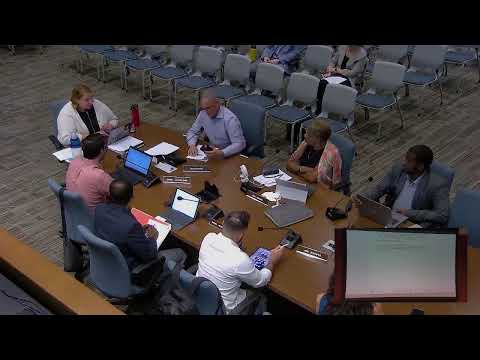
Lancaster City Council reviews draft administrative code in Aug. 19 work session
Summary
Lancaster City — Lancaster City Council members heard a presentation on a second tranche of a proposed administrative code during a special work session on Aug. 19, 2025, with city counsel describing the document as “the starting point for discussion” and asking council and the public to submit questions through an online portal before the next work session on Sept. 16.
Lancaster City — Lancaster City Council members heard a presentation on a second tranche of a proposed administrative code during a special work session on Aug. 19, 2025, with city counsel describing the document as “the starting point for discussion” and asking council and the public to submit questions through an online portal before the next work session on Sept. 16.
The draft, presented by city counsel Michael Henwerker, summarizes proposed organizational and procedural rules for the city and consolidates material pulled from the city charter, existing city ordinances, Third Class City Code practices and other municipal examples. Henwerker said the draft is intended as a flexible starting point that ultimately would be adopted by ordinance if council chooses. “This is the starting point for discussion,” Henwerker told council.
Why it matters: The administrative code would codify how departments are organized and supervised, clarify appointment processes for officials, tighten civil service promotion processes in the police bureau, set expectations for boards and commissions, establish a public-facing fee schedule and provide a framework for an ethics code to be developed with an independent ethics commission. Many provisions would change current practice only after further council deliberation and ordinance adoption.
Key provisions discussed
- Organizational structure and departments: The draft lays out major administrative units (office of the mayor, bureau of police and bureau of fire) and requires department directors to report at least annually to the mayor and council. Henwerker noted the charter already prescribes seven council members, a controller and a mayor.
- Police promotions: The draft proposes making the rank of detective a civil‑service rank, subject to the same promotion procedures used for sergeants and lieutenants, so that promotions would come from an objective civil service list. Henwerker said the police chief concurs with that change.
- Fire bureau staffing: The proposed code includes recommended minimum officer counts provided by the fire chief: one fire chief, one deputy chief, four battalion chiefs, four captains (one serving as captain of the fire marshals) and 12 lieutenants, with language intended to avoid falling below those staffing levels unless council amends it.
- Council procedures and committees: The draft consolidates council rules (chapter 55 of the city code) and clarifies meeting times, public-comment rules tied to the Sunshine Act and a method to calculate a supermajority for waiving rules (described in the draft as “majority plus one of the members present”). It also addresses appointment term alignment for council representatives on outside boards and the requirement that committee notices and minutes comply with the Sunshine Act.
- Ordinance introductions and documentation: Henwerker proposed requiring a short memo to accompany ordinance introductions explaining the problem the ordinance addresses, existing related laws, enforcement approach, data sources and projected impacts — a practice he said would create a legislative history useful to staff and the public.
- Advertising and public notice: The draft encourages using the city’s publicly accessible website for ordinance notices and requires a clear, easy-to-find posting area. Henwerker discussed tradeoffs of website posting versus newspaper legal notices and noted the risk that if the website is unavailable when a statutory notice window closes, an ordinance action could be jeopardized.
- Boards, commissions and removal: The draft generally tracks charter appointment processes (mayoral appointment with council consent) and adds a removal process limited to repeated failure to attend required meetings, violation of the ethics code or other impropriety; any removal would require notice and council consent.
- Ethics code: The draft contains a placeholder for an ethics code; Henwerker said the newly formed ethics commission has met and will advertise meetings in September and that the commission will provide recommendations for the council to consider before a final ethics code is drafted.
- Human resources and employment: The draft restates federal and state employment-law obligations, confirms employees are at-will unless covered by collective bargaining agreements (three unions were noted), and directs personnel offices to maintain standard policies including harassment, accommodations and a complaint process.
- Fees, municipal claims and website requirements: The draft would require the director of administrative services to maintain a comprehensive fee schedule on the public website and to periodically review fees against the cost of services; it also incorporates existing municipal-liens authority and attorneys’-fee provisions currently in chapter 36 of the city code.
Public comment and next steps
One speaker during public comment urged redundancy for public-notice methods and recommended that the city engineer position be filled by someone with municipal traffic-engineering certification to reduce friction with PennDOT and to allow the city to change signal timings without external approval. Tony Dashra of the 700 block of New Holland Avenue said redundancy matters because “redundancy is the reason we have 2 traffic lights on 1 pole.”
Henwerker said the public portal for questions will remain open until two weeks after the council’s next meeting and encouraged both council members and residents to submit proposed edits in advance if they want legal review before Sept. 16. No ordinance or formal adoption of the administrative code occurred at the Aug. 19 work session; Henwerker emphasized the draft would be presented later as an ordinance if council finds consensus.
Votes at a glance
- Approval of minutes from the July 15, 2025 administrative-code working session — motion passed by roll call; recorded yes votes in the transcript: Mister Mitt; Mister Royo; Mister Kleece; Miss Craig; Mister Hirsch; President Baker (transcript lists these roll-call affirmations). Outcome: approved. (The motion’s primary mover is not specified in the transcript; a director provided the second.)
- Motion to adjourn — passed (all present voted “Aye” on the voice vote recorded at the end of the session). Outcome: approved.
Context and limits
The presentation was labeled a nonlegislative working session; Henwerker repeatedly described the draft as flexible and subject to change and emphasized that some items (notably the ethics code) will return after recommendations from the ethics commission. Where the transcript does not name a specific mover or staff title, this article reports the transcript’s wording (for example, the transcript records a second as “DIRECTOR Second” but does not provide that person’s full name). The administrative code was not adopted at the Aug. 19 session; further council deliberation and formal ordinance introduction would be required for adoption.
For more: Council scheduled its next work session on Sept. 16, 2025, at which members plan to continue section-by-section review before considering the administrative code for ordinance adoption.