Get Full Government Meeting Transcripts, Videos, & Alerts Forever!
Get email alerts on the Public Finance topic
No spam. Unsubscribe anytime.
Aransas Pass council creates Aransas Oaks public improvement district, approves developer reimbursement and development agreements
Summary
After a public hearing, the Aransas Pass City Council voted to create the Aransas Oaks Public Improvement District, approve a reimbursement agreement to cover developer expenditures, and adopt a development agreement with Braselton Development LTD. The PID will assess only property owners within the district to fund public infrastructure.
The Aransas Pass City Council voted to create the Aransas Oaks Public Improvement District and approved related agreements that let the developer fund and later recover the cost of public infrastructure through assessments on properties inside the district.
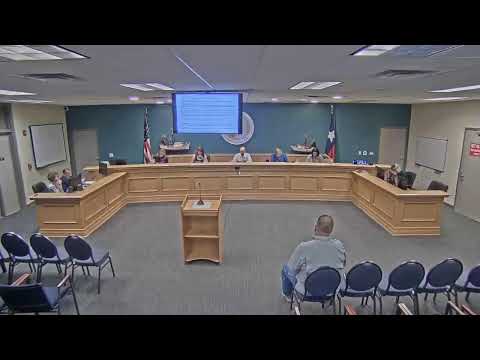
The action followed a public hearing at which Mark McLaney of Samco Capital Markets, the city's financial adviser, explained the structure and limits of a PID and answered residents' questions about taxes, utilities and water use. “A public improvement district is a district created to do public infrastructure and paid for... only landowners within that public improvement district,” McLaney said. He later added in response to a question about gated communities, “It cannot be a gated community. That wouldn't be public.”
Why it matters: the PID gives the developer and the city a formal legal entity to fund roads, drainage, parks and similar public improvements inside the proposed Aransas Oaks development. Assessments on properties inside the district — not the city's general tax base or residents outside the district — will pay for the improvements; a dissolution agreement was included to protect the city if the project does not move forward.
Council voted on three related resolutions in sequence: (1) creation of the Aransas Oaks Public Improvement District (the PID “shell”), (2) a reimbursement agreement to allow the developer to be reimbursed for qualifying infrastructure expenditures as assessments are levied and (3) a development agreement spelling out what will be built and the terms for zoning, planning and the public improvements. Council approved all three items by voice vote; each motion carried.
During the public hearing and ensuing discussion, McLaney and others said: the assessment is an extra, district-specific charge on top of regular city, county and school taxes and will be paid only by property owners within the PID; utilities for the development will tie into existing infrastructure; and if the development does not proceed the dissolution agreement will cause the PID to dissolve (the staff explanation noted an automatic dissolution backstop if the project does not develop after three years). On water use, council was told construction would follow the same citywide restrictions: “No. So there's there there's no additional water used, outside of what would typically be used during the construction,” McLaney said.
Members of the public asked whether the assessment could burden existing low-income property owners; staff and the developer said the petition reflects a new development (no existing homeowners in the petitioned area) and that assessments and any bonds will be disclosed in sale documents when properties are purchased. A member of the audience also asked where the development is located; staff indicated it is the large curve on Highway 35 across from the Allen Samuels dealership and that utilities will connect to existing lines and a nearby lift station.
The reimbursement agreement was described as the mechanism that lets the developer record qualifying expenditures now and be reimbursed later from district assessments or bond proceeds once infrastructure is completed.
Council and staff said the development agreement contains the zoning, planning terms and the specifics of what infrastructure and amenities the city will receive as the project is built. Staff told the council that the city will hold certain protections in escrow related to the dissolution agreement if the development stalls.
The council approved the three resolutions by voice vote; the record shows the motions carried and the mayor declared each motion approved. No roll-call vote counts or individual yes/no votes were recorded in the public portion of the transcript.