Get Full Government Meeting Transcripts, Videos, & Alerts Forever!
Get email alerts on the Education Policy topic
No spam. Unsubscribe anytime.
Appleton school district outlines truancy data, interventions and proposal to reinstate citations
Summary
Appleton Area School District presented updated chronic absenteeism and truancy data, described current interventions and outlined proposed dispositions including possible municipal citations as a last resort; the committee set a tentative timeline for further consideration.
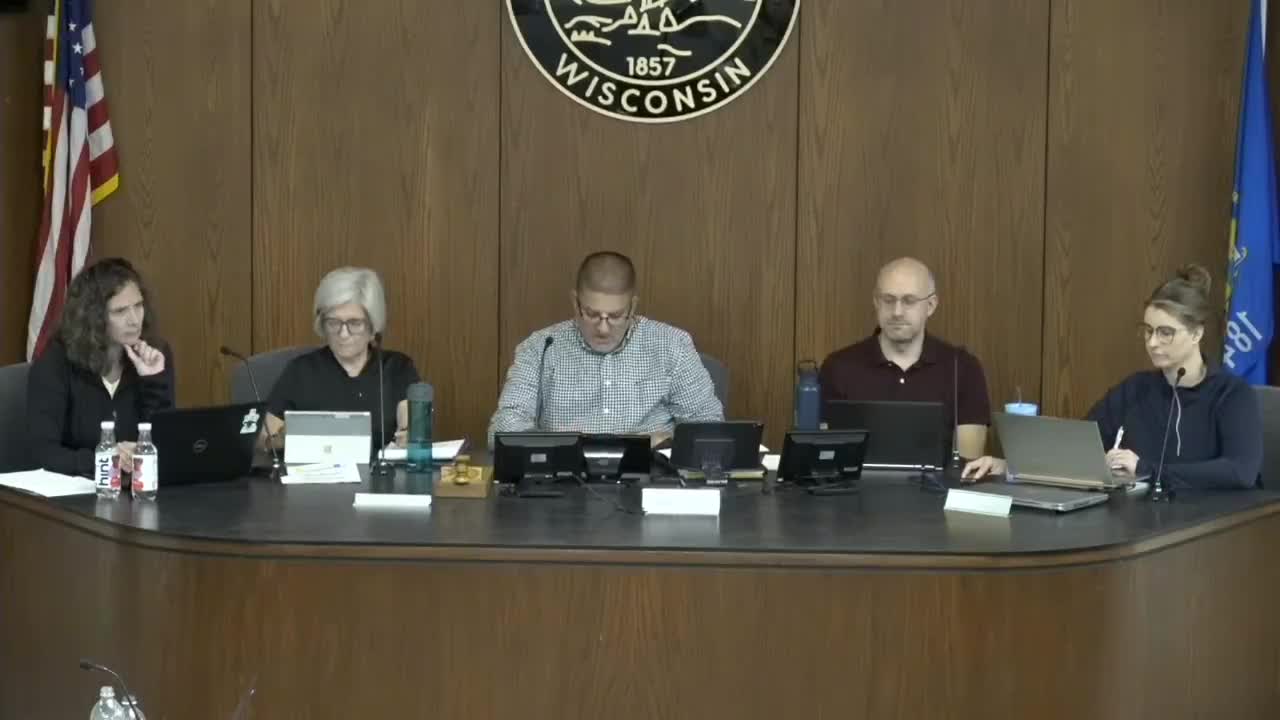
Superintendent Greg Archus and district staff presented updated attendance data and discussed a proposed return to municipal truancy citations during the Aug. 13 Safety and Licensing Committee meeting.
Archus said the district’s chronic absenteeism rate for the 2024–25 high-school year was 29.1 percent, an increase from prior years. He said 1,269 high-school students missed 18 or more days in 2024–25; within that group, 404 missed 36 days, 240 missed 50 or more days and 39 missed 100 or more days. Archus also said 866 high-school students met both the district’s chronic-absence threshold and the state definition of habitual truancy.
A parent, Angie Day, told the committee she pushed for a county referral for her son because she believed outside accountability helped change his behavior. "I advocated for a county referral regarding my son's truancy because I believed he needed more support than the school could provide," Day said, adding that the county referral made her son take warnings more seriously.
A former-student letter read by district attendance coordinator Stephanie Marta recounted a similar view: Morgan Schrider (letter) said the court process for a truancy citation changed her outlook on school attendance and urged the district to consider restoring citations.
Justin Heidel, principal at Appleton Central Alternative High School, described the student population his school serves — ranging from preteens up to age 21 — and emphasized that some students face complex, chronic barriers including mental health issues and poverty. He said many students who do not come to school regularly cannot be reached and therefore cannot access supports. "If we can't get them to the doors, we can't help them with health care, we can't help them access housing, mental health services," Heidel said.
District staff reviewed an internal ranking of the statutory dispositions available under state truancy law and said the district’s recommended approach would prioritize educational and supportive interventions first, with forfeitures (fines) reserved as last-resort options. The district proposed a potential forfeiture figure of $250 as an officer-recommended maximum in its draft ordering, noting the state statute allows for higher amounts up to $500. School staff and alderpersons discussed judicial discretion and the district attorney’s guidance that prosecuting parents is unlikely.
Committee members and district staff highlighted key distinctions: the district said its primary concern is chronic absenteeism (excused and unexcused absences that cumulatively affect student outcomes), not the narrow statutory definition of habitual truancy. Staff described a documentation form and workflow for when the district would involve the school resource officer and potentially pursue a citation: the attendance coordinator would document outreach efforts and interventions before referring a case to law enforcement.
The committee did not take action to adopt an ordinance or to reinstate citations at the meeting. Chair Chris Croat said the discussion would continue, with a tentative plan to return a resolution or amended resolution for further consideration at the Sept. 10 committee meeting and potential Common Council action on Sept. 17.
Key data and proposals presented - 2024–25 chronic absenteeism (high school): 29.1 percent. - 1,269 high-school students missed 18+ days; 404 missed 36+ days; 240 missed 50+ days; 39 missed 100+ days. - 866 students were both chronically absent and habitually truant (state definition). - District graduation rate: 88 percent; staff said attendance problems were common among the 12 percent who did not graduate. - District recommended dispositions prioritize education and supports; fines and other statutory outcomes reserved as last resort. District suggested $250 as a suggested forfeiture amount for consideration; state statute allows up to $500.
Committee members asked for additional outcome data on the effectiveness of interventions; district staff said they could provide data on specific evidence-based programs (e.g., Check and Connect), attendance-education lessons and county-referral outcomes.
Public comment included notice of a community listening session on Aug. 18 and requests for meeting materials to be posted with the clerk; district staff said FAQs and materials would be available on the district website.