Get Full Government Meeting Transcripts, Videos, & Alerts Forever!
Get email alerts on the Charter Amendments Election topic
No spam. Unsubscribe anytime.
Conroe council reviews proposed charter amendments; mayor‑council vs. city‑manager, quorum and other measures headed to possible November ballot
Summary
City attorney and staff presented a packet of proposed charter amendments Aug. 13 and an ordinance to call a Nov. 4 special election; measures include a possible shift to a council‑manager government, a stricter quorum rule, shorter council terms and multiple procedural and housekeeping changes.
Conroe city officials presented a packet of proposed charter amendments and an ordinance to call a special election on Nov. 4 to submit those amendments to voters.
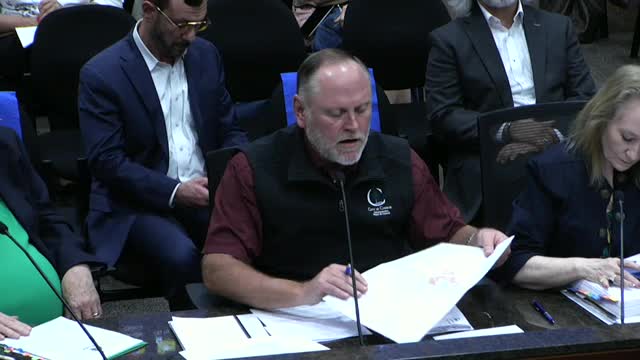
City attorney Charlie Zeck walked the council through more than a dozen proposed propositions Aug. 13, which the city is collecting into an ordinance that would place the measures on the Nov. 4 ballot if the council approves the ordinance in a forthcoming meeting. The packet also lists early‑voting dates and polling locations the county supplied and an estimated joint election cost from Montgomery County.
The measures cover structural governance, operational standards and procedural changes. Key items that drew discussion included:
- A potential change from the current mayor‑council framework to a council‑manager form of government. The proposed city‑manager language would vest policy authority with the elected council while placing day‑to‑day administration in a professional city manager hired and, in practice, removable by the council. The city attorney emphasized the charter would still vest ‘‘all powers of the city’’ in the council and that the manager would implement council policy; appointment processes for department heads would shift to manager recommendation and council confirmation in some sections.
- A quorum‑focused amendment to prevent three council members from meeting outside a posted public meeting to discuss city business; proponents said the measure would make the charter’s quorum language clearer and reduce the risk of deliberations occurring outside formal sessions.
- A proposed reduction in council member terms from four years to two years and other related changes that supporters said would increase accountability and opportunities for candidate turnover.
- A measure that would prohibit elected officials from maintaining private physical offices inside city buildings.
- Other measures ranging from board and commission appointment procedures to recall petition thresholds, an item limiting debt issuance without voter approval (the draft lists $25 million as a threshold), and housekeeping edits (for example, clarifying whether the city secretary may also serve as the finance director). Some measures are contingent: several provisions are drafted to apply only if a broader city‑manager proposition does not pass.
Council members questioned the packet’s scope and whether other frequently requested reforms — including adding council seats or single‑member districts — should be included. City staff and the attorney said they compiled the propositions from town hall input, staff review and earlier discussions and warned that some changes require careful drafting or further study; the attorney said the deadline to file the election order was Aug. 18.
Montgomery County staff provided estimated election logistics and an estimated joint cost of approximately $175,000; the county will set final polling locations and can alter logistics. Council members asked staff to return with fiscal impact language for each proposed charter change and to clarify potential budget or operational effects.
Ending
The council did not adopt the ordinance Aug. 13; staff and the city attorney will return with any requested amendments and fiscal impact information. Council members emphasized that voters would make the final decision and that some topics — such as adding council seats or establishing single‑member districts — may require additional study before appearing on a ballot.