Get Full Government Meeting Transcripts, Videos, & Alerts Forever!
Get email alerts on the Municipal Budget topic
No spam. Unsubscribe anytime.
Georgetown presents $1.3 billion proposed FY26 budget, highlights public‑safety and water investments
Summary
City staff presented a proposed FY2026 budget totaling roughly $1.3 billion across all funds, proposing a tax rate just below the voter‑approval rate and prioritizing public safety, major water projects and debt defeasance while reserving up to $3 million for July flood recovery.
City of Georgetown staff presented a proposed FY2026 budget that totals roughly $1,300,000,000 across all funds, emphasizing public‑safety investments, major water and wastewater capital projects and debt management.
David (staff member) told the City Council that the packet reflects certified property values and a proposed property tax rate “right below the voter approval rate at 35.3¢,” and that staff is recommending a smaller year‑end transfer to the Council Discretionary Fund and reserving up to $3,000,000 for recovery related to a July flood event. “We estimate that there will be up to $3,000,000 to be used towards the July flood event, for debris removal and recovery after the flood event,” David said.
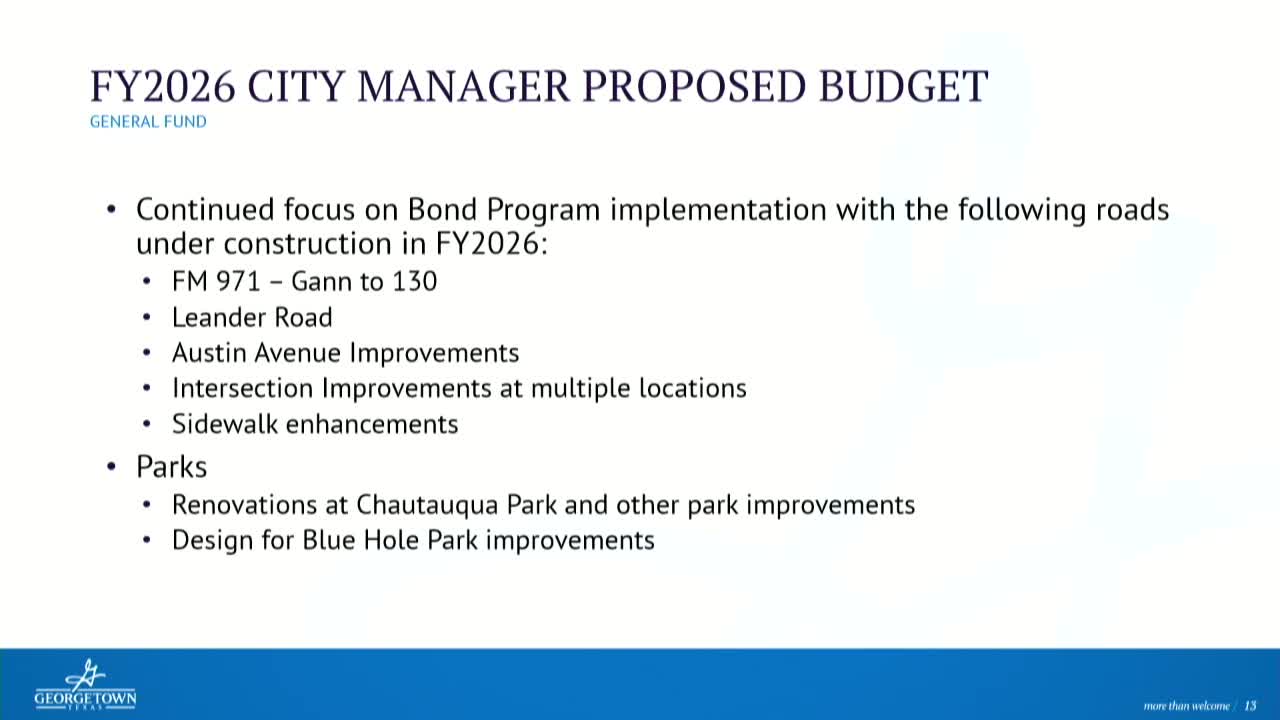
The proposal fronts significant capital spending, with more than half of the all‑funds total identified as capital investment. Staff described the largest expense areas as the water utility (driven by large projects to acquire new water and treatment capacity) and the electric utility. Major capital items highlighted for 2026 include preliminary engineering and right of way acquisition for FM 971, widening work on Leander Road, Austin Avenue improvements tied to the Downtown Master Plan and Austin River Corridor Study, signal upgrades, sidewalk work, and park renovations including Chautauqua Park and San Jose Park.
On public safety, the budget proposes additions to police and fire staffing, including 6 positions for Fire Station 8 and 7 positions to add a paramedic unit; staff said Station 8 staffing would be phased with a target of the station being operational by FY2028. The general fund expense breakdown shown to council places 54% of general fund budget on public safety, with 30% of that for fire and 24% for police.
Staff described several utility rate and fee proposals tied to cost‑of‑service studies: a proposed 9% increase in water charges, a 12% increase in wastewater, and a 2% average increase in electric rates (the city has not raised electric rates since 2019, staff said). The water utility plan includes negotiating new groundwater supply agreements (Carrizo‑Wilcox aquifer was mentioned) and funding two wastewater plants currently in schematic design.
Staff proposed staffing increases citywide: 70 positions added in the proposed budget (noting a net change of about 60.5 positions after reductions related to an animal shelter transition to a regional provider). The positions span police, fire, water, electric, library security, parks and other functions. Compensation highlights include an average 3% merit increase across funds, step increases for civil service/public safety, and an anticipated 5% increase in employee insurance premiums.
Debt management was a notable item: staff said the proposal includes a roughly $2.4 million debt defeasance paid from the tax rate so the city can hold the debt service rate near 24¢ for future capacity. Staff also noted continued use of bond proceeds and impact fees to match capital outlays.
Staff flagged sales tax forecasting at a conservative 3% increase next year and noted an ongoing audit and dispute with Builders First Source that has diverted some sales tax revenue to another jurisdiction; staff said the matter is an active, multiyear audit with the Texas Comptroller and that other cities face similar disputes.
Next procedural steps presented to council include setting the maximum tax rate at the regular meeting, scheduling public hearings (staff listed an August 26 hearing), first readings of the budget and tax ordinance, and a final adoption timeline with a second reading and adoption on September 9; the new fiscal year would begin Oct. 1 if adopted as scheduled. David said the city will post a digital proposed budget and provide a summary of Ask GTX comments and other public outreach.
The presentation included quantitative detail on revenue sources (bond proceeds and impact fees for capital, sales tax and charges for service for operations), the proposed split between O&M and I&S rates, and specific capital‑project funding assumptions. Staff repeatedly characterized remaining items as proposed pending the formal adoption process.
Council members asked for follow up on some items, including monitoring the performance of the Ride GTX/CapMetro partnership and revisiting it after a full calendar year of operation. David said staff would analyze rider and paratransit usage this fall and return with numbers to inform the FY27 budget.