Get Full Government Meeting Transcripts, Videos, & Alerts Forever!
Get email alerts on the Tax Sale Deeds topic
No spam. Unsubscribe anytime.
Hampton County residents press council over delayed tax-sale deed transfers
Summary
A Hampton County resident told council she and other investors have waited months for deeds after buying properties at delinquent tax sales. Tax Collector Adelio Smith said probate issues, pre-1978 deed corrections and a thin staff are causing delays and that refunds may be issued when legal title remains in probate.
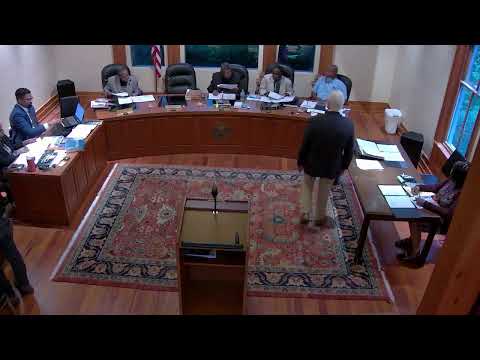
Tricia Moore, a Hampton County resident who said she purchased a property at a delinquent tax sale on Dec. 4, 2023, told the Hampton County Council on Aug. 11 that she still has no information on the deed transfer and called the problem “not an isolated incident, but a systemic problem.”
Moore told council she had submitted purchase records and a chain of emails showing attempts to get updates and that, as of the meeting, “today marks 616 days since I made that purchase and 249 days beyond the redemption period” without confirmation of title. She said the delay prevents new owners from obtaining insurance, making repairs, or otherwise securing the properties they purchased.
Adelio Smith, Hampton County tax collector, responded that under county practice the original owner generally has 365 days to redeem property after a tax sale, and that deed work “starts” once the redemption period expires. Smith said the office’s process includes a title search performed by a staff member, and explained that staffing and pre-1978 recording issues can lengthen the work. “We only have, like we have 3 people in our office,” Smith said, describing his office as himself, a deputy clerk and a title searcher (identified in the meeting as Miss Vaughn).
Smith said properties with title complications sometimes require returning to the assessor’s records to “redo their deed,” particularly when deeds were recorded before 1978; that step, he said, can add substantial time. He also told council that when a property remains tied up in probate and the recorded name on the deed is not the person actually controlling the property, the tax office’s usual option is to refund the bidder’s money: “Usually, when we come into something like that, we have to give the bidder their money back because it’s still in the probate.”
Council members pressed Smith and county staff for follow-up. Councilman James asked about the process for updating deed records filed before 1978; Smith said that requires work with the assessor’s office and sometimes consulting archived books. A separate instance of county discussion raised a statewide shortage of assessors, a factor Smith and others said is making timely title work harder in small counties.
County staff agreed to follow up with Moore directly and attempt to provide a clearer timeline and a point of contact. During the meeting the county counsel and council members noted the limits of the tax collector’s authority when probate or assessor corrections are required and emphasized that resolution may depend on external offices and timelines.
What happened at the meeting does not show a council vote or formal policy change on tax sales; it recorded a public presentation, questions from council members, and an operational response from the tax collector’s office. The tax collector described two practical outcomes available now: (1) continue tracking the probate and assessor steps until legal title can be conveyed, or (2) refund the bidder when legal title remains in probate and cannot be transferred.
Moore asked whether, if refunded, she would retain any priority to repurchase the property later; the tax collector said the bidder would have the “first right” to acquire the property again if it clears and is reoffered, but that the office cannot complete transfers while a matter remains in probate.
Council members and staff also discussed the county’s options for addressing the underlying delays, including tracking complaints, sharing assessor resources with neighboring counties, and improving communications to bidders. Smith said the office will notify bidders when deeds are complete, and that the county will attempt to provide Moore an update and, where appropriate, a refund if probate prevents transfer.
The exchange highlighted several constraints on local action: deadlines and redemption periods set out in tax-sale procedures; dependency on the assessor’s records and historic deed corrections for pre-1978 recordings; probate court control of certain estates; and limited local staffing in the tax collector’s office. Council members asked staff to provide Moore a status update and to return to council if systemic changes or policy actions are required.