Get Full Government Meeting Transcripts, Videos, & Alerts Forever!
Get email alerts on the Bruin Street Rezoning topic
No spam. Unsubscribe anytime.
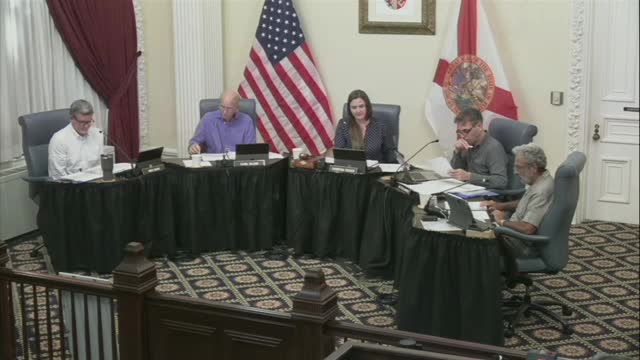
Planning board opposes rezoning proposals for 96 and 98 Bruin Street amid neighborhood concerns
Summary
The board recommended against land‑use and rezoning amendments for 96 and 98 Bruin Street after extensive public comment raising traffic, precedent and neighborhood‑preservation concerns; applicants had said the changes would allow multi‑family/quadplex housing.
The Planning and Zoning Board on Aug. 5 recommended against two proposed land‑use and zoning changes for parcels on Bruin Street that would have converted portions of the lots from residential low density (RS‑2) to commercial low intensity (CL‑1). The board’s negative recommendations followed extensive public comment from nearby residents who warned that upzoning would erode single‑family character, increase traffic on narrow streets and create a precedent for further commercial encroachment.
Applicants said their plans called for multi‑family (quadplex) housing intended to provide more affordable units; the applicants said they sought a single zoning district across the combined parcels to simplify regulations and allow their proposed quadplexes. Board members and multiple public speakers pushed back, noting that the West City CRA and the city’s land‑use map preserve a commercial corridor along Masters Drive while keeping the interior blocks residential. Longtime residents and neighborhood association representatives told the board that rezoning interior lots could trigger a cascade of future rezoning requests and would conflict with objectives in the comprehensive plan to preserve residential neighborhood character.
Public commenters included residents who live within a few blocks and owners of century‑old homes; several asked the board to preserve existing zoning and said affordable housing can be achieved under current rules or in other, more appropriate districts. Planning staff and the board emphasized the difference between the applicant’s stated intent and the legal effect of a CL‑1 rezoning: once granted, CL‑1 allows multiple commercial and residential uses (including those not currently proposed) and the zoning would remain with the land.
The board voted to recommend denial of both the land‑use amendments and rezoning requests. Members cited comprehensive‑plan goals to maintain established residential densities and building patterns and expressed concern about creating a patch of commercial zoning that would extend commercial uses into a residential block. The applicants were told they could pursue medium‑density residential zoning or other paths consistent with the comprehensive plan and the newly established West City CRA.