Get Full Government Meeting Transcripts, Videos, & Alerts Forever!
Get email alerts on the Gaza Humanitarian Access topic
No spam. Unsubscribe anytime.
UN says brief tactical pauses in Gaza insufficient as aid flow and fuel remain constrained
Summary
The UN Office for the Coordination of Humanitarian Affairs told reporters that four days of unilateral tactical pauses have not produced the continuous access or supplies Gaza needs, with crossings limited to Kerem Shalom and Sikkim, fuel deliveries described as "a drop in the ocean," and airdrops judged too limited and risky to meet needs.
The United Nations Office for the Coordination of Humanitarian Affairs (OCHA) said Thursday that four days after unilateral tactical pauses began in Gaza, the measures have not allowed for the steady flow of food, fuel and other lifesaving supplies the territory requires.
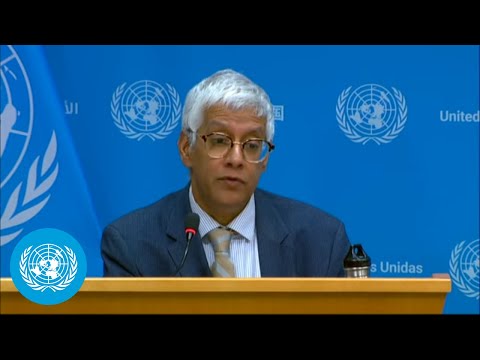
Farhan, an OCHA spokesperson, said aid deliveries face multiple operational hurdles at crossings and inside Gaza and that the amounts of fuel and food entering are far below needs. “Unilateral tactical pauses alone do not allow for the continuous flow of supplies required to meet immense need levels in Gaza,” he said.
OCHA said aid convoys have been able to use two transfer points in recent days: Kerem Shalom and Sikkim. The briefing noted that the Kerem Shalom crossing is a fenced-off area where, for drivers to enter, Israeli authorities must approve missions, provide safe travel routes, give repeated green lights for movement, pause hostilities and open the iron gates. The office reported that three facilitated missions recently allowed staff to collect cargo and move limited fuel within Gaza, while other missions faced delays or were canceled.
On fuel, OCHA said last week limited quantities entered through Kerem Shalom and Zakim crossings and that roughly half of that fuel was transferred to the north to support health facilities, emergency services, water systems and telecommunications. The office called current fuel entries “insufficient” and described them as “a drop in the ocean” compared with needs.
Reporters pressed OCHA about alternative routes and delivery methods. Edie (reporter) asked whether Rafah had been used; Farhan said Rafah had not been used in recent days and that questions about why it remains closed should be directed to Israeli authorities. Asked whether the UN opposes airdrops, Farhan said the UN does not oppose anything that brings more aid in but warned that airdrops have limits and risks, including earlier incidents in which dropped supplies landed on tents. He said airdrops “add to the overall amount of aid coming in” but are insufficient to rely on as a primary mechanism for sustained assistance.
On coordination, Farhan said the UN and partners continue to coordinate humanitarian movements inside Gaza with Israeli authorities but that timely facilitation and safeguarding of aid movements are critical to scale up deliveries. He reiterated OCHA’s call for all crossings to be open to a broad range of humanitarian and commercial supplies and for humanitarians to be allowed to carry out their work without impediment.
The briefing also noted operational strain on frontline aid workers in Gaza, including high workloads, burnout and exhaustion, and mounting needs among people seeking assistance. OCHA said the limited assistance coming in has led to desperate scenes at crossings where people offload small amounts of aid from trucks.
The UN’s spokesman declined to provide a precise meal count for UN deliveries when asked, saying only that available deliveries to date have been insufficient to prevent rising malnutrition indicators, including reductions in children’s mid-upper arm circumference. He added that when conditions allowed earlier in the year, UN distribution networks were able to feed Gaza’s population but that those conditions do not currently exist.
Farhan emphasized that the scale of needs means convoys remain essential: “The amount that can be dropped from one plane is nowhere near the amount that can be delivered through a convoy of trucks,” he said.
The briefing closed with OCHA reiterating appeals for expanded humanitarian access, uninterrupted fuel and food deliveries, and safe humanitarian movement inside Gaza to prevent further suffering.