Get Full Government Meeting Transcripts, Videos, & Alerts Forever!
Get email alerts on the Disability Independent Living topic
No spam. Unsubscribe anytime.
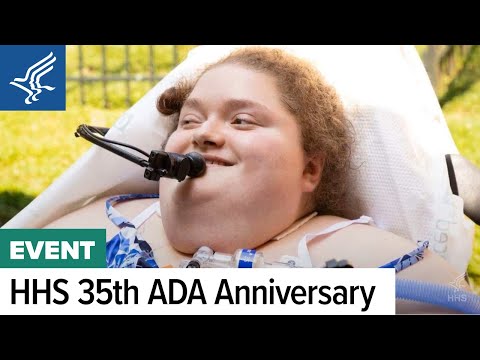
Young woman credits HHS Office for Civil Rights and Disability Rights NC after leaving long-term hospital care for apartment
Summary
A woman identified as Latisha said a complaint to the U.S. Department of Health and Human Services’ Office for Civil Rights and assistance from Disability Rights of North Carolina helped secure independent housing after years in hospital care.
Latisha, about to turn 20, said a complaint to the U.S. Department of Health and Human Services’ Office for Civil Rights helped her move from long-term hospital care into her own apartment.
Latisha told listeners that she has a spinal injury sustained at about 2½ years old and that she lived in hospitals through much of her childhood and teenage years before moving into community housing. "Disabilities doesn't define me. It might be, yes, I have a physical difference, but I do everything and everything that you do just different ways," she said.
The complaint that led to her move was filed with the HHS Office for Civil Rights, Latisha said. She also said Disability Rights of North Carolina intervened after the federal office contacted the organization. "They did, and they helped a lot. And in the end, we won the next," she said.
Matt Graham, who identified himself as the coordinated caregiver for Alexis Radcliffe, said the HHS office played a central role. "HHS and the Office of Civil Rights had everything to do with her getting this home, and they have been magical for her. They've made her a life that she would not have had," Graham said.
Latisha described a sequence of care: she was in the hospital for about six months immediately after the injury, went to live with her grandfather from roughly age 2½ until about 13, and then spent "all my teenage years in the hospital" before moving into an apartment she now occupies. She said the hospital at one point sought to move her to a different placement and she objected; that dispute led to the complaint to HHS OCR.
Latisha spoke about daily life and participation in community activities as markers of independence: "I'm a typical 20 year old. I make TikToks... I went to the Big Time Rush concert, and I was screaming and singing at the top of my lungs," she said. She also named personal goals, including law school and public service.
The remarks were produced by the U.S. Department of Health and Human Services, according to the recording's end credits. The testimony did not specify the precise nature of the OCR finding, the dates of the complaint and resolution, or the exact program or funding that supported Latisha's move to independent housing.
No formal motions or government votes were recorded in the testimony provided; the segment is a personal account and an expression of gratitude to the HHS Office for Civil Rights and to Disability Rights of North Carolina for assistance in securing community-based housing.