Get Full Government Meeting Transcripts, Videos, & Alerts Forever!
Iron County approves land-use and zoning changes to limit septic density, backs solar tax settlement
Summary
The Iron County Commission adopted an ordinance and approved general-plan tier and zone changes aimed at limiting septic density around Summit and Newcastle after a Utah Geological Survey-backed study. The commission also approved settlement and mitigation agreements with Appaloosa Solar and awarded an invasive-species grant.
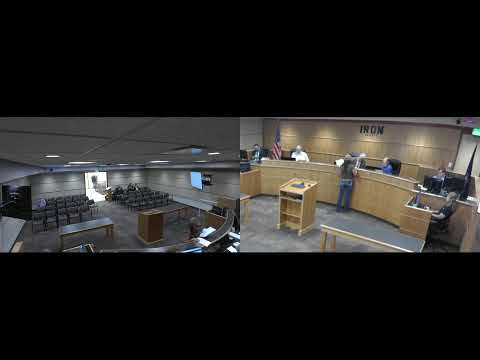
Iron County commissioners on the morning of a July 2025 meeting approved a set of land-use code amendments and accompanying general-plan tier and zoning changes intended to limit septic-system density near Summit and Newcastle and protect the county’s groundwater. The board also approved a settlement and tax-adjustment package to correct a missed incentive payment to Appaloosa Solar 1 LLC, and authorized a Utah Department of Agriculture and Food grant for invasive-species work in Coal Creek.
The actions follow technical studies by the Utah Geological Survey and a groundwater analysis used to set a nitrate-based threshold for the areas under review. County planning staff told the commission that the studies model how many septic systems each study area can sustain before local well nitrate levels increase by a measurable amount; the planning presentation tied proposed lot-size and zoning changes to those findings.
“This is the result of a lot of study,” Reid, county planning staff, told the commission during the public hearing and presentation. He directed residents seeking the underlying reports to the Utah Geological Survey website: “If you just type in Utah Geological Survey, then they’ll have a link there for recent studies, and they’ll list all the studies that they’ve done. You can go and click on that and get the whole report,” Reid said.
Why it matters: Planning staff and commissioners said the changes aim to reduce the risk of long-term groundwater contamination from a growing concentration of septic systems. The county relied on a 2005 Central Iron County Water Conservancy District study and more recent, site-specific sampling that established baseline nitrate levels and modeled how much…
Already have an account? Log in
Subscribe to keep reading
Unlock the rest of this article — and every article on Citizen Portal.
- Unlimited articles
- AI-powered breakdowns of topics, speakers, decisions, and budgets
- Instant alerts when your location has a new meeting
- Follow topics and more locations
- 1,000 AI Insights / month, plus AI Chat