Get Full Government Meeting Transcripts, Videos, & Alerts Forever!
Get email alerts on the Sign Code topic
No spam. Unsubscribe anytime.
North Bend planning commission reviews draft sign-code prohibitions, exemptions and materials
Summary
The Planning Commission reviewed an initial draft of sign-code changes including prohibitions, exemptions, material standards and enforcement language. Staff will send the draft to legal, incorporate public and business feedback and return a revised draft at the next meeting.
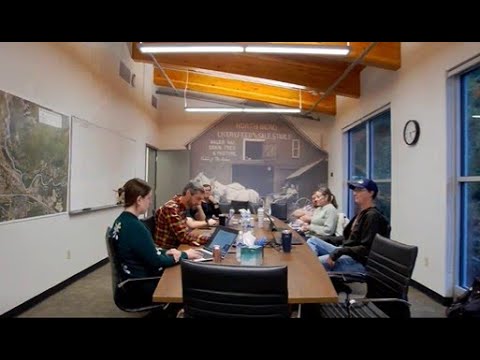
The North Bend Planning Commission reviewed the first public draft of proposed revisions to the city sign code at a meeting focused on prohibitions, exemptions, definitions and material standards. Planning staff presented the draft and sought commissioner feedback; no formal action on the code was taken.
The draft covers topics ranging from mobile advertising and vehicle signs to corporate flag size limits, reader-board allowances, material restrictions and rules for signs attached to utilities and public features. Planning staff said the session was an initial review intended to collect questions and to refine standards before a legal review and subsequent drafts.
"We are not looking for a motion to pass anything. This is just to get some initial feedback on some critical sections of the code," planning staff member Seth said during the presentation. He told the commission staff will incorporate the comments, submit the packet to city legal for review and bring a revised draft back to the commission in the coming month.
Why it matters: sign regulations affect business identification, public safety and the city’s historic character. Commissioners pressed staff for clearer, objective criteria in places where the draft gives the director or city engineer discretionary authority. Several commissioners recommended replacing open-ended language with specific standards so the public and businesses know how determinations will be made.
Discussion highlights
- Outreach and schedule: Staff reported a business survey posted to the Snoqualmie Valley Reporter and local social channels; roughly 10 responses had been received when checked and the survey was scheduled to close the following Wednesday. The commission was told a fuller public-notice and outreach plan includes the Chamber of Commerce and the Downtown Foundation.
- Mobile and vehicle signage: The draft carves out exemptions for signs that are integral to vehicles used in commerce (for example, a food-truck logo). Commissioners asked for clearer time-based language to distinguish short-term use (bookmobiles, delivery vehicles) from vehicles used as mobile billboards parked in place for prolonged periods. Commissioners suggested a simple time threshold (for example, a 24‑hour limit) for when parked, advertising vehicles become regulated rather than exempt.
- Flags and corporate flags: The draft exempts patriotic or corporate flags from the sign code but commissioners raised concerns about very large corporate flags used as advertising. The draft includes a reference to tube/feather flags exceeding 60 square feet; commissioners asked staff to clarify whether the 60‑square‑foot limit applies only to business flags and to add a size limit on corporate flags to avoid oversized commercial displays.
- Materials and durability: The draft proposes prohibiting certain materials such as aluminum composite material (ACM) for outdoor use; staff said the intent is to discourage lower‑durability panels that deteriorate quickly. Commissioners asked for a narrow, objective standard (durability/resistance to weather) and for explicit exceptions for signs in the historic district—where glass and neon are historically appropriate—so that protected historic signs are not inadvertently barred.
- Reader boards and electronic signs: Commissioners and staff discussed retaining grandfathered reader boards and marquee signs already present in North Bend while clarifying which modern digital reader boards would be permitted. Staff said older references in the current code use different terminology and will be updated.
- Traffic‑safety and imitation signs: The draft prohibits signs that imitate traffic-control devices. Commissioners recommended simplifying the language so it bans signs that imitate official traffic signs or signals rather than listing sample words ("stop," "danger") that could be construed as examples rather than an exhaustive list.
- Enforcement and discretion: Multiple commissioners asked that where the draft gives decision authority to a "director" or "city engineer," the code specify clear standards those officials must use (for example, measurable sight‑triangle dimensions or reference to existing traffic‑safety standards) to avoid arbitrary application and to make appeals and expectations transparent.
- Nonconforming signs: Staff reiterated existing code principles: legally nonconforming signs generally may be maintained but not enlarged, and abandonment (more than one year without use) typically ends nonconforming status. Commissioners asked staff to identify major nonconforming signs around town during the next review so property owners know how the draft would affect them.
Direction and next steps
Planning staff said they will: incorporate commissioner feedback into a revised draft of definitions, prohibitions and exemptions; submit the package to city legal for initial review; circulate revised materials and the business survey results to the commission; and return with an updated draft at the next meeting. "I would expect at this time for the fifth, I would expect definitions, prohibitions, and exemptions to come back with legal feedback and all of your feedback that I've received so far incorporated into it," Seth said.
Votes at a glance
The commission approved the minutes from the Sept. 17, 2025 meeting by voice vote; the record shows the motion carried with all present voting in favor. No other formal votes on the sign‑code draft were taken.
Context and background
Commissioners and staff noted the existing code had been revised in part in 2016 but includes terminology and provisions that staff say are out of date. Commissioners referenced the need to ensure the new code is constitutionally content‑neutral (citing the Supreme Court decision Reed v. Town of Gilbert, 2015), and requested that staff coordinate with legal on First Amendment/time‑place‑manner issues. Staff indicated the sign code rewrite will proceed in stages, with administrative and enforcement standards and later, zone‑ and use‑specific design standards to follow.
For now, the draft remains under discussion; staff urged interested businesses and residents to review the posted materials and provide written feedback before the next commission meeting.