
Community partners expand pantries, mentoring and navigation for students facing housing instability
Get AI-powered insights, summaries, and transcripts
Subscribe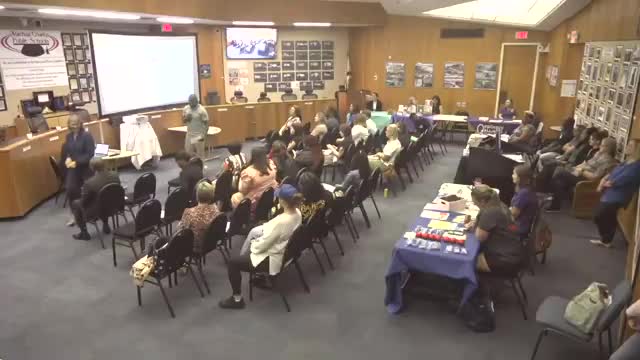
Summary
Nonprofit and county agencies at an Alachua County Public Schools event described coordinated services for students experiencing homelessness, including school pantries, mentoring, paramedicine outreach, and referral services to reduce barriers to attendance and health care.
Several community organizations described programs that support students and families experiencing housing instability at a homeless student awareness event hosted by Alachua County Public Schools.
"At 1 Family Community Resource Center, our mission is simple but powerful: to meet people where they are, connect to resources they need, and empower them to build stronger, healthier futures," said Jarell Whitehead, founder of Strong Minded Mentoring and a representative of 1 Family Community Resource Center.
United Way's director of community impact, Maddie Fleming, framed early literacy as prevention: "Children who do not read proficiently by the end of third grade are 4 times more likely to drop out of high school," Fleming said, describing United Way's Campaign for Grade Level Reading and localized interventions such as Reading Pals and book access services.
Food access and school pantries Shara English, associate executive director of Bread of the Mighty, described food‑bank efforts and school pantries. She said school pantries and student‑run pantry programs aim to reduce stigma and make food available where families and students already gather. "We want to be where the clients are," English said. She noted the food bank now partners with dozens of nonprofits and operates pantries in multiple schools; funding for fresh produce previously supported by federal grants has declined and local organizations are seeking alternative sources.
Health, case navigation and reentry supports Krista (Gainesville Fire Rescue) described a community paramedicine program that meets families at shelters, encampments and other locations to assist with paperwork, health care connections and insurance enrollment. Officer Star Pittman and Officer Boston described a jail reentry "Change" program that helps people leaving incarceration connect to employment, housing and services that also affect student households.
Mental health and schools Demira Hopkins, district mental health coordinator, emphasized the role of counselors and social workers in providing stability and said community partners are essential complements: "Everyone is fighting a battle no one knows about," Hopkins said, urging attendees to stay alert for students who show silent indicators of housing instability.
Other partners and resources Speakers also described: school transportation coordination, bus passes, the Child's Home Society and Hazel Healthcare MOUs, mobile dental services via the University of Florida College of Dentistry's Saving Smiles program, family resource centers, the 2-1-1 community referral line and Gianna's Place's housing and support for student mothers. Presenters encouraged attendees to contact program staff or visit partner tables after the event.
Ending Speakers asked community members to continue volunteering, donating and partnering so schools can keep students fed, healthy and in class.