
Des Moines County advances draft wind and solar siting rules with new wildlife protections
Get AI-powered insights, summaries, and transcripts
Sign Up Free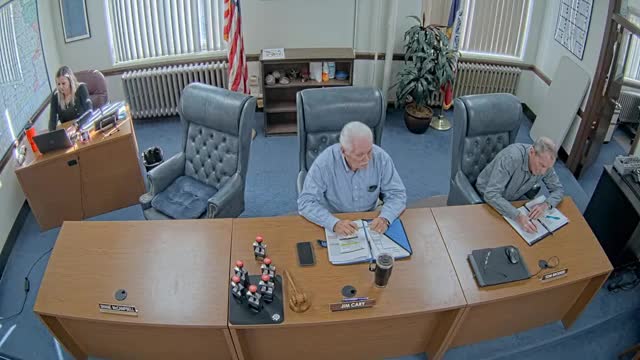
Summary
Supervisors and staff reviewed edits to a draft wind and solar siting chapter that adds long‑term sustainability standards for wildlife, a baseline for predicted wildlife mortality, multi‑year monitoring and required consultation with county, state and federal conservation agencies. Public commenters raised concerns about bats and turbine impacts.
Des Moines County supervisors and planning staff on Oct. 21 reviewed revisions to a draft wind and solar siting chapter that add specific wildlife protections, set monitoring timeframes and require consultation with conservation agencies before projects proceed.
The changes discussed at a public work session target — among other items — long‑term sustainability for wildlife populations in the county, a requirement that developers document consultation with county, state and federal conservation entities about endangered species and habitat, and a baseline predicted mortality rate to be used for post‑construction monitoring and mitigation.
County planner Jared (presenter) told the board the revisions were prompted by comments from the County Conservation Board and other reviewers. “We clarified that the standard is whether a project would negatively impact the long‑term sustainability of wildlife populations in Des Moines County, and we added examples such as the Mississippi Flyway, active and inactive bald eagle nests and maternity and foraging habitat for endangered bats,” Jared said.
Under the revised draft, developers must include predicted mortality rates for applicable wildlife species in permit applications; the post‑construction monitoring plan would require independent, third‑party monitoring for at least three years after construction. If observed mortality exceeds the predicted baseline, the owner or operator must propose and implement mitigation measures — including temporary shutdowns, design modifications, deterrent technologies, changes to lighting or “feathering” blades to reduce rotational force — and consult with conservation entities before implementation.
The draft was also changed to emphasize consultation with named agencies. Jared said documentation should include “any specific recommendations from the aforementioned entities regarding proximity between the project site and relevant wildlife habitat sites.” The draft now references federal statutes that commonly shape project review: the Endangered Species Act, the Bald and Golden Eagle Protection Act (referred to in the meeting as the Eagle Protection Act) and the Migratory Bird Treaty Act.
Board members and staff discussed how strict, fixed setbacks — for example, the Conservation Board’s earlier suggested figures of 10 miles from the Mississippi River, three miles from some habitats, or five miles from eagle nests — could effectively preclude development across much of the county and might prompt legal challenges if the county has not adopted broader zoning. Jared said that concern led staff to prefer a consultative approach that relies on conservation agencies’ site‑specific recommendations rather than blanket, county‑wide setbacks.
The draft also adds a technological‑risk evaluation requirement for older or uncommon turbine models. Instead of using an arbitrary age cutoff, staff proposed requiring a licensed third‑party engineering evaluation at the developer’s expense to determine whether a turbine model is “novel or experimental” for local conditions and whether it meets the county’s operational safety and wildlife‑protection expectations.
Public comment addressed the wildlife risks. Charles Tomkinson of Yarmouth urged the board to consider bat mortality, saying wind turbine blades and vortices posed a “killing field” for bats and argued the county should take that risk into account. Allison Moore, near Yarmouth, asked whether the Board of Health would make a formal recommendation; a county public‑health speaker said the Board of Health planned to invite a rural utility service representative to its November meeting and may weigh in if it chooses.
Staff told the board they will compile the latest edits into a complete updated draft. Jared estimated that compilation would happen within one to two weeks and that the board could schedule a final work session or next steps after reviewing the consolidated draft.
The work session included sustained discussion and several technical revisions but produced no final permit decisions; the meeting record shows staff will return with an integrated draft for the board to consider in a future session.