Get Full Government Meeting Transcripts, Videos, & Alerts Forever!
Get email alerts on the Invasive Species Milfoil topic
No spam. Unsubscribe anytime.
Volunteers propose mechanical harvest on Namasket River to remove invasive Eurasian milfoil
Summary
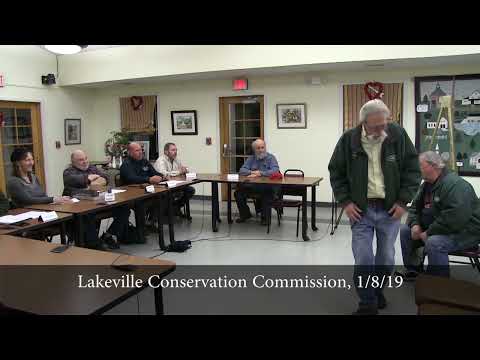
A group of volunteers from the Herring Fisheries Commission told the Town of Lakeville Conservation Commission that they plan a mechanical harvest this year to remove dense stands of invasive Eurasian milfoil from a slow-moving stretch of the Namasket River.
A group of volunteers from the Herring Fisheries Commission told the Town of Lakeville Conservation Commission that they plan a mechanical harvest this year to remove dense stands of invasive Eurasian milfoil from a slow-moving stretch of the Namasket River.
The volunteers said the targeted section has trapped fish in low-water events and contributed to oxygen loss and localized fish kills. "This is a sample to determine whether or not this mechanical harvester is practical," said Ryan Burgess, a member of the Herring Fisheries Commission, who described prior fish mortalities and the weed's rapid spread.
Why it matters: Commission members and volunteers said the milfoil is expanding across streams in the region and could affect runback for herring and other species. Commission members raised concerns about downstream effects, nearby municipal wells and the river's role as the border between two towns.
What the project would be: The volunteers said they plan to use a conveyor-equipped mechanical harvester that pulls plants by the roots, brings them onto shore and transports the material offsite for composting. They described the riverbed in the affected stretch as thin, mucky soil rather than sand and gravel and estimated the dense patch at about 100 yards at most.
Permitting and process: The presenters said they will file an ecological restoration notice with the state wetlands/rivers program and that Outback Engineering (represented by Lee) would prepare the application package. They also said the state wetland/rivers staff told them it did not matter which municipality files because the state reviews the project. The group asked to keep the conservation commission informed so members can participate in hearings and raise conservation concerns.
Funding and partners: The volunteers said multiple municipal bodies have provided interim funding: the town of Middleborough gave $5,000, the town of Lakeville gave $5,000 at town meeting, and the New Bedford water department provided $5,000. Presenters said they had spent money on engineering reports and river profiles to support the filing.
Options considered and constraints: The group said chemical herbicides were not recommended for this segment of flowing river because of downstream water-supply wells and other aquatic vegetation; they described chemical treatment as effectively ruled out for this location. They also discussed potential follow-up maintenance strategies such as localized fabric barriers and periodic mechanical spot treatment if the initial harvest proves workable. Presenters emphasized the experiment-like nature of the first river use of the harvester, noting the equipment is commonly used in lakes and ponds but not in rivers.
Access and logistics: The volunteers identified three possible offload/access points, including a launch at Bridge Street and an old boat-launch site near Maxim's Orchard. They said they are negotiating at least one landowner agreement for offloading and that material would be allowed to dewater and be removed from the wetland area for composting. Commission members asked about sediment disturbance, the potential for fragments or seeds to move downstream, and the timing of work (typically late summer/early fall when water is lower).
Commission response and next steps: Commission members expressed general support for the proposed approach and asked to be kept informed of the filing timetable. Commission member Joe asked whether the commission could waive filing fees for intermunicipal applicants; a staff reply noted fee waivers typically require the applicant to be a municipality or an arm of a municipality. Presenters said they will proceed with preparing the restoration filing and coordinate with Middleborough and state staff.
Ending: The presenters said they will keep the commission updated as the filing proceeds and will notify members of hearing dates so the conservation commission can comment. "We'll keep you informed," one volunteer said. "Any concerns, please let us know."