Get Full Government Meeting Transcripts, Videos, & Alerts Forever!
Get email alerts on the Economic Development topic
No spam. Unsubscribe anytime.
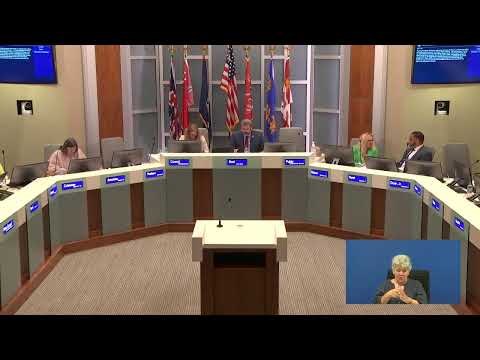
Metropolitan Council approves 1¢ sales tax for LSU Economic Development District after heated public debate
Summary
The Metropolitan Council voted to authorize a 1% sales-and-use tax within the newly created LSU Economic Development District after public comments split between supporters who said the tax will fund campus-area improvements and opponents who argued it carved out voters and shifted burdens to nearby businesses and students.
The Metropolitan Council of the City of Baton Rouge and Parish of East Baton Rouge voted to approve a 1% sales-and-use tax for the LSU Economic Development District (EDD), authorizing the parish to levy the tax and begin collections as provided by the enabling state statute.
The council approved the item on a motion by Councilwoman Carolyn Coleman, seconded by Councilman Justin Hudson; the motion carried with no recorded roll-call objections. The ordinance authorizes the levy and assessment pursuant to the statute cited during the meeting (referenced as Louisiana Revised Statutes 33.938.76(e)(2)(b) in the agenda text) and implements the district boundaries established by the state legislation that created college economic development districts.
Supporters said the tax will let the district collect locally generated receipts and reinvest them in the district. Charles Landry, speaking as a volunteer with interest in LSU’s neighborhood, told the council the EDD “started over 8 years ago” and urged approval so the district can pursue projects the university and adjacent commercial areas need. John Enquist, who identified himself as a member of the LSU EDD board, said the district has been formed by the legislature and “there is no use been determined right now. That will happen at a future meeting. And it will be a public meeting.” Jill Kidder of Visit Baton Rouge said the EDD and related projects would help make the downtown and campus areas more competitive for conventions, events and workforce retention.
Opponents urged delay or rejection. Darryl Glasser said the board that would govern the funds had “not even been formed yet” and raised concerns that the district would protect developers rather than small business owners. Former state senator Woody Jenkins warned council members the proposal may violate the state constitution’s limit on local sales tax levies and said the district map had been drawn to exclude registered voters: “There will be no registered voters residing in the proposed district,” Jenkins said, adding that existing businesses inside the district “would be subjected to this additional sales tax.” Shirley Bowler and other residents said taxes should be imposed only after a vote of the people and that the district’s design effectively leaves students and non-resident customers paying a tax without local voting representation.
Council staff and finance answered questions about formation and authority. Tiffany Delapos of the finance department explained two formation paths: by local ordinance or by state legislation; the LSU EDD was created by a legislative bill that specified board composition, boundaries and the district’s powers. Delapos also said that, under the statute cited, a sales-and-use tax levied by a college economic development district “may exceed the limitation” in the state constitution, per the wording of that specific enabling law. She told the council that taxes approved by the council would be collected by East Baton Rouge Parish and distributed to the district after ratification by the LSU EDD and that collections would begin on Oct. 1 following ratification.
Council members who spoke emphasized the difference between authorizing the levy now and how district funds will later be spent. Delapos and others said the district’s board — not the council — will decide which projects the funds finance, within the statutory limits. Several speakers noted the statute’s language reserving specific uses, and Delapos pointed the council to subsection (d)(9) of the statute that authorizes public improvement projects for the benefit of the college as an example of authorized uses.
The vote followed more than an hour of public comment and technical exchanges. The council approved the ordinance as presented; council members said the legislative creation of the district limited the council’s discretion over boundaries and governance. Several residents and civic groups signaled they will continue to press for transparency and further review of the district’s plans for spending.
What’s next: After the council’s approval the district must ratify the levy; collections (if ratified) would be scheduled to start Oct. 1. The council noted that future decisions about project selection and spending will be the responsibility of the LSU EDD board and will occur in public meetings run by that board.
This article is based on the council meeting record and on public comments made during the item’s public hearing and subsequent council discussion.