Get Full Government Meeting Transcripts, Videos, & Alerts Forever!
Get email alerts on the Cda Levy topic
No spam. Unsubscribe anytime.
Washington County CDA proposes $7.08 million levy to support affordable housing, preservation and developer loans
Summary
The Washington County Community Development Agency (CDA) proposed a $7,079,361 2026 levy (a 7.8% increase) to support property management, tenant-based rental assistance, a local housing trust (GROW) and preservation and development loans, while noting uncertainty in federal HOME and CDBG funding streams.
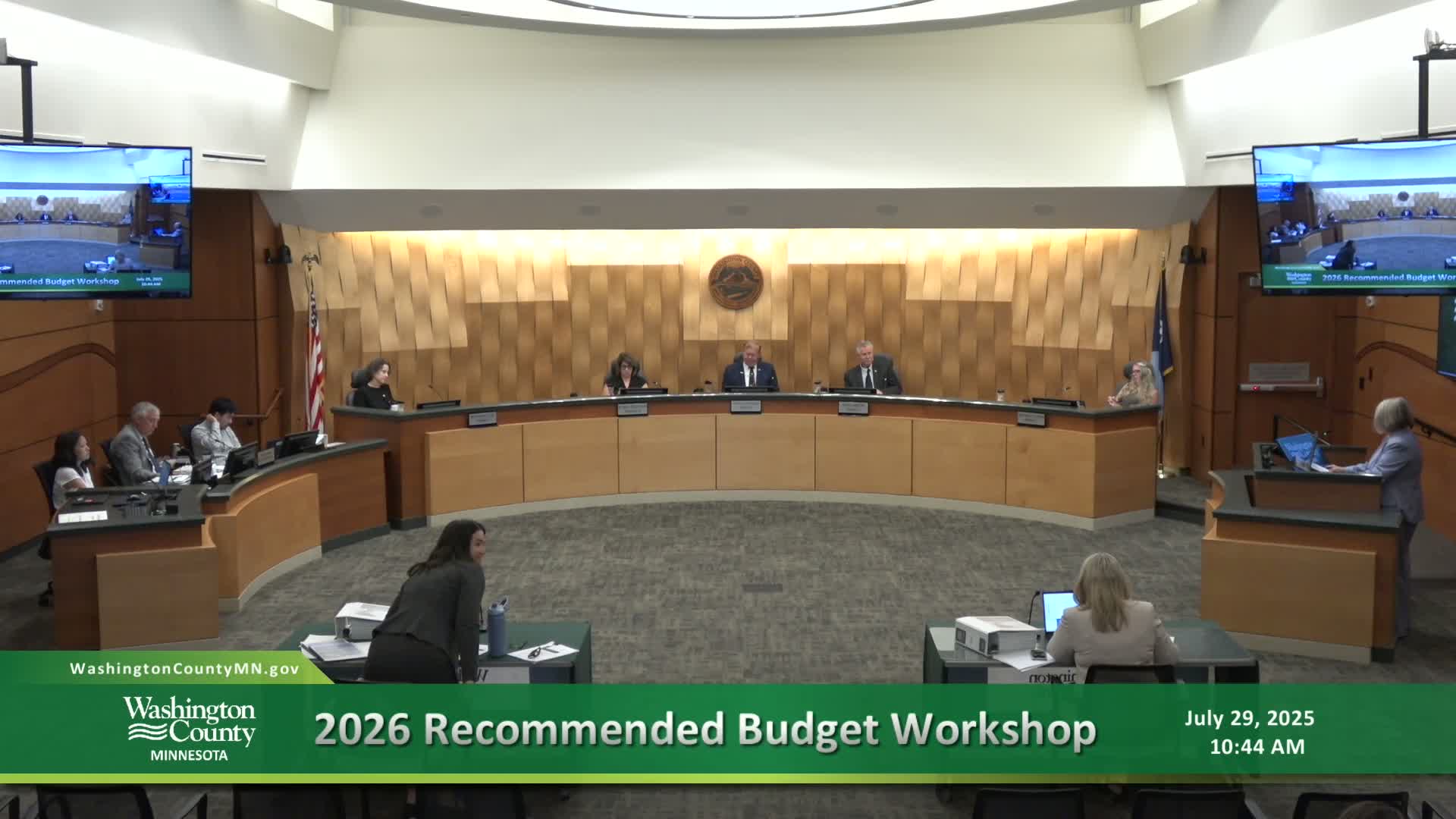
Melissa Taphorn, executive director of the Washington County Community Development Agency, told the Washington County Board of Commissioners on July 29 that the CDA's proposed 2026 levy is $7,079,361, a 7.8% increase from 2025. Taphorn said the CDA operates as the county's housing and redevelopment authority, housing finance agency and public-housing agency and that its levy is separate from the county levy and certified under special taxing-district rules.
Why it matters: the CDA administers tenant-based rental assistance, operates more than 1,150 income- and rent-restricted apartments, runs homebuyer and homeowner programs, and provides loans and tax-credit financing for developer-led affordable housing projects. The agency's budget and levy decisions directly affect the supply and preservation of affordable housing and county-administered housing aid programs.
Key numbers and uses
- Proposed CDA levy for 2026: $7,079,361 (presented as a 7.8% increase). - Total CDA budget presented: about $37,000,000 (includes business-type activities such as property management). - Major revenue sources: ~45% grants (federal and state), ~$10.1 million in rental income, remainder from tax increment, investments and fees. - Levy line items: operations/debt service coverage for CDA apartments (~$1.45M), general fund support for administrative/debt costs (~$149k), housing choice voucher administrative support, $2.0M proposed to the GROW local housing trust for loans and gap financing, and allocations for financial flexibility/ capital improvements and program staffing.
Programmatic priorities explained
- Preservation and new construction: $2.0 million was proposed for expanded housing opportunities through the GROW loan fund to provide subordinated debt and gap financing for developers and to encourage long-term affordability (30-50 year loan terms). Taphorn said CDA has active development interest at multiple sites, including projects that would produce hundreds of units when built.
- Operating needs: Taphorn said property-management costs (insurance and staffing) are increasing and the CDA budget includes a modest tenant rent increase proposal (drafted at 3%, with a cap contemplated at no more than 5%). She said the CDA is managing federal and state program uncertainties and expects that some federal HOME funds are at risk in the federal budgeting process.
- Tenant-based assistance: The CDA administers 284 housing choice vouchers and an additional ~400 portability vouchers for households who moved into the county. Taphorn said HUD administrative fees do not fully cover program costs; the CDA has trimmed some administrative costs because of new state rental-assistance programs that fund administration.
- Local housing aids and city funds: Taphorn described the state local affordable housing aid (LAHA) and state local housing aid (SAHA) funding arrangements and said that for 2026 the county's LAHA estimate used budgeting assumptions similar to 2025. CDA staff said they are coordinating with cities that receive LAHA funds and that several cities have chosen to allocate funds to CDA-administered programs (for example, home repair and gap financing).
Board discussion and next steps
Commissioners asked about program risks tied to federal CDBG and HOME funds and about the CDA's ability to respond quickly to development opportunities and preservation needs. Taphorn said the CDA aims to stay within statutory levy caps (the proposed levy is about 71% of the local cap) and use levy dollars to leverage state, federal and private financing. She asked the county board to provide feedback to the CDA board before the CDA certifies a preliminary levy in August; the CDA expects to return for levy certification in September and final levy in December.
No formal county board vote occurred on the CDA levy at the workshop; Taphorn noted the CDA board approves the CDA budget and sets the levy, then brings that decision to the county board for consent under statutory procedures.