Get Full Government Meeting Transcripts, Videos, & Alerts Forever!
Get email alerts on the Audits Facilities topic
No spam. Unsubscribe anytime.
Sayville auditors report low overall risk; recommend extra-classroom signature controls, updated maintenance documentation
Summary
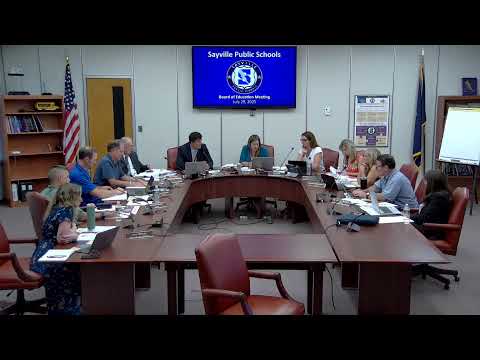
Mary Anne Van Dyne, the partner on the district’s internal audit engagement, told the Sayville Board of Education that the auditors’ annual risk assessment updated 25 of 27 control areas to “low” but identified two areas needing attention: extra‑classroom activity funds and state grant budget adjustments.
Mary Anne Van Dyne, the partner on the district’s internal audit engagement, told the Sayville Board of Education that the auditors’ annual risk assessment updated 25 of 27 control areas to “low” but identified two areas needing attention: extra‑classroom activity funds and state grant budget adjustments.
“25 out of 27 were assessed as low,” Van Dyne said. She said testing of extra‑classroom activities — student clubs and similar funds — found three of 10 receipts lacking evidence of student treasurer sign‑offs and three cash disbursements without evidence that sales tax had been paid, which the auditors assessed as a moderate control risk.
The auditors also reviewed prior‑year recommendations and reported the district had implemented virtually all items except one grant‑related recommendation. Van Dyne said the district had not completed an amendment to its budget as of the time of testing for two state grants (one for about $20,000 and one for about $1,800), putting those grants at risk until the State Education Department approved a budget adjustment.
“It was the status as of the time we did this testing,” Van Dyne said of the grant issue, adding district staff were working to request an amendment from the state.
In a separate, related presentation, auditors reviewed facilities maintenance and capital projects. The team tested 25 capital disbursements, change‑order approvals and contract administration documentation; no exceptions were noted on those tests. Auditors verified required certificates of insurance, architect approvals, prevailing‑wage documentation and SA‑77 final building project filings used to obtain state aid were in place and timely.
The facilities review did identify two documentation gaps the auditors recommended the district address: (1) formal, written documentation of the district’s preventive‑maintenance procedures as required by Board Policy 7100, and (2) an update to the district’s comprehensive maintenance plan, which the auditors noted was last dated July 2020. Van Dyne said district staff reported they had been working in recent months to update practices and records.
Auditors also found several repair‑and‑maintenance expenditures that should have been capitalized but were omitted from the capital‑asset records; they said the district is in the process of updating its capital asset inventory to include the omitted items.
Board members asked timing and implementation questions during and after the presentations. When one board member asked when the report had been prepared, Van Dyne said the risk assessment reflected testing “as of 12/31/2024.”
The board approved the audit‑committee minutes as presented later in the meeting and moved on to business‑section items.
Why it matters: The internal audit findings show broad control strength across the district’s financial and operational processes while highlighting specific, actionable gaps that could affect grant eligibility, compliance with tax rules on extra‑classroom activities and the accuracy of capital‑asset records. The facilities recommendations, if implemented, protect state aid flows and help prioritize maintenance spending to avoid costlier capital work in the future.