Get Full Government Meeting Transcripts, Videos, & Alerts Forever!
Get email alerts on the Economic Development topic
No spam. Unsubscribe anytime.
Port Arthur council approves ballot language asking voters to let its Type A EDC fund "quality of life" projects
Summary
Port Arthur voters will decide Nov. 4 whether the city's Type A Economic Development Corporation may use existing sales-tax revenue for Type B projects such as affordable housing, recreation and water facilities.
The Port Arthur City Council on Aug. 12 approved ballot language asking voters on Nov. 4 whether the city's Type A Economic Development Corporation may use existing sales-and-use tax revenue to undertake projects normally authorized for Type B EDCs, including affordable housing, recreational/community facilities, water supply and conservation, new or expanded business enterprises that create or retain primary jobs, and sports venues.
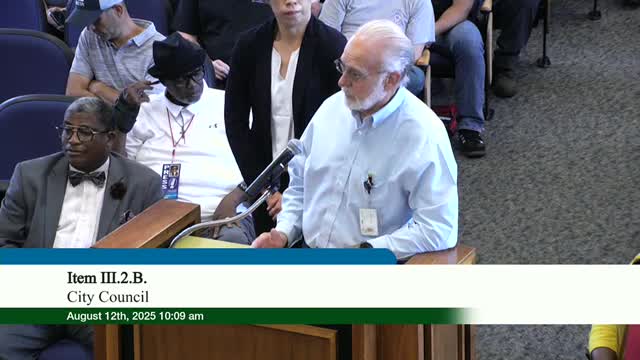
City Attorney Roxanne Paesco Tornow explained the legal basis under the Texas Local Government Code. "A type a can do a type b project if the voters authorize it," she said, summarizing section 504.152 and cross-referencing chapter 505 projects. Paesco Tornow showed council video excerpts from prior joint council/EDC discussions and cited two outside law-firm opinions that say a Type A corporation can be granted Type B authorities on a vote of the municipality.
Why it matters: The change would not increase the sales tax or create a new levy, officials said. Port Arthur's Economic Development Corporation currently receives a half-cent (.005) of sales tax. The ballot language the city approved would allow those existing funds ("including any amount previously authorized and collected") to be used for the enumerated Type B categories if voters approve.
Council concerns and clarifications: Multiple council members asked whether the ballot language should name dollar limits or specific projects so voters can "discern the limits" of the authorization. Mayor Pro Tem Dusett read the statute that requires a proposition to "clearly describe" the project or categories so voters understand the limits. Legal staff said the language can be tightly limited (for example by boundary, project or dollar cap), but the version before the council used broader language that would allow the EDC to work case by case within the enumerated categories.
Education and transparency: Council members emphasized voter education. Councilmember Beckham asked for a public-education plan because of voter apathy and reported social-media misinformation. City officials said they will coordinate information and hold town halls but noted the city may not use public resources to advocate for or against the proposition; staff can educate voters on the content of the measure.
Next steps: City staff will transmit the approved ballot language to the Secretary of State and proceed with the election schedule. If voters approve the measure, EDC proposals would still require the EDC board process and city-council approval for each project; citizens retain petition rights that can place approved projects before voters in certain circumstances.
Ending: The council framed the measure as a tool to broaden the EDC's ability to invest in "quality of life" projects if Port Arthur voters agree. Officials said they will make educational materials and town halls a priority before the Nov. 4 election.