Get Full Government Meeting Transcripts, Videos, & Alerts Forever!
Get email alerts on the Senior Services topic
No spam. Unsubscribe anytime.
Senior advisers review eviction process, caregiver supports and private advocacy services
Summary
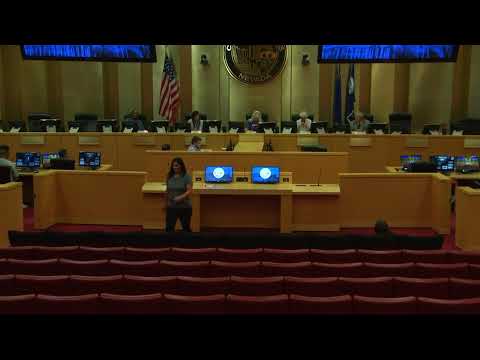
At the Aug. 7 Las Vegas Senior Citizens Advisory Board meeting, city staff and a private senior advocate outlined tenant-eviction rules for homeowners, limits on caregiver compensation, and services offered by a local private firm helping families navigate health, financial and placement issues.
Las Vegas — City and community speakers at the Senior Citizens Advisory Board's Aug. 7 meeting described recurring problems seniors are reporting involving household occupants who assert tenant rights, and reiterated that state and federal benefit programs set narrow limits on caregiver compensation.
Gregory Gray, management analyst I with the Department of Neighborhood Services, told the board his office has received multiple calls from older residents who allow someone to stay in their home and later find that person refuses to leave. "If you let someone stay in your home past the period of two weeks, they are considered a tenant and you would have to formally evict them from your home," Gray said, adding that eviction requires a court process and can take time.
Gray said the department refers residents to the Southern Nevada Legal Aid Center and the Senior Law Program for help with eviction proceedings and with other issues that can stem from these arrangements, including elder abuse and financial exploitation. He also described cases in which seniors downsized, entered a rapid closing and then had to restart eviction steps because a household member would not leave.
"It does tend to lead to some elder abuse situations, exploitation, isolation," Gray said. He urged seniors to seek legal help early rather than waiting until they face an immediate emergency.
Gray and board members also discussed caregiver supports. Gray said Nevada does not provide a general program that pays family members simply for acting as caregivers. "There is personal care services available through Medicaid...there is a waiver, but it's a lengthy process and it's subject to approval," he said, and noted respite services are available through Medicare, Medicaid and some private insurance but do not function as direct pay to family caregivers.
The board then heard a 45-minute presentation from Rachel West, owner and managing director of Nevada Advocates, a private senior advisory and case-management firm in operation since 2016. West described services her team provides: licensed registered nurses who attend appointments, social workers who assist with Medicaid and disability applications, and fiduciary services including acting as health-care or financial power of attorney.
"We can serve as health care or financial power of attorney...we will help with basic bill pay," West said. She said Nevada Advocates bills privately at $120 an hour, invoiced in 15-minute increments, and noted the firm fields an on-call nurse 24/7 for clients. West said the company sometimes accepts pro bono cases when clients lack capacity and the firm has bandwidth; she estimated several ongoing pro bono matters.
West also described workarounds families can use when a senior lacks capacity but needs help accessing funds. "You can actually sign up through Social Security to become the payee without going through guardianship or power of attorney," she said, describing the Social Security payee process and the requirement that the payee account for how funds are spent.
Board members asked about compensation, capacity and coordination with state programs. Deanna Rear Cameron, chair, noted Medicaid's shortage of case managers and said the board has discussed using work groups to improve pathways to existing funds. Vice Chair Nicole Graham and members praised Nevada Advocates' role in specific cases and said the firm can help families that live out of state.
Votes at a glance The board approved a motion to accept the May 1, 2025, meeting minutes by voice vote; the motion carried. The motion was moved by Member Mosdean. No second or detailed tally was recorded on the transcript.
Why this matters Board members said these issues are frequent and can have serious consequences for older residents' safety and finances. Legal and benefit programs cited by speakers have eligibility rules and procedural requirements that can delay relief, and private advocates said they can bridge some gaps but are not a substitute for public benefits.
Board next steps and logistics Speakers and members urged early legal consultation, documentation of financial and health-care authorities, and use of local resources such as the Southern Nevada Senior Law Program. The board reminded the public the next meeting will be Sept. 4 at a new location and that meeting notices will be posted.
Ending The discussion closed with board members encouraging outreach: make information available in neighborhoods, especially where seniors post requests for help on apps such as Nextdoor, and route callers to appropriate legal and case-management resources sooner rather than later.