Get Full Government Meeting Transcripts, Videos, & Alerts Forever!
Get email alerts on the Public Housing Gilpin topic
No spam. Unsubscribe anytime.
Richmond council directs city attorney to require council approval before RRHA signs master development agreement for Gilpin Court
Summary
After months of resident complaints and a disputed master development agreement, Richmond City Council voted to direct the city attorney to notify the Richmond Redevelopment and Housing Authority (RRHA) that council approval is required before RRHA may enter a master development agreement to redevelop Gilpin Court.
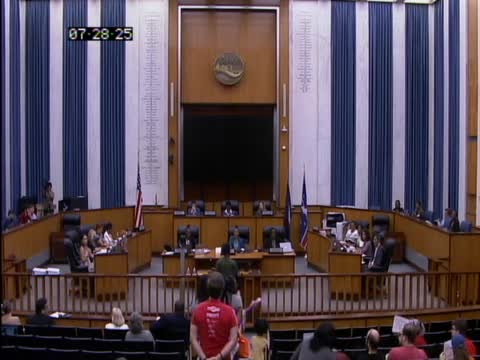
Richmond City Council on July 28 adopted a resolution directing the city attorney to notify the Richmond Redevelopment and Housing Authority that the RRHA must get City Council approval before entering a master development agreement (MDA) for the redevelopment of Gilpin Court.
The action followed extended public comment from Gilpin Court residents and advocates who said they were not informed about the MDA and raised concerns about housing displacement, lack of transparency at RRHA and alleged misconduct by RRHA leadership. Councilmember Kenya Gibson, who sponsored the resolution, said she reviewed documents and cited Code of Virginia language on redevelopment plans to argue the authority needed governing-body approval before implementing an MDA.
Why it matters: Council members and tenant advocates said the decision is intended to protect nearly all residents of Gilpin Court and to ensure local oversight before a public-housing site moves into a privately administered redevelopment process. Supporters called the vote a necessary step to get clarity and to preserve residents’ rights while the city and RRHA resolve conflicting legal interpretations.
What the council debated: Councilmembers pressed for timely clarification because, they said, RRHA leadership appeared to have signed an MDA after the RRHA board voted against transferring Gilpin to the Richmond Development Corporation (RDC). Councilmember Stephanie Lynch warned that private redevelopment without one-for-one replacement of deeply affordable units or a reliable relocation plan could displace large numbers of very-low-income households. Lynch said many Gilpin residents make less than $16,000 a year and that private redevelopment relying on Housing Choice Vouchers could leave residents without feasible housing options.
Tenants and tenant advocates addressed the council during a public hearing. Multiple Gilpin residents testified they lacked clear communication from RRHA, alleged that RRHA offered residents incentives to attend prior city meetings in support of the transfer without explaining the consequences, and described poor living conditions and management failures. Legal Aid Justice Center organizer Omar El-Gaddafi and tenant-organizing representatives said RRHA had a history of audits and litigation and that council intervention was long overdue.
Council action: The council first approved an expedited consideration request and then voted on the resolution. The expedited motion passed and the final motion to direct the city attorney was adopted by voice vote with the members present recorded as voting in favor. President Newbill said the vote would be followed by efforts to get the parties together, including attorneys for the city and RRHA, to clarify precisely what approvals are required and how to proceed for Gilpin and other public housing sites.
Quotes: "According to the Code of Virginia ... an authority shall not implement any redevelopment plan under this law until the governing body of the locality has approved the redevelopment plan," Councilmember Kenya Gibson said. "I reached out to our legal counsel and she agreed" that RRHA's actions raised compliance questions.
Next steps: The resolution directs the city attorney to notify RRHA of the requirement for council approval prior to entering an MDA for Gilpin Court. Councilmembers said they will seek a meeting with RRHA leadership, residents and legal counsel to clarify the legal record and to discuss a path forward intended to preserve affordable units and ensure resident participation.
Ending: Councilmembers and tenant advocates described the vote as a pause to ensure legal compliance and resident protections rather than a block on redevelopment. Several councilmembers emphasized that the city still needs a redevelopment path for aging public housing, but they said the process must include clear approvals, resident engagement and enforceable commitments about replacement housing and relocation plans.