Get Full Government Meeting Transcripts, Videos, & Alerts Forever!
Get email alerts on the Recuperative Care Centers topic
No spam. Unsubscribe anytime.
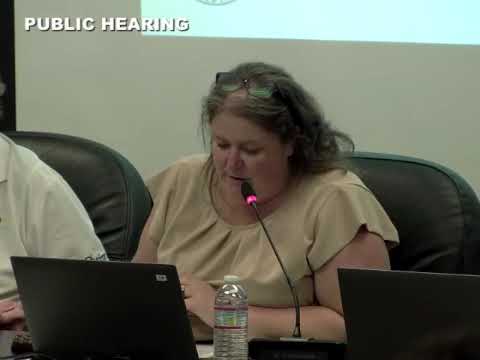
Planning commission pauses decision on Motel 6 recuperative care conversion after public safety, police questions
Summary
The San Bernardino Planning Commission continued an application to convert a Motel 6 into a 200‑bed recuperative care center after commissioners requested written comments from the Police Department and reports from other cities operating similar facilities.
The San Bernardino Planning Commission on a 4–3 vote on Wednesday continued a request to convert an existing Motel 6 at 1960 Ostroms Way into a recuperative care facility, citing outstanding public‑safety questions and a lack of written comment from the Police Department.
The proposal, filed as Conditional Use Permit 25‑05, would allow the operator to convert the motel into a short‑term post‑hospital recuperative center with up to about 200 beds (the applicant said the building contains 104 rooms and the CUP seeks flexibility up to 200 beds). The facility would accept patients referred by hospitals or health plans for a typical stay from 1 to 90 days, with an option to use secure housing support for up to six months while navigation services help transition residents into permanent housing.
Staff told the commission it recommends approval and prepared Resolution 2025‑027 along with CEQA findings that the project is categorically exempt pursuant to CEQA Section 15301 for existing facilities. The applicant, representing National Health/Housing Alliance (NHHA), described on‑site services that would not include direct medical procedures but would provide medical coordination, medication supervision, case management, behavioral‑health support and transportation.
Why it matters: commissioners pressed the applicant and staff on neighborhood impacts, security, medical supervision and the city’s ability to track outcomes. Several commissioners said they want formal written comment from the Police Department and examples or follow‑up reports from other cities where the operator runs similar programs before voting.
Details of the proposal and discussion
- Capacity and layout: The operator described 104 rooms on the site and said the CUP seeks authority for up to about 200 beds; they said the program will ramp up over time and that portions of space will be used for offices and on‑site services rather than immediate full occupancy.
- Staffing and services: Applicant representatives said the facility would employ about 25 staff, include 24/7 on‑site security and have clinical supervision provided by partners. Connie Bartlett, identified as chief medical officer/medical director for WPC, said the site would “help them with medication delivery,” connect clients to primary care and coordinate home health services and transportation. The applicant emphasized that clients are referred by hospitals or health plans: “Clients are not able to self refer or come to the program and ask to be part of it. They do need to be referred by hospitals,” the applicant said.
- Safety and training: The operator described a cadre of “stabilization and safety counselors” who receive extensive de‑escalation and behavioral‑health training from the program’s clinical leads. Psychiatrist Dr. Clayton Chow said staff complete an intensive training curriculum and that the operator has low rates of emergency calls at comparable sites.
- Parking and circulation: Staff said the site provides 105 parking spaces (including five ADA stalls), and that most clients are ambulatory and transported by program vans, so parking impacts are expected to be lower than a motel use.
- Community concerns: Neighbors and commissioners raised concerns about guests currently living at the motel, potential displacement, the presence or absence of medical care on‑site, and whether the site would create repeat hospitalization cycles if housing is unavailable. A commissioner asked for crime or calls‑for‑service data from the operator’s other locations; the applicant invited commissioners to tour a Long Beach site and said they had community partners and housing navigators working from day one.
Police Department input and next steps
Staff told the commission it had sent the project to the Police Department but had not received a written response. Several commissioners said they expect the Police Department to provide a formal comment for the planning record. Commissioner Daley made a motion to continue the item until staff can produce either a Police Department response or a statement that PD has no comment, and until staff brings back comments from other cities where the operator runs recuperative care sites. That substitute motion passed 4–3. The commission set the item for return at the July 8 meeting.
The vote on the substitute motion was recorded as: Chair Sherrick — yes; Vice Chair Quill — yes; Commissioner Galante — yes; Commissioner Pratt — yes; Commissioner Casey Daley — no; Commissioner Orlando Garcia — no; Commissioner Ivan Garcia — no.
No permit or CUP was approved; the commission’s action was to require additional information and continue the public hearing.
Applicants and partners quoted in this report: Elizabeth (NHHA, applicant representative); Debbie Wolford (Executive Director, Encompass Housing); Connie Bartlett (Chief Medical Officer/Medical Director, WPC); Dr. Clayton Chow (psychiatrist/psychologist; program training lead).