Get Full Government Meeting Transcripts, Videos, & Alerts Forever!
Get email alerts on the Building Codes topic
No spam. Unsubscribe anytime.
Norman adopts permanent ‘visitable dwelling’ ordinance to encourage aging‑in‑place homes
Summary
The Norman City Council voted unanimously Aug. 12 to adopt a permanent ordinance establishing a visitable‑dwelling incentive program that offers a modest permit fee credit to builders who include basic accessibility features in new single‑family, two‑family and ADU construction.
The Norman City Council on Aug. 12 adopted an ordinance making permanent a city program that gives builders a modest permit‑fee credit for constructing “visitable” homes with basic accessibility features intended to help residents age in place.
The ordinance, adopted unanimously on final reading, formalizes a program staff has run by resolution for several years and centers on homes built with features such as no‑step entries, wider doorways, minimum bathroom backing for future grab bars and wider kitchen pathways. The council vote followed a presentation by Greg Clark, the city’s development services manager.
Clark said the program is voluntary and designed to “give back” to builders who choose these features. He described the mechanics: builders indicate interest when they apply for a building permit, the city waives the building permit fee (charged currently at 14 cents per square foot), and inspectors perform a single verification inspection near project completion. Clark used a 3,000‑square‑foot example to show the credit—about $420 at the current fee rate—and noted builders may either correct deficiencies or repay the waived fee if a home fails verification.
“It’s called the Visitable Dwelling Program,” Clark said during his presentation. He told council the changes typically involve low incremental cost—wider doors, a no‑step concrete entry, wall backing in bathrooms—and that the city has run the program by resolution since a citizen ad‑hoc committee first proposed it in 2019.
Two members of the public spoke during the item. Cynthia Rogers of Ward 4, who said she had spent money retrofitting her home, urged the city to consider ways to help existing homeowners make small changes so they can remain in place. “I very much appreciate this, having spent a bunch of time making my home more visible,” Rogers said, adding, “Fortunately, it’s a ranch, so no steps.”
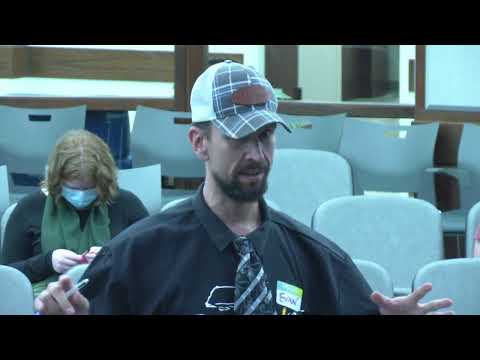
Resident Evan Dunn raised questions about whether the financial incentive is large enough and asked what participation rate the city anticipates. “I love incentives, and I’m not sure quite if this is enough of an incentive,” Dunn said.
Clark told council staff will continue outreach to builders, including planned “lunch and learn” sessions, and that the city has sufficient experience administering the program to make it a permanent ordinance rather than renewing it by resolution.
Councilors cast unanimous support for the ordinance on second reading and then again on final reading as a whole. The ordinance adoption was recorded as passing unanimously.
The ordinance adopts standards aligned with the city’s current building code references (the city has adopted the 2018 International Residential Code and refers to ICC A117 accessibility standards) and incorporates the program elements the development services department has been enforcing as a voluntary credit. The city’s stated goals are to increase the stock of homes that allow easier access for people with mobility limitations and to expand aging‑in‑place options.
Councilors and staff said the program is intended to be a low‑cost, incremental tool—one piece among broader housing and accessibility approaches the city could pursue. Clark emphasized the city will monitor participation and may adjust outreach and program details based on builder response.
The ordinance becomes city policy upon adoption; council did not specify additional funding or a timeline for a participation target.
Votes and next steps: the council adopted the ordinance unanimously. Staff said it will continue builder outreach and training to increase program enrollment.