Get Full Government Meeting Transcripts, Videos, & Alerts Forever!
Get email alerts on the Budget Process topic
No spam. Unsubscribe anytime.
Bloomington fiscal committee presses for clearer program inventory, schedules follow-up on 2026 budget
Summary
Members of the Bloomington Common CouncilSpecial Fiscal Committee discussed next steps for implementing outcomes- and priorities-based budgeting, reviewed highlights from the mayors and city clerks proposed budgets, set timelines for follow-up and agreed to schedule additional work sessions before the public hearing.
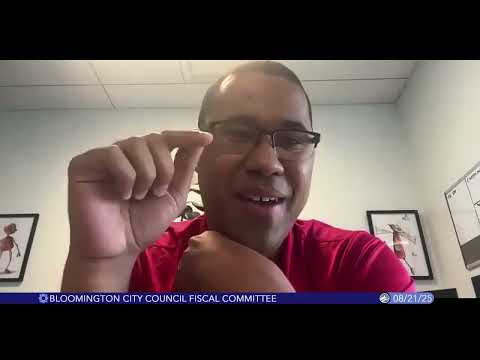
Council Member Isabelle Smith, chair of the Special Fiscal Committee of the Bloomington Common Council, called the committee to order Aug. 21 and led a wide-ranging discussion about how the council should provide meaningful feedback on the 2026 budget as the city implements an outcomes- and priorities-based budgeting process.
The committee focused on three near-term issues: standardizing the program inventory that underpins the new budgeting approach, producing the data council members say they need to make spending decisions, and setting a schedule to deliberate before the statutory public hearing.
"The first step that we have to get right is the program inventory. And this is super tedious work," said Gretchen, the city controller, describing the need to allocate every dollar to a program in the new system. She told members the inventory will require the council and departments to decide how granular programs should be, and that some departments (for example, Parks) already work in larger program groupings while others record activity at a much finer level.
Committee members repeatedly returned to the same practical problem: the financial system the city uses, New World, tracks line items and divisions but does not automatically roll those costs up into program-level totals that show the full cost of a program (including staff time). "If you want to know what a program costs to run ... New World is not super efficient for figuring that out," a budget staff member told the committee.
Members asked for clearer, comparable views of costs and outcomes. Council Member David Rallo said he is most interested in prioritizing capital projects versus maintenance: "A new fire station to me is a very high priority," he said, and asked that the administration produce a ranked list of capital projects, their stage and discretionary priority so the council can weigh them against recurring maintenance needs.
Committee members and administration staff described an iterative approach: departments should supply program inventories and staff will work with council to cluster or collapse programs where appropriate so that outcomes can be measured without overwhelming detail. Several members asked that the council be given the specific data they received in past years where it helped decision-making; staff said they will provide those data where available.
The meeting included line-item review of two budgets the committee had not yet examined in detail: the Office of the Mayor and the Office of the City Clerk. Deputy Mayor and mayoral staff walked the committee through the mayors proposed lines, including travel ($15,000 proposed, to cover staff travel when the mayor brings personnel to conferences), an increase in advertising tied to a planned website update, and a shift of roughly $13,000 from subscriptions to sponsorships to stop the mayors office from separately sponsoring events that are citywide. The city clerk explained that printing and ordinance-book costs can spike when the council adopts major code changes and that some statutory requirements (paper copies for certain records) remain in effect.
The committee identified several follow-ups: staff were asked to produce (1) clearer program-inventory examples showing two different approaches (departments already prepared contrasting examples for the next meeting), (2) the capital project list with current stage and priorities, and (3) historical line-item data used in prior years that some council members said helped their decisions. Budget staff also told the committee that written responses to council questions are due Sept. 9, the public hearing on the budget is scheduled for Sept. 24, and the council's final vote is scheduled for Oct. 8.
The committee agreed the budget task force will continue longer-term work on implementing outcomes-based budgeting and that the special fiscal committee should plan at least one additional deliberation session before the Sept. 24 public hearing so members can discuss responses to their written questions and identify items they want to prioritize or cut.
In public comment, Chris MJ of the Greater Bloomington Chamber of Commerce urged the council not to cut deferred maintenance and said the chamber supports the direction of the new budgeting work. "This is my chamber stamp approval that you are moving in the right direction," he said.
Procedural action: the committee approved a motion to reorder the meeting agenda to discuss follow-up on the 2026 budget earlier in the session. The motion, moved by Chair Isabelle Smith, passed with recorded "yes" statements from Council Member Esari and Chair Smith; the record does not show a recorded second or a full roll call of all members present.
The committee scheduled follow-up work next week and asked staff to circulate a scheduling poll for an additional deliberation/work session before the Sept. 9 deadline for written responses and the Sept. 24 public hearing.
The meeting closed after a brief review of next steps and the committee's calendar.