Get Full Government Meeting Transcripts, Videos, & Alerts Forever!
SFPUC proposes new net-export valuation for rooftop solar, aims to fund electrification incentives
Summary
San Francisco Public Utilities Commission staff proposed replacing retail-rate credits for exported rooftop solar with an avoided-cost-based valuation for new interconnections, while Clean Power SF and the city environment department discussed permitting, batteries and industry trends during a Commission on the Environment briefing.
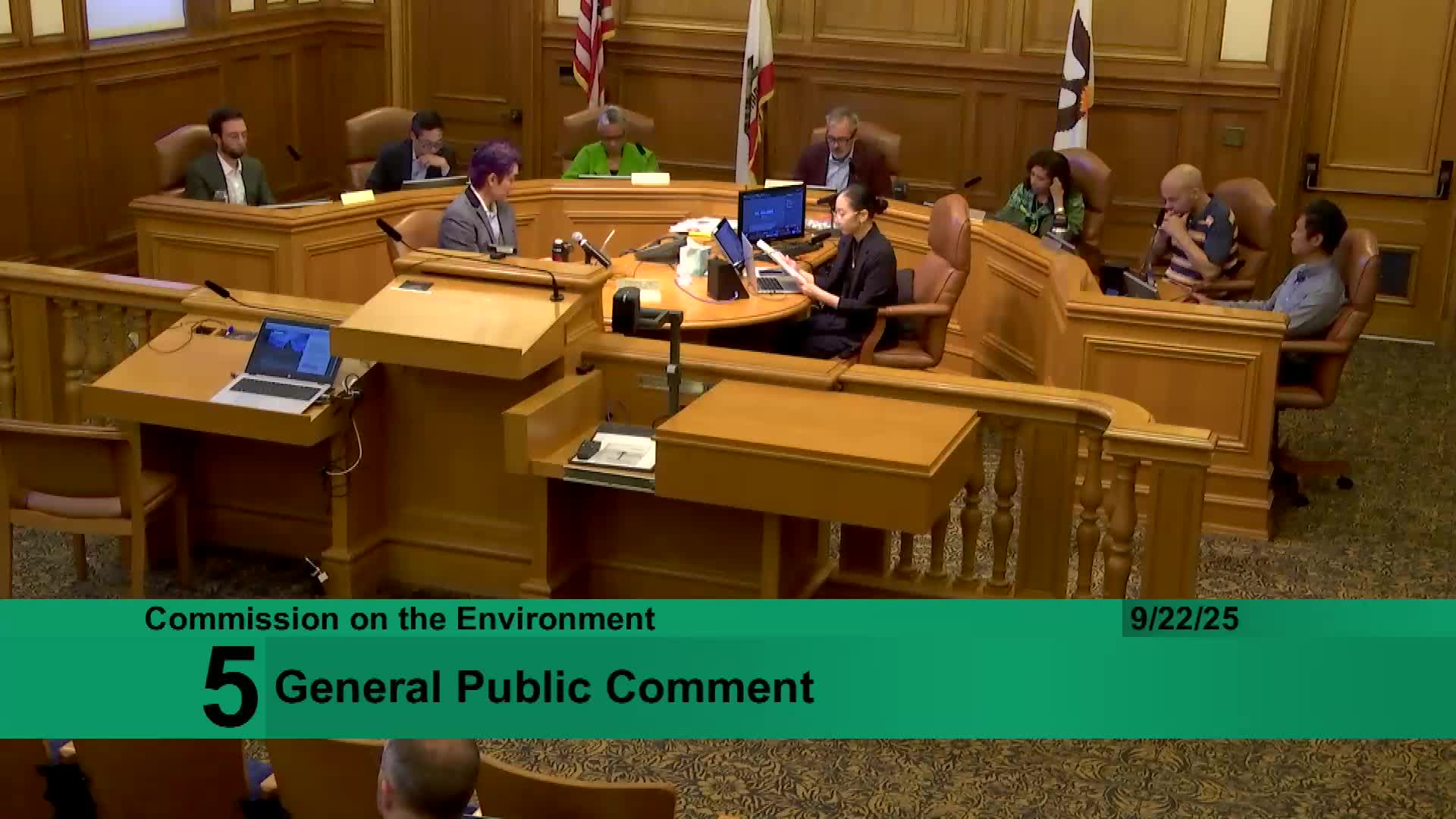
San Francisco Public Utilities Commission staff proposed changes to how rooftop solar exports are credited that would reduce retail-rate payments for surplus midday generation and redirect savings into electrification and storage incentives, speakers told the San Francisco Commission on the Environment on Sept. 22.
The proposal, described by Andrew Bevington, manager of the Clean Power SF customer solutions team at the San Francisco Public Utilities Commission (SFPUC), would limit the new tariff to solar interconnections approved after April 2023 or customers on PG&E’s solar billing plan and compensate surplus exports using a CPUC “avoided cost” calculator rather than full retail rates. "Under NEM we are now paying 12 times the wholesale energy market value of a kilowatt hour," Bevington said, summarizing the mismatch the SFPUC seeks to address.
The change aims to encourage customers to use more of the power they generate on-site — including through batteries and heat-pump technologies — instead of exporting surplus midday solar to a grid that increasingly has low wholesale prices during sunny hours, Bevington said. He said Clean Power SF would include an income-targeted adder for customers on the CARE/FERA programs and invest savings into programs such as a $1,200 bill credit for heat-pump water heaters and a residential battery incentive under development.
Why it matters: The vendor- and permitting-side context and how new export credits are calculated affect homeowner economics, industry jobs and…
Already have an account? Log in
Subscribe to keep reading
Unlock the rest of this article — and every article on Citizen Portal.
- Unlimited articles
- AI-powered breakdowns of topics, speakers, decisions, and budgets
- Instant alerts when your location has a new meeting
- Follow topics and more locations
- 1,000 AI Insights / month, plus AI Chat