Get Full Government Meeting Transcripts, Videos, & Alerts Forever!
Get email alerts on the Animals Chickens topic
No spam. Unsubscribe anytime.
Public speakers urge Bellbrook council to allow backyard hens; council debates survey versus advisory vote
Summary
Several residents urged the council to permit regulated backyard hens. Councilmembers expressed differing views about whether to hold an advisory election, commission a paid survey or move directly to ordinance introduction; no final ordinance vote was taken Sept. 22.
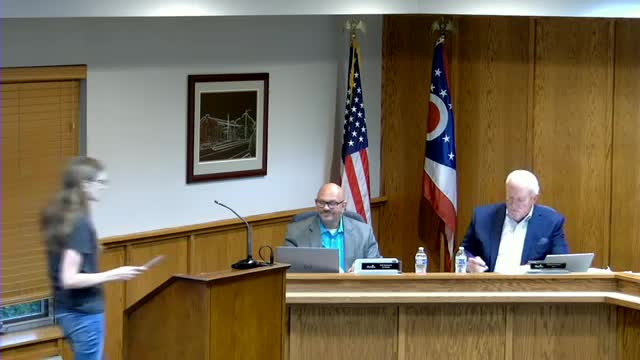
Multiple members of the public and several council members took up changes to Chapter 6.18 (animals) at the Bellbrook City Council meeting on Sept. 22, pressing the council to clarify whether the city will allow small backyard flocks of hens and how the issue should be decided.
Public commenters Rebecca Langdon, James Becker and Charles Truesdell each described reasons they support regulated backyard hens, citing family education opportunities, quiet hens (no roosters), and manageable health and sanitation risks with proper coop design and owner education. Langdon told council she had spoken with residents who favored allowing hens but would not speak at the meeting because they feared risking their jobs; she urged the council to provide a clear ordinance rather than tolerate unlawful backyard flocks.
"There are many people in Bellbrook who would like to responsibly raise backyard chickens," Rebecca Langdon said during public comment. James Becker and Charles Truesdell described the hobby and household benefits, with Truesdell noting the Centers for Disease Control guidance that risks can be managed through hygiene and coop sanitation.
Council members discussed three options: place an advisory question on a future election ballot, commission a more sophisticated paid survey or introduce the drafted ordinance for formal consideration. Rob, the city manager, told council a professional survey with focus groups and cross‑tabulation could cost as much as $7,000 to $10,000; the city’s in‑house online tool and lower‑cost canvassing options could reduce that fee to a few thousand dollars. He also reported the Board of Elections had informally said an advisory question could be placed on a primary or general election ballot if it met ballot language rules.
Council members were split. Some said a low‑cost advisory election or a professionally designed survey would give a clearer community mandate; others said the council — elected to make policy decisions — should move promptly to introduce the ordinance because the zoning and draft language already address most concerns (setbacks, no roosters, coop sanitation). One council member noted the council’s April unanimous vote to pursue an advisory question but said more information and outreach have followed since then.
No ordinance was adopted or introduced on Sept. 22. Council asked staff to explore options for a low‑cost survey, to consult local universities for student projects that could assist with public outreach and to check election costs per precinct. Members also discussed outreach mechanisms (mailings, postcards, automated calls, Bill/utility notices) and concerns about nonresidents participating in online surveys.
The debate will continue at future meetings; council members who favored more public input said they wanted to see broader community awareness before a final council vote.