Get Full Government Meeting Transcripts, Videos, & Alerts Forever!
Get email alerts on the Seclusion And Restraint topic
No spam. Unsubscribe anytime.
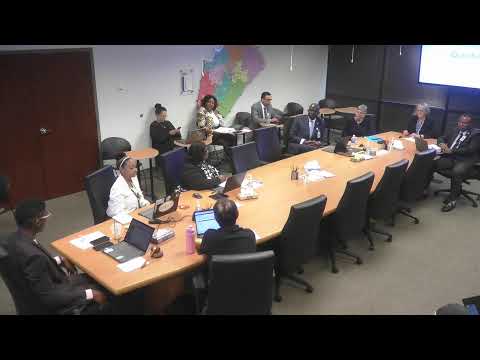
Wake County Board hears seclusion and restraint data; staff outline training, room‑inspection and intervention steps
Summary
District staff reported 2024–25 seclusion and restraint reporting, said 544 students experienced an incident last year (fewer than 1% of district enrollment), described differences between federal and state reporting definitions, and outlined targeted training, room inspections and partnerships to reduce incidents and support affected students.
Wake County Public Schools staff presented district seclusion and restraint data and described actions the district is taking to reduce incidents, improve oversight and expand training for staff.
Dr. Paul Walker, with student support services and special education staff including Lisa Allred, led the presentation and emphasized reporting distinctions between federal and state definitions and the district’s daily review process. “When it comes to restraint, [the federal category] is broad,” Dr. Walker said, adding the district reports incidents to Infinite Campus and then to NCDPI for federal reporting.
Staff said the 2024–25 reporting period covered roughly 160,000 students and that 544 students experienced at least one incident of seclusion or restraint during the year (fewer than 1% of enrollment). The district reported 447 incidents of seclusion (the presenter noted that the 301 number sometimes displayed is embedded in the 447) and highlighted that state reporting to NCDPI treats seclusions that exceed 10 minutes as reportable under the state system even when federal rules and state statute differ in legal meaning.
Staff stressed that seclusion and restraint are not to be used as disciplinary measures and described the district’s review and oversight process. The district said it uses Infinite Campus for incident reporting (replacing prior ECATS reporting), conducts an internal review team call after each reported incident, and monitors compliance and documentation. Staff noted parental notification expectations and that the central review team contacts schools to verify details as incidents are reported.
The presentation detailed targeted operational steps the district has already taken or plans to take: surveying and inspecting rooms identified by schools as seclusion rooms to confirm they meet safety standards (ventilation, lighting, ability to observe and hear a student, removal of hazardous objects); distinguishing “calming spaces” (classroom or team spaces used to help students regulate) from formal seclusion rooms; and identifying 11 approved seclusion rooms after the review. Staff said some spaces labeled as seclusion rooms were in practice used for other purposes and required remediation before they could be used again as formal seclusion rooms.
To reduce incidents, the district described increased professional development and partnerships: expanded de‑escalation training (district‑developed and DPI de‑escalation courses), enhanced functional behavior assessment (FBA) and behavior intervention plan (BIP) training, collaboration with the Autism Society of North Carolina (ASN.C.), hiring Board Certified Behavior Analysts (BCBAs) and Registered Behavior Technicians (RBTs), and plans to add board‑certified staff in central services. Staff said three RBTs were already contracted and assigned to support high‑need students while coaching school teams to fade external support over time.
Presenters acknowledged disproportionate representation in the data. Staff said roughly 73% of the 544 students involved in incidents had Individualized Education Programs (IEPs) and that Black students were overrepresented among incidents at elementary and other levels. Staff and board members discussed the need to disaggregate data, examine antecedents and school practices, and expand preventative supports and relationship‑building strategies.
Questions from board members addressed whether calming stations are required (staff said they are not required districtwide but should be provided if an IEP team determines a student needs one), whether seclusion rooms must be certified before use (staff said the district inspects and provides remediation and said the process for formal notification to central office will be strengthened), parental notification timelines (staff said parents should be notified that day and the central review team follows up by phone), and accountability when staff fail to notify families.
Board members raised policy and procedural questions about standardizing room certification and making oversight non‑optional. Several members urged turning certain procedures into districtwide policy requirements so that schools cannot treat compliance as optional. Staff said they will work with legal and HR and consider additional procedures and possible policy changes.
Presenters said the district treats seclusion and restraint as last resorts when a student or adult is at risk of harm and emphasized restorative and preventive approaches (restorative practices, tiered behavior supports, coaching and family engagement). Staff said they will continue targeted training, expand oversight, and return to the board with more detailed disaggregated data and results from training and interventions.