Get Full Government Meeting Transcripts, Videos, & Alerts Forever!
Get email alerts on the Immigrant Trust Policy topic
No spam. Unsubscribe anytime.
Residents urge Richmond to adopt 'trust' policy and end sharing of license-plate reader data with federal agencies
Summary
Multiple speakers at public comment urged Richmond City Council to legally bar collaboration with ICE, end contracts for license-plate readers and adopt a written trust policy to protect immigrant residents.
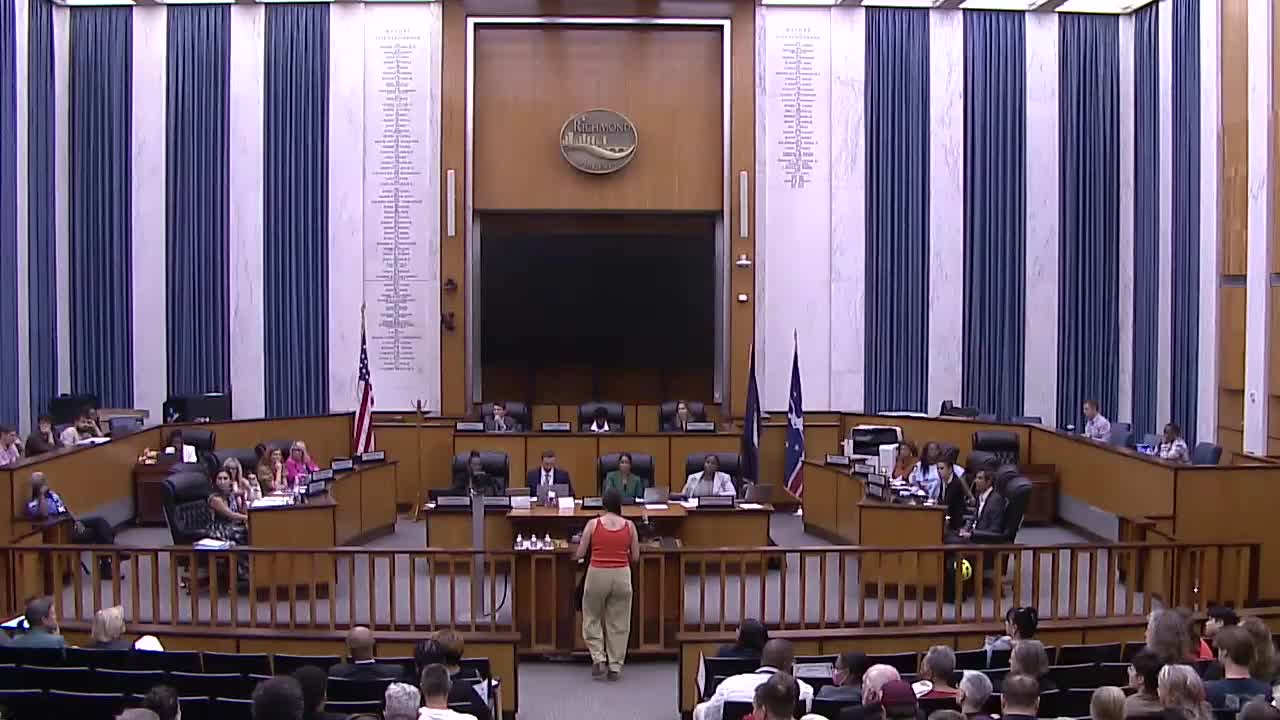
Several residents and immigrant-rights advocates urged Richmond City Council during public comment to adopt a legally enforceable “trust policy” that would bar local cooperation with federal immigration enforcement and end contracts for license-plate-reader surveillance.
Victoria McCullough, speaking from the Second District, asked the council to “adopt a legally enforceable trust policy, like Arlington County did,” and listed specific protections she said such a policy should include: “No detainers honored without a judicial warrant, no release of personal data or jail information to ICE, no ICE access to people in city custody, and no use of city resources for immigration enforcement.” McCullough also asked the city to “end the city's contract with Flock license-plate readers,” citing a recent Richmond Police Department disclosure that ATF agents used the department’s license-plate-reader system to investigate immigration-related cases.
Fern Diaz Castro (recorded as Fern Villas Castro) told council that immigrant communities in Richmond face “the threat” of mass immigration enforcement and publicized a recent local incident she said involved the detention and rapid deportation of workers. “Stopping hateful and violent people, kidnapping our community members and putting them through such conditions should be one of your top priorities,” she said.
Other public commenters tied immigrant-protection demands to housing stability. McCullough linked surveillance and data-sharing to increased risk for immigrant residents and urged council to also prioritize anti-rent-gouging measures to prevent displacement.
Speakers asked the council to follow Arlington’s example and codify the policy into local law; McCullough said that an enforceable local ordinance is needed rather than policy statements alone. Council members did not take an immediate vote on a trust policy during the meeting; the public record shows repeated requests from constituents for formal council action and for review of the city’s data-sharing contracts and surveillance agreements.