Get Full Government Meeting Transcripts, Videos, & Alerts Forever!
Get email alerts on the School Boundaries topic
No spam. Unsubscribe anytime.
School board discusses boundary-line plan, phased high-school shifts and community outreach
Summary
Board held an extended discussion on proposed boundary-line adjustments, timeline for planning/communication/implementation, possible referendum contingency planning and phased high-school transitions through 2030.
The Grand Forks Public Schools board held a detailed discussion Sept. 8 about proposed boundary-line adjustments, public communication plans and phased implementation for elementary, middle and high school catchment areas.
Superintendent Dr. Brenner reviewed the district’s timeline: the 2024–25 school year served as the planning year, 2025–26 is the communication year, and implementation would begin in 2026–27. He said the district held two public listening sessions (Jan. 15 and Jan. 16, 2025) and subsequent work sessions April 24 and May 22, 2025, that led to a consensus draft. Brenner said staff would publish clear timelines, objective data used for decisions and consistent language to explain considerations such as school capacity, enrollment thresholds and magnet-program impacts.
Brenner described an illustrative four-year phased plan for high school boundaries in which incoming grade cohorts would transition gradually: in 2026–27 ninth graders would begin attending new schools per the revised boundary lines while older students would remain at their current high school; the phase would continue across successive years until full implementation by 2029–30. Brenner said the draft also contains policies for ‘‘trailing siblings’’ — younger siblings of current students — to address family continuity when changes span multiple years.
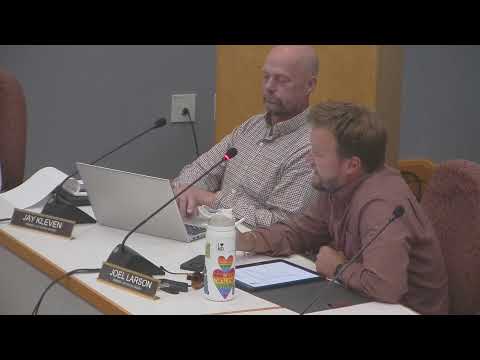
Board members asked questions and raised concerns. Board member Jay Lund praised the demographic task force and said he was “fully supportive” of the plan. Member Palmasino asked whether physically reconfiguring space within Discovery (noting common areas) had been examined as a near-term mitigation before pursuing new construction; Brenner said such options can be explored but cautioned about capacity guidelines and district building-size thresholds. Member Cleven asked whether the draft wording implied a committed referendum; administrators agreed to change language from a commitment to a consideration of a referendum and to clarify contingency plans if a referendum did not pass.
Transportation, magnet-program bus routing and anticipated changes in neighborhood housing patterns were also part of the board conversation. Brenner emphasized that district staff intend to publish clear contact points and channels for public questions and feedback, to coordinate with transportation contractors about route impacts, and to provide accessible documents and short “quick briefs” on the website for families. He said the board will take action on boundary adjustments at its Sept. 22 meeting after the communication period.
No formal vote was taken Sept. 8; board members received the discussion packet and asked staff to continue community outreach and finalize recommended language for the Sept. 22 meeting.