Get Full Government Meeting Transcripts, Videos, & Alerts Forever!
Get email alerts on the Evidence Rule 404b topic
No spam. Unsubscribe anytime.
Court of Appeals hears arguments over admissibility of ‘grooming’ evidence in State v. Newberry
Summary
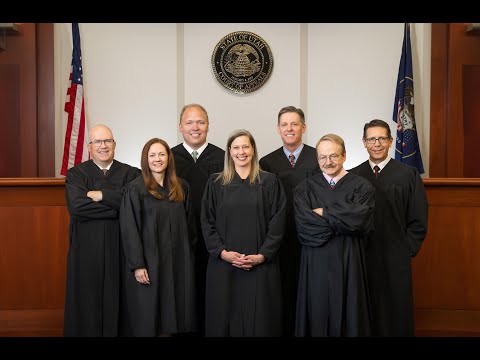
The Utah Court of Appeals heard argument in State v. Newberry (No. 20230121) over whether the district court erred in admitting allegations of prior conduct under Utah Rule of Evidence 404(b) and Rule 403.
The Utah Court of Appeals heard argument in State v. Newberry (No. 20230121) over whether the district court erred in admitting allegations about the defendant’s prior conduct under Utah Rule of Evidence 404(b) and Rule 403.
Appellant counsel Anna Grigsby argued the district court abused its discretion in admitting the other‑acts allegations, saying State v. Reed does not authorize evidence of ongoing behavior where the only inference is one of propensity. "Reed...does not hold that ongoing behavior evidence is admissible to show propensity," Grigsby told the three‑judge panel. She argued the prior incidents (allegedly occurring outside Utah) were not intrinsic to the charged offense and did not show planning, opportunity, or preparation in a way that bore on any disputed element at trial.
Assistant Utah Attorney General David Simpson, for the State, responded that the district court permissibly admitted the evidence either as intrinsic (inextricably intertwined with the charged act) or under Rule 404(b) to show preparation and planning. Simpson said the court’s ruling described the allegations as legitimately part of the case narrative and thus not used merely for a character inference: "The prosecutor argued...the jury would hear how the defendant and the victim grew close while driving together, described an escalating pattern of conduct, and argued that this escalating pattern of conduct culminated with the incident here in Utah," Simpson said.
Judges probed both sides on fine distinctions between evidence that is intrinsic to the charged offense and evidence that is permitted under Rule 404(b) for non‑propensity purposes such as identity, opportunity, preparation, planning, or to explain delay in disclosure. Judge Ryan Harrison asked whether "grooming" itself is a non‑propensity purpose or merely a label for a pattern that must be linked to a separate non‑character purpose. Grigsby replied that grooming must be tied to a proper non‑character purpose to be admissible; otherwise it invites the jury to infer propensity. Simpson said the doctrines overlap in this category of cases and that, on these facts, the evidence fit within the narrative of how the charged act came about.
Both sides also disputed whether the State had preserved an intrinsic‑evidence theory below and whether the district court’s limiting instruction to the jury was sufficiently precise. Simpson argued the trial court’s ruling and the later jury instruction were consistent with admitting the evidence for context or to show a pattern and that defense counsel had opportunities to object but declined to press specific instruction language.
The panel did not rule from the bench. After argument, the court took the matter under advisement and said it would issue a written decision in due course.