Get Full Government Meeting Transcripts, Videos, & Alerts Forever!
Get email alerts on the Property Taxes topic
No spam. Unsubscribe anytime.
Linn County residents criticize sharp property-tax increases; commissioners leave rate at revenue neutral after tie vote
Summary
Residents at a Linn County revenue-neutral hearing described sudden, large jumps in property assessments. The county appraiser defended the methodology and the commission, after a 1-1 tie on a motion, left the county at revenue neutral and scheduled additional budget workshops.
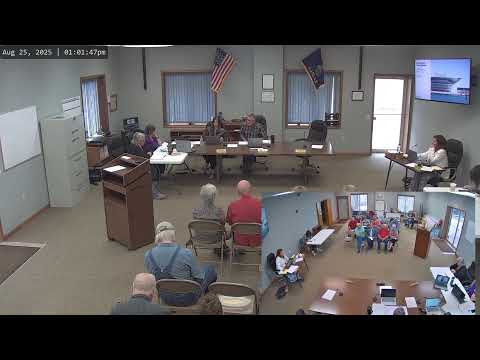
Dozens of Linn County residents told commissioners at a July revenue-neutral hearing that recent property-tax and assessment increases had left them unable to pay and unsure how to stay in their homes.
Residents at the hearing described double- and triple-digit increases on homes and vacant lots, urged the commission to lower county spending instead of raising rates and asked whether the county could do anything to alter the state-driven appraisal process. The county appraiser explained the office’s market-value approach and the statutory and professional obligations that guide valuations. After public comment and discussion, a motion to remain at the revenue-neutral rate failed on a 1-1 roll-call, and commissioners—having made no successful motion to exceed revenue neutral—left the budget at revenue neutral while scheduling additional workshops to attempt further cuts.
The hearing matters because Linn County is facing large shifts in taxable value while residents report steep increases on small homes and lots. A higher mill levy or a decision to “exceed revenue neutral” would raise next year’s tax bills further; a decision to stay revenue neutral forces deeper cuts to county spending to keep the county’s share of taxes level.
Speakers described sudden assessment changes that they said were financially damaging. “Our taxes went up... 667% on our lot,” said Sandy Sands, who identified herself as a Sugar Valley Lake resident. Kathleen Hampton, who said she is 81 and on a fixed income, told commissioners her taxes on an 80-acre property increased “30%” and that the rise is “beyond our budget.” Rhonda Crump said her property taxes “went up basically 100 percent in one year with no improvements.” Several residents said vacant lots without utilities saw large valuation jumps.
Lisa, the county appraiser, gave a detailed overview of how the office determines values. “I am bound by statute. The state tells me I have to appraise at market value,” she said, describing a mass-appraisal process that analyzes thousands of parcel sales, neighborhood groupings, depreciation and cost tables, and state review. She described three standard appraisal approaches—cost, income and comparable sales—and said the appraiser’s office conducts informal hearings, small-claims appeals and state-board appeals when taxpayers contest values.
Scott Lloyd, the county-hired CPA, and county counsel and staff answered procedural questions about revenue-neutral calculations and deadlines. Published documents and staff testimony showed several different mill-levy figures discussed during the hearing: a published notice number (38.237 mills), the budget manager’s working figure (37.225 mills) and a stated revenue-neutral target in the materials roughly 35.086–35.087 mills (staff noted minor rounding differences in print/mailer versions). County staff said the certified assessed value used for final calculations will be finalized later in September or October; an error or correction in assessed value can lower the final revenue-neutral rate.
On the budget itself, staff provided line-item context and figures. The commissioners and staff discussed that the sheriff’s office 2025 budget showed about $4,185,968 in actuals and a proposed 2026 figure of $4,732,566 (figures referenced from budget documents at the hearing). Staff also reported a roughly $32 million increase in assessed value overall (including a roughly $9.4 million increase in state-assessed utilities at one point in staff’s review), which materially affected the mill-value calculation.
Commissioners debated whether to vote to exceed revenue neutral today or require deeper department cuts to reach revenue neutral. One commissioner said she would prefer to “kick the can” one year and try to absorb costs; another urged aggressive cuts. A motion “to stay revenue neutral” was made and seconded, and the vote tied 1–1, which the county counsel explained meant the motion failed. Counsel and staff also explained that because no motion to exceed revenue neutral carried, the statutory default is to remain at revenue neutral unless a later, successful motion exceeding it is passed in time to meet statutory budget deadlines.
The board set additional budget workshops to pursue further reductions and aim to finalize the budget by the state deadline. Workshop dates offered at the hearing included Sept. 15, Sept. 22 and Sept. 29 (staff said it would attempt to meet the county clerk’s Oct. 1 filing deadline). Staff also reminded seniors and disabled veterans of a property-tax-freeze program (described at the hearing as a program that can provide a rebate/check via state funds if applicants meet eligibility criteria) and said staff would provide outreach information.
Ending: The hearing closed with commissioners scheduling follow-up budget sessions; no final budget was adopted at the meeting. County staff advised residents that appeals of individual property values remain available (informal hearings, small-claims, and state-board appeals) and that other local taxing entities (school districts, libraries, townships) also hold revenue-neutral hearings that affect each taxpayer’s total bill.