Get Full Government Meeting Transcripts, Videos, & Alerts Forever!
Get email alerts on the Water Infrastructure topic
No spam. Unsubscribe anytime.
Valley County Water District outlines rate, infrastructure and contamination costs, warns of invasive ‘golden mussel’
Summary
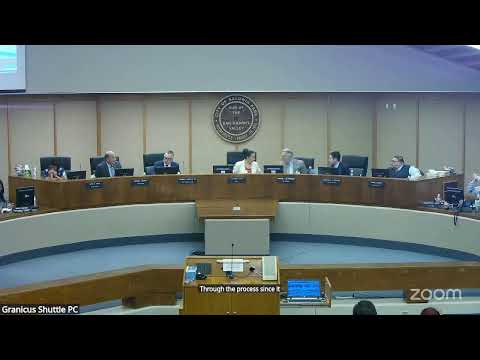
Valley County Water District General Manager Jose Martinez told the Baldwin Park City Council on Aug. 20 that the district faces rising monitoring and capital costs, has adopted new rates after a consultant study, and is working with regional partners on contamination and an invasive mussel threat to imported supplies.
Jose Martinez, general manager of the Valley County Water District, told the Baldwin Park City Council on Aug. 20 that the district has adopted new water rates to match the cost of service and is pursuing grant and legislative strategies to address contamination, aging infrastructure and the risk from an invasive species.
Martinez said Valley County serves about 60% of Baldwin Park residential customers and that the district’s most recent cost-of-service study was presented at a public hearing earlier in June (12,500 mailed notices) that drew zero attendees; the board later adopted the rates the district presented. “As a public agency, we can only charge what it costs us to deliver that water to our customers,” Martinez said.
Why it matters: Martinez warned that testing and treatment costs for contaminants such as PFAS are substantial (he said a single PFAS sample can cost roughly $1,000) and that planned capital work to maintain storage and treatment capacity is large. He cited a master-plan catalogue of roughly $42 million in prioritized projects over 10 years, and a 5-year capital program that is “just under $12 million,” funded partly by rate revenue and by grants. The district has secured more than $15 million in outside funding, Martinez said, including an roughly $11.5 million grant toward reservoir construction, but several grants require the district to front costs or await federal approvals.
Most important details - Usage, tiers and bills: Martinez said the average residential customer in the district uses about 9,000 gallons per month. Under the district’s current rate structure he said roughly 7,500 gallons fall into the Tier 1 allocation and about 1,500 gallons into Tier 2; the district’s average monthly bill with new rates is about $62. Martinez compared that to higher bills elsewhere in Los Angeles County, which he said average $80–$90 per month. - Infrastructure and grants: The district is advancing reservoir and capital projects identified in a 2020 master plan; delays increase future costs. Martinez said the district collects roughly $2.35 million a year through rates toward capital and has been pursuing grants and loans to bridge the delta between identified needs and available rate revenue. - Contamination and monitoring: Martinez said the district continues work on legacy contamination cases dating back decades and is coordinating with EPA and regional water agencies; testing and disposal of contaminated material are costly and carry ongoing liabilities. - Invasive-species risk: Martinez described the “golden mussel,” an invasive bivalve moving down the California Aqueduct, as a potential threat to imported State Water Project deliveries. He said regional producers, Metropolitan Water District representatives and others are meeting in Sacramento and working with legislators on liability and prevention language. - Affordability and customer programs: The district has an affordability/care program (which Martinez said the district recently adjusted from $5 to $10 per month for qualifying customers), rebate and water-efficiency programs run with outside funding, and a My360 (water-use tracking) program for customers. He noted a large meter-replacement project (about 11,500 residential meters) that now allows faster leak detection.
Council questions and follow-up. Council members asked whether the consultant’s cost-of-service study was publicly available; Martinez replied the study is posted on the district website. A council member asked about the district’s nine wells; Martinez said four are operating and several have been taken offline because of contamination; one grant is targeted to return a well to service. On emergency capacity (for fires or other peak demand), Martinez said the district’s planning identifies a need for additional storage and that two new reservoirs are planned pending FEMA approval of roughly 75% of construction funding in one grant.
Martinez invited residents to a district workshop in October to discuss rates and operations and encouraged attendance at Valley County Water District board meetings. “Safe, reliable water comes at a cost,” Martinez said. “We have to continue to be proactive and to ensure that we provide safe, reliable water.”
Ending: The presentation closed after council members thanked Martinez and district directors in the audience; council members and staff asked staff follow-up questions about well status, testing for contaminants and outreach for customers who need payment arrangements.