Get Full Government Meeting Transcripts, Videos, & Alerts Forever!
Get email alerts on the Governance Protocols topic
No spam. Unsubscribe anytime.
Indio council reviews formal protocols to codify meeting conduct, town‑hall rules and staff interactions
Summary
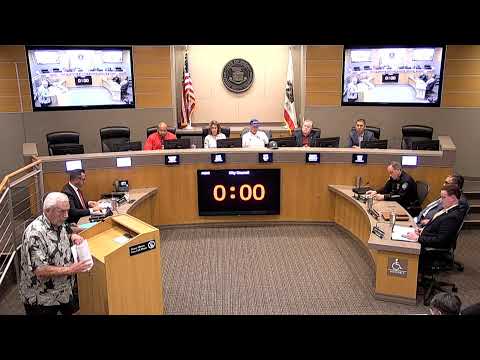
The Indio City Council heard a study‑session presentation Aug. 20 on a proposed set of written council protocols that would codify long‑standing practices and add local guidance on meetings, committee rules and interactions between council members and staff.
The Indio City Council heard a study‑session presentation Aug. 20 on a proposed set of written council protocols that would codify long‑standing practices and add local guidance on meetings, committee rules and interactions between council members and staff.
City Attorney Steven Pacifico told the council the draft is intended to put existing practices into one public document, not to change what the body does. He said the document restates state rules such as the Brown Act and Political Reform Act and adds guidance on topics that cause recurring questions — for example, the difference between standing and ad hoc committees, limits on ex parte contacts in quasi‑judicial hearings, and procedures for closed (executive) sessions.
Council members spent more than an hour discussing several specific items: a proposed 90‑day limit on city‑sponsored town halls before an election (some council members favored 60 days, others 90); whether the mayor or, in the mayor’s absence, the mayor pro tem or the district council member should present ceremonial items for events in a council member’s district; and guidance about when a council member’s informal requests for staff research become a formal direction that needs broader council approval. Pacifico and City Manager Brian Montgomery said staff would draft clearer language after the discussion.
Members emphasized transparency and public notice when council business is conducted. Pacifico reviewed serial‑meeting rules under the Brown Act, the elevated requirements for quasi‑judicial hearings (such as planning matters), and the recommended use of Rosenberg’s Rules of Order for day‑to‑day proceedings.
Councilmembers repeatedly returned to town halls and use of city resources during campaign seasons. Some members said city‑sponsored events during the 60‑ to 90‑day pre‑election window create a perception of favoritism; others warned that refusing to attend community events in that window can appear to ignore constituents. The city attorney and city manager proposed drafting a rule that would generally discourage city‑sponsored, district‑level town halls within 90 days of an election but allow exceptions for urgent public‑interest events, and to route disputes to the mayor or the ad hoc committee for review.
The draft also encourages disclosure of substantial meetings between council members and applicants or interested parties, and recommends that council members avoid substantial unsupervised direction to staff. Pacifico said many practical questions can be handled by asking staff in a way that does not create an on‑going staff assignment; the draft suggests a 10–15 minute threshold to distinguish short informational inquiries from research that should be formally assigned by the city manager.
At the end of the study session Pacifico summarized three changes he would prepare for the draft: (1) revised language on town halls and city resources in advance of elections (staff suggested 90 days as a starting point); (2) clarifying the order of who represents the city at ceremonial events (mayor, mayor pro tem, then the district representative or a council member with committee expertise); and (3) adding the mayor pro tem to the list of officials who may issue an initial, informal reminder if a fellow council member appears to be violating the protocols. He said he would send the revised language to the mayor and mayor pro tem and, if the ad hoc endorses it, the item will return on a future agenda for possible adoption. No formal vote was taken.
Why it matters: The protocols are designed to lower the number of procedural disputes, make expectations clear to both the public and newly elected members, and reduce legal risk by restating state requirements and showing how the council intends to apply them locally. The town‑hall and resource‑use provisions are intended to balance constituent access against the risk of perceived political advantage during election periods.
What’s next: City Attorney Pacifico will prepare draft revisions incorporating the council’s direction, send them to the mayor and mayor pro tem and the ad hoc committee, and return the item to a future council meeting for consideration. The council did not adopt the protocols at this meeting; staff will bring the revised draft back for a formal vote.