Commissioners hire Level 5 Architecture to study animal control facility options; discussion emphasizes service model as much as building
Loading...
Summary
The court approved a contract with Level 5 Architecture to develop plans for a new or expanded animal-control facility; commissioners and staff said the project will examine multiple cost and service options, including partnerships and modest remodels, and not assume a $3 million final price.
The Guadalupe County Commissioners Court on Aug. 19 authorized a contract with Level 5 Architecture to provide architectural and engineering services for the county’s animal control facility project, but commissioners stressed that the decision to hire an architect does not commit the county to any single scope or price.
Why it matters: Animal control services drew repeated public comment and internal attention during the budget process. County officials said the current shelter lacks adequate staff space, volunteer work areas and consistent veterinary contractor access; commissioners said they intend to evaluate multiple facility and service models before selecting a preferred plan.
What the court approved
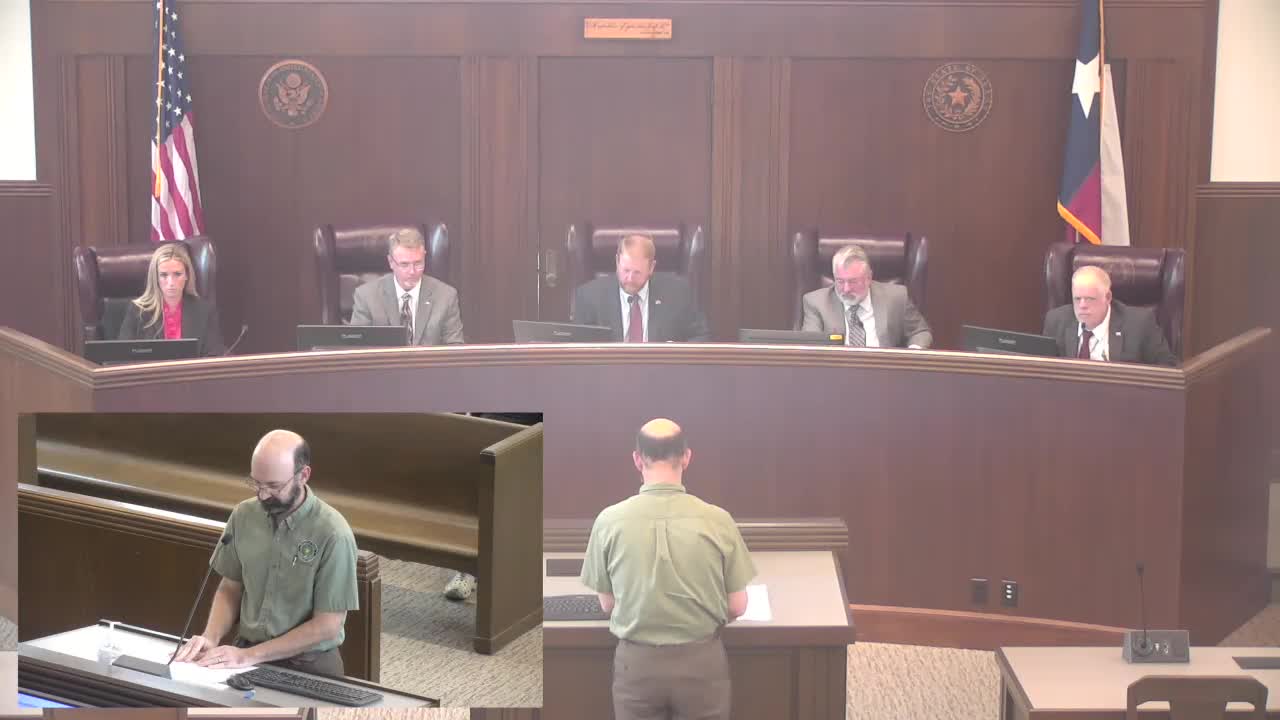
The purchasing office had negotiated a contract with Level 5 Architecture; the court’s vote authorizes the negotiated scope for architectural and engineering services. Architect Justin Gilmore presented the team and outlined project objectives. Court members emphasized they want options and cost comparisons: smaller remodel plus operational changes, modest expansion reusing the existing building, and full replacement. Commissioner Engelke said the $3 million figure discussed in workshops is an upper ceiling for planning purposes, not a final commitment.
Alternatives discussed in court
- Contracted services/partnerships: Several jurisdictions nearby use nonprofit humane‑society partners or regional contractors for intake and adoption services; judges and commissioners visited nearby programs and asked staff to explore whether a public‑private partnership might reduce capital needs. - Phased or modest renovations: Commissioners asked architects to present lower‑cost remodel options (reused shell, more efficient kennel layouts and modular vet trailers) as well as larger new‑building alternatives. - Operational upgrades: The court emphasized non‑capital fixes such as stronger volunteer coordination, better outreach to rescue groups and scheduling of mobile spay/neuter services.
What was not decided
There was no final determination of square footage, price per square foot or whether the county will build a fully new facility. Commissioner comments made clear they would reject proposals that escalate cost per square foot beyond conservative thresholds and that they expect options at multiple price points. The court approved the architectural contract and instructed staff to work with the architect and stakeholders to return with formal designs and cost options.
Ending
Contract approval allows the architect to begin feasibility work and bring multiple designs and budgets back to the court. Commissioners asked staff and the architect to present realistic, staged options that the court can consider alongside the county’s other capital priorities.