Get Full Government Meeting Transcripts, Videos, & Alerts Forever!
Get email alerts on the Youth Programs topic
No spam. Unsubscribe anytime.
Durham leaders outline $276 million in youth spending, warn of gaps as ARPA funds end
Summary
County staff told the joint Durham County–City–Schools meeting that the county spends roughly $276 million a year on youth-related services—about 40% of the general fund—while one-time ARPA investments totaling about $17.6 million are ending, prompting calls for coordinated data and planning to close an emerging funding gap.
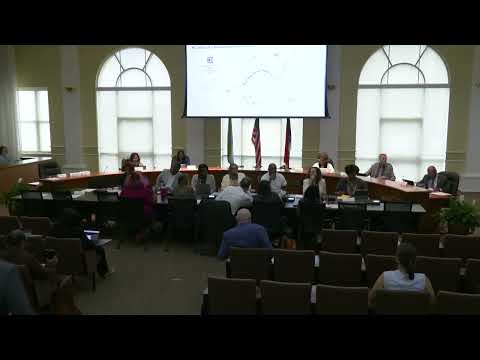
Durham County officials told a joint meeting of Durham County, the City of Durham and Durham Public Schools on Aug. 12 that the county currently budgets roughly $276,000,000 a year for youth-related services — about 40% of the county general fund — and that one-time federal American Rescue Plan Act (ARPA) investments supporting after-school and wraparound services are winding down.
Manager Cheryl Hager, identified in the meeting as county manager, said, “But talking about the budgeted amount that the county has in general for youth spending, that's a broad definition for the current approximately $276,000,000. That's approximately 40% of our general fund budget.” She added that Durham Public Schools accounts for the largest share of that total at about $224,000,000 and that school-related debt service adds another roughly $61,000,000 for 2025–26.
Why it matters: elected officials and agency leaders said many of the county’s ARPA-funded programs — used for school capital, after-school programming, school nurses and direct academic supports — were one-time investments and that local partners will face service gaps when the money runs out. County staff and elected leaders urged coordinated data collection across jurisdictions to quantify youth served and to plan a joint approach for scarce future dollars.
County staff outlined ARPA commitments of roughly $17,600,000 toward youth. Manager Hager and staff described the distribution as including about $6,000,000 for school capital investments, $5,100,000 for direct instructional supports (including a $3,000,000 award for a local academy named in materials), $2,400,000 for child care and wraparound services, and smaller grants totaling about $2,100,000 across 17 nonprofit awards. Hager warned that many of the nonprofit recipients have “expended almost all of their dollars,” creating a near-term funding cliff.
Elected officials from the city and county, school board members and nonprofit leaders pressed staff for more data. Council Member Claudia Caballero asked whether the county could report how many youth were served by ARPA-funded programs; Hager said that Treasury reporting exists for ARPA grants and that the county would provide further information. Board member Joy (identified as a nonprofit operator who had administered ARPA-funded programs) said grassroots providers used funding intensively but now face reporting burdens, space shortages and transportation challenges as the grants close.
Durham Public Schools officials joined the discussion. Dr. Danner, presenting for DPS’s Community Education, described the district’s licensed before- and after-school programs and an eight-site pilot to operate some after-school programs under a non-state-licensed model to increase staffing and capacity. Dr. Danner said DPS “currently operate[s] 28 programs” and reported three‑year total enrollment figures across programs of 4,904 (4,251 at elementary level; 653 at middle-school ENCORE sites), with the elementary program serving roughly 10% of district elementary students and middle-school programs serving about 4%.
City staff and Durham Parks and Recreation described existing city-run after-school and teen drop-in programs and the city’s interest in partnering to expand services. Rokia Womack of Durham Parks and Recreation said teen programs are now largely drop-in, free, and operate at three sites; the department reported about 6,380 check-ins last fiscal year with 127 unique teen users and said it expects to exceed that number this year. City and county speakers agreed to return with an analytic strategy that maps current programs, locations, populations served and funding timelines to inform budgeting decisions.
What officials said they would do next: County manager Hager said the county intends to revisit its nonprofit allocation process to explore options for sustaining high‑impact programs. Multiple elected officials requested a joint data package — separated by age group where possible — showing total youth served across city, county, school and nonprofit providers, locations of services and timelines tied to budget cycles so elected leaders can consider funding decisions in time for upcoming budget processes.
Quotes and context: Council Member Claudia Caballero asked for service counts for program planning: “Is there a way we could get information on how many youth were served in these programs?” Dr. Danner said DPS would provide enrollment and capacity numbers and staff later said DPS does not currently track detailed demographic data for after‑school enrollments but could provide school‑level counts. County staff noted that ARPA reporting to the U.S. Treasury will supply some enrollment numbers for ARPA‑funded grants.
Ending: Officials agreed to follow up with coordinated data requests and a proposal for a joint strategy. County staff said they would return with a suggested approach for cross‑jurisdictional data collection and an outline of the nonprofit allocation review. Elected leaders emphasized aligning subsequent briefings with budget schedules to ensure policy choices can be made in time for the next fiscal cycle.