Get Full Government Meeting Transcripts, Videos, & Alerts Forever!
Get email alerts on the Coroner Budget topic
No spam. Unsubscribe anytime.
Marion County coroner cites data modernization, opioid-settlement family advocates and budget cuts
Summary
Coroner Alfie McGinty told councilors the office has modernized case management, expanded family advocacy funded by opioid-settlement dollars, and faces a modest county budget cut with operational decreases that could affect forensic staffing if autopsy volume rises.
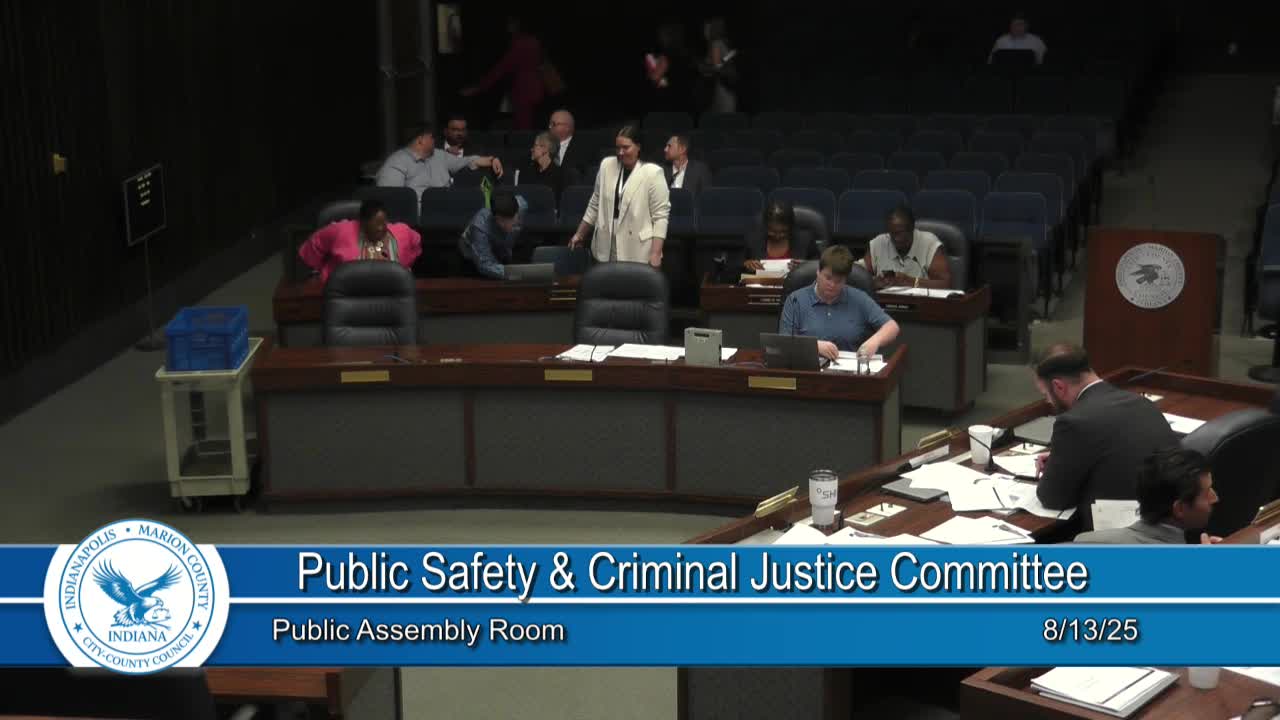
Marion County Coroner Alfie McGinty presented his office’s 2026 budget priorities to the Public Safety & Criminal Justice Committee on Aug. 13, describing recent upgrades to case management, continued family‑advocate services funded by the opioid settlement and a county general fund reduction that the coroner said will require careful planning.
McGinty highlighted a data‑modernization effort performed with the county’s ISA team that the office says has reduced manual data entry and improved turnaround times for death certificates. He described a family advocacy program — funded through opioid settlement and other grants — that places social workers and family advocates with bereaved families after overdose and homicide investigations.
The coroner told the committee the office anticipates an overall county‑general reduction of about $228,000 (roughly a 3 percent decrease) and said an uncontrolled operational reduction of roughly $428,000 (about 15 percent) would reduce funding for routine operational items. He said reductions in character 3 budget lines primarily affected funding for forensic pathologist services; if autopsy volume rises in 2026 the office would return to the council with a request for additional funds because state law requires qualified forensic pathologists to perform autopsies.
McGinty said the coroner’s office is beginning to charge other counties for pathology services in cases where the decedent died in Marion County hospitals but the incident occurred elsewhere, and that the office is more rigorously billing for records requests. He also described community prevention work such as distribution of gun locks and outreach aimed at reducing child gun fatalities and overdose deaths.
Councilors asked about trends and programs; McGinty pointed to recent declines in overdose deaths over two consecutive years and said the office will re-evaluate opioid-settlement funding in the fall. He described operational constraints tied to the availability of forensic pathologists and to fleet and equipment needs for death investigations.