Get Full Government Meeting Transcripts, Videos, & Alerts Forever!
Get email alerts on the Marion Circuit Court topic
No spam. Unsubscribe anytime.
Marion Circuit Court reports caseload growth for name‑and‑gender changes and outreach work
Summary
Marion Circuit Court Judge Amber Collins presented a $1.307 million budget that absorbs a surge in self‑represented name and gender change petitions, describes Title IV‑D child support work and lists outreach programs for youth.
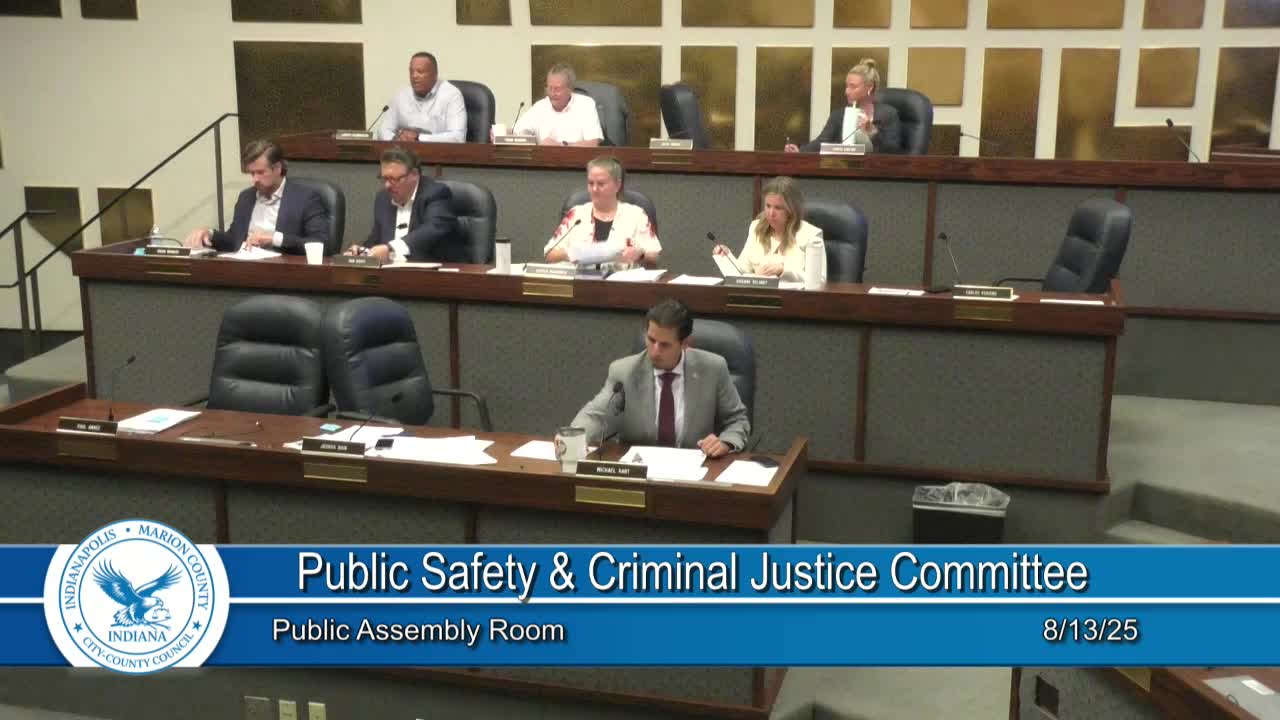
Judge Amber Collins told the Public Safety and Criminal Justice Committee on Aug. 13 that Marion Circuit Court’s docket has shifted and expanded in ways that have increased staff workload, particularly for self‑represented litigants seeking name and gender changes and Title IV‑D child support matters.
Collins said the court is the county’s constitutional circuit court and that the name/gender-correction docket has “exploded.” The presentation included counts showing that the court received far more of those petitions in 2024 and 2025 than in prior years, and Collins said the court absorbed the extra work with existing staff so far.
The circuit court’s Title IV‑D child support division is partially federally reimbursed; Collins told the committee the federal reimbursement to the county was about $108,000 last year. The court also funds a navigator at the Legal Help Center to assist self‑represented litigants and runs a youth outreach program that brings teens into a mock trial and court tour to demystify the justice system.
Budget totals in the presentation list a 2026 total budget of $1,307,135 with a modest net decrease from 2025 levels; personnel and building chargebacks drove most of the character‑level shifts Collins discussed. The judge said she may request an additional staff person if civil collection caseloads continue to rise, and she confirmed the court routinely waives filing fees for indigent filers or those qualifying on public assistance.
Collins fielded questions from councilors about fee waivers, case allocations between circuit and superior courts, and community outreach; she said the court will continue outreach and may expand youth programming.