Get Full Government Meeting Transcripts, Videos, & Alerts Forever!
Get email alerts on the Superior Court Budget topic
No spam. Unsubscribe anytime.
Presiding judge outlines Superior Court budget, kiosks and Family & Youth Intervention Center grant
Summary
Judge Marc Rothenberg presented the Marion Superior Court budget to the Public Safety & Criminal Justice Committee, highlighted programs including the Family and Youth Intervention (FYI) Center, kiosk probation-reporting locations and community service work, and described grant pressures affecting problem-solving courts.
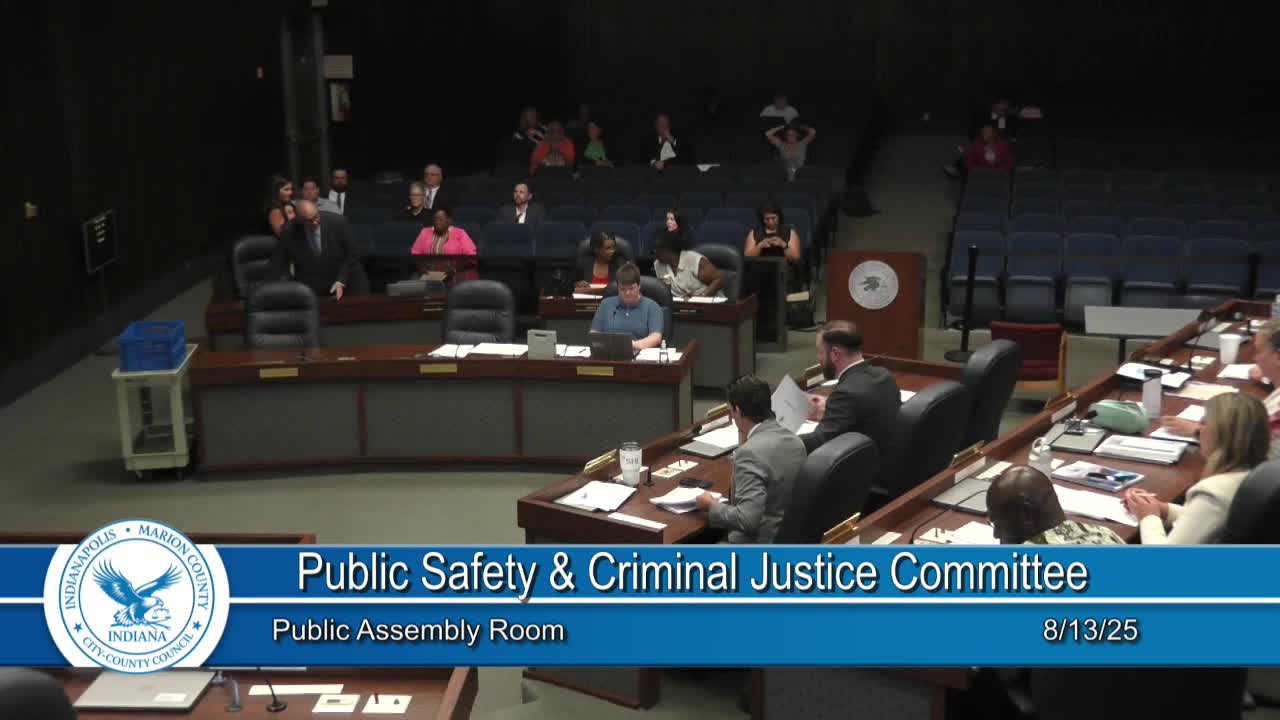
Judge Marc Rothenberg, presiding judge of Marion Superior Court, presented the court’s 2026 budget and program updates to the Public Safety and Criminal Justice Committee on Aug. 13, emphasizing several court-run programs funded largely by grants rather than an increase in county general-fund requests.
Rothenberg described Superior Court’s structure — 36 judges, master commissioners and three divisions (civil, criminal and family) — and highlighted the new Family and Youth Intervention (FYI) Center at 20th and Keystone. He said the largest grant increase in the court’s budget was for the FYI Center: “That increase of $1,663,000 was for the Family Youth and Innovation Center,” he told the committee. He and other presenters said most “increases” in the budget are grant-related and do not reflect higher requests from the county general fund.
The court reported operational programs that reduce court traffic: a Legal Resource Center with navigators that have recorded about 34,000 visits since June 2022, a kiosk system that allows probationers to report without traveling downtown, and the community service work program (roughly 3,500 hours reported last year with an estimated local benefit of about $25,000). Chief Kroll, probation department head, told the committee the kiosk program is costly to expand and described the per-kiosk cost: “My goal is if I can come up with about $14,000 a year, I can put 1 everywhere. It's a matter of about $1,575 starting next year per kiosk per month,” she said.
Councilors pressed the court on several policy points during the Q&A: consolidation of eviction dockets in Superior Court 33 (the judge said eviction cases previously spread across civil court were centralized under one judge for consistency), reductions in grant funding that have cut problem-solving court resources by roughly 13 percent, and the court’s practice of indigency hearings for assessment of fees. Rothenberg described the legal process for fee assessment and said that public defender fees may be assessed from bond funds while other court costs require an indigency determination at the time of assessment; he referenced Spells v. State in that explanation.
Budget presentation details show a net increase described as largely grant-driven (an overall increase of about $698,000 driven by grant funds), while the court said its request to the county remains effectively flat. The Superior Court team offered to provide a program-level grant breakdown to the committee and encouraged councilors to visit the FYI Center.
No formal committee vote on the budget was recorded at the meeting; presenters said they would provide follow-up materials on grant breakdowns and program details.