
Board approves school district spending exclusions under TEOSA after public comment
Get AI-powered insights, summaries, and transcripts
Subscribe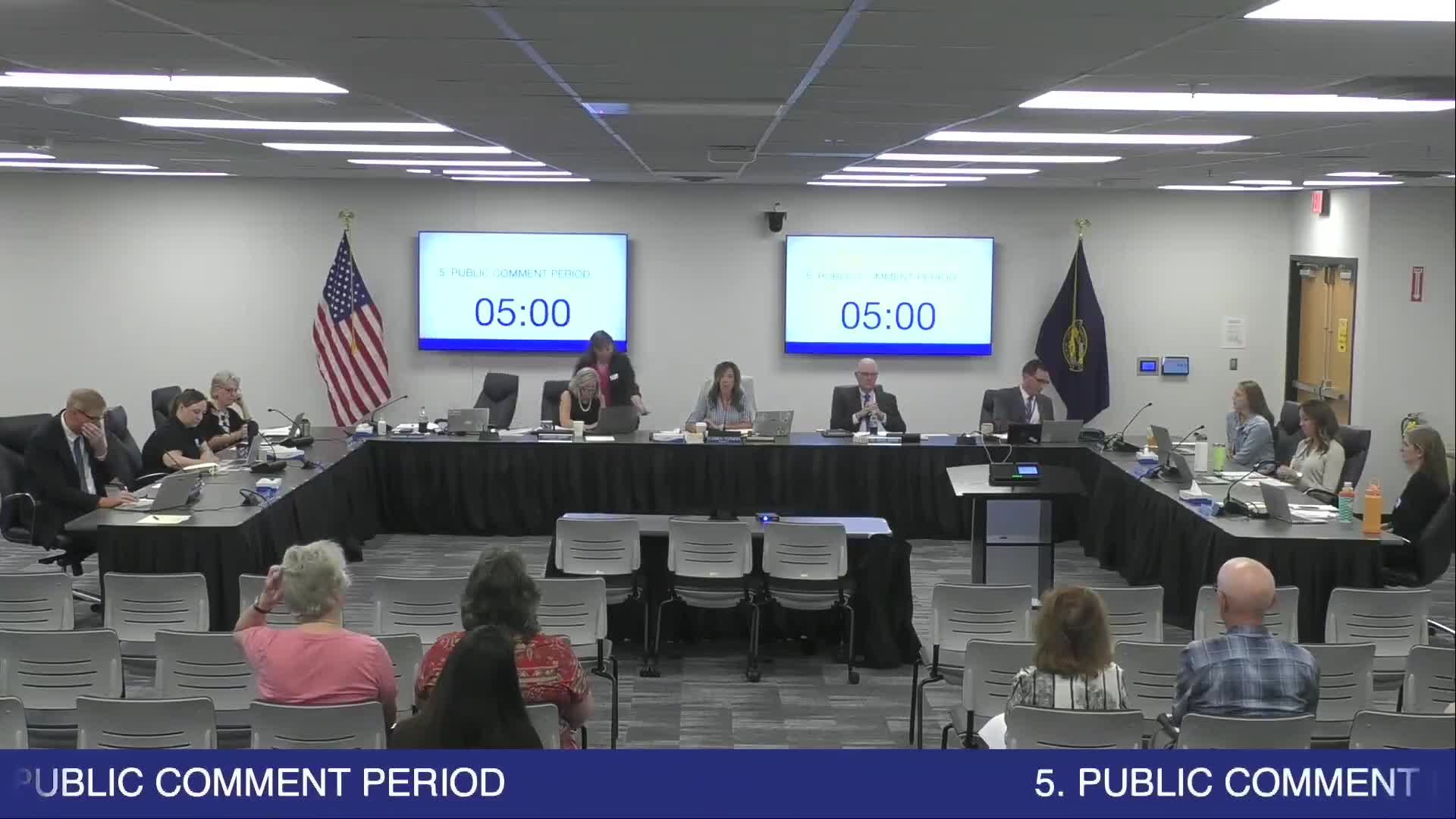
Summary
The State Board of Education unanimously approved school districts' requests for exclusions to the general fund spending limitation under the Tax Equity and Educational Opportunity Support Act (TEOSA) after a public commenter urged scrutiny of district income reporting.
The State Board of Education voted unanimously Aug. 8 to approve school districts' requests for exclusions to the general fund spending limitation under the Tax Equity and Educational Opportunity Support Act (TEOSA). The item had been removed from the consent agenda earlier in the meeting for public comment and discussion.
Public comments and concern
A public commenter, Loewen Eby of Papillion, told the board she reviewed district financial reporting and raised concerns that many districts are not accounting for all revenue and that NDE staff were recommending large income exclusions that she said could improperly increase state aid eligibility. Eby cited a memo she found noting total exclusion amounts of $121,240,452 and said 62 school districts were requesting exclusions.
NDE explanation
Bryce Wilson, NDE finance officer, explained the exclusions are standard: they allow districts to spend non-tax revenue—for example federal grants, private donations, or foundation gifts—without that income counting against the statutory local spending lid. He said the exclusions do not change TEOSA state-aid calculations nor do they directly increase local property taxes. He added that districts that are not up against their spending lid do not need to request exclusions.
Board action
The board moved and seconded the motion to approve districts' requests for spending exclusions. Roll call recorded unanimous approval: 8 yes, 0 no. Board members said they appreciated the public comment and asked staff to respond to further questions.
Key facts
- Public commenter Loewen Eby said a memo from NDE referenced $121,240,452 in total recommended income exclusions and 62 school districts requesting exclusions. - NDE finance officer Bryce Wilson explained exclusions are for non-tax dollars and do not affect TEOSA state-aid calculations or local property tax directly.
Ending
The board approved the spending exclusions by unanimous roll call and asked staff to continue to provide clarity about financial reporting and the mechanics of exclusions when public concerns arise.