Get Full Government Meeting Transcripts, Videos, & Alerts Forever!
Get email alerts on the County Budget topic
No spam. Unsubscribe anytime.
Cherokee County proposes 5.153 millage rate, $2 million Pine Log land purchase; commissioners debate staffing funding
Summary
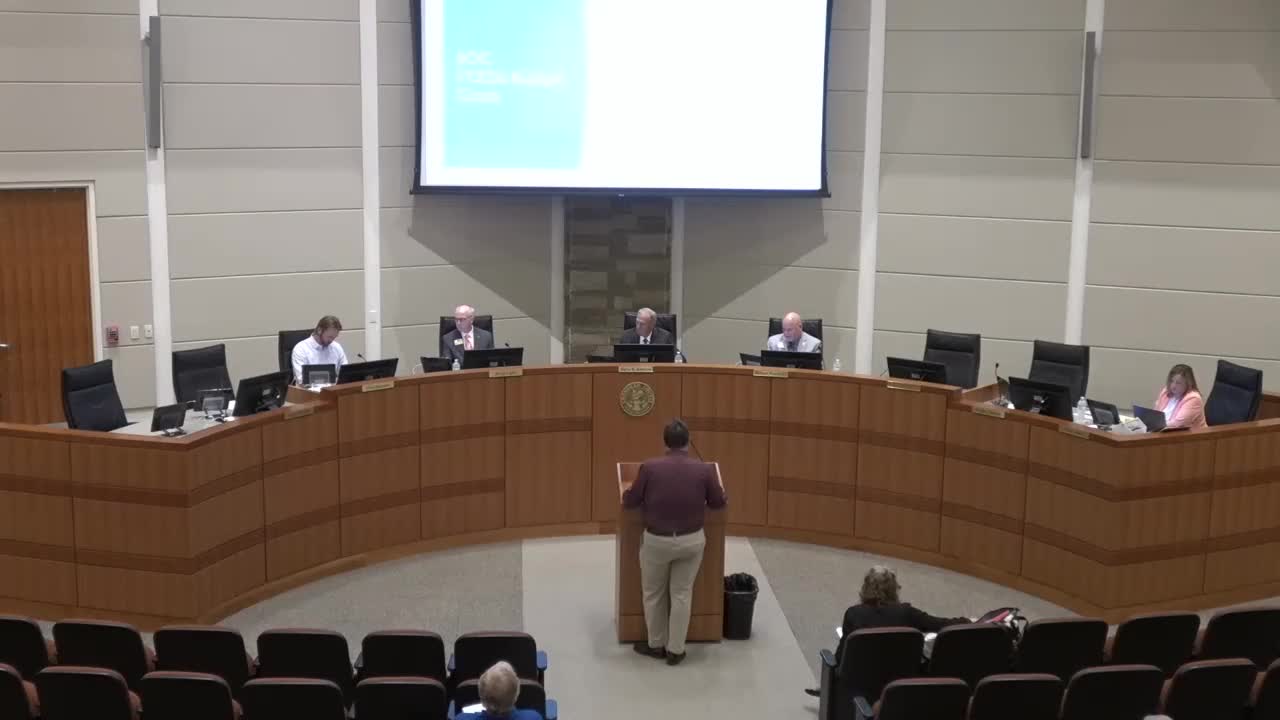
At a Cherokee County Commission public hearing on proposed tax rates, staff presented a draft budget that would keep the county M&O millage at 5.153 while using $2,000,000 in general fund reserves to buy the Pine Log property.
At a Cherokee County Commission public hearing on proposed tax rates, county staff presented a draft 2026 general fund budget that would keep the county M&O (maintenance and operations) millage at 5.153 while using part of the general fund balance to pay for a proposed $2,000,000 purchase of the Pine Log property.
County budget staff told commissioners the package of spending and reserves would lower months of general fund balance from about 4.13 months today to roughly 3.8 months in one calculation and to about 3.36 months in another, depending on assumptions. Staff said departments initially requested about $15.7 million in increases; after cuts the net department increase in the general fund was about $5 million and the draft county-wide budget totals roughly $175,000,000.
Why it matters: the proposal would preserve the M&O millage at the level presented to the public while drawing on reserves for the Pine Log purchase and other uses. The change in months of fund balance is a measure commissioners cited when weighing reserve sustainability versus one-time uses of fund balance.
County staff summarized how general fund tax receipts would be allocated under the draft budget: about 42% to the sheriff's office, 19% to judicial functions and 22% to general services, with the bulk of the general fund directed to public safety, judicial functions and county operations. Fire services were presented separately in a dedicated fund; staff said the fire fund's millage would remain at 2.888 and parks millage would drop in the draft from about 2.27 to about 0.26. Staff showed two example homeowner impacts: roughly $61.98 additional property tax for a homestead property and about $65.80 for a non‑homestead property under the presented package compared with the rollback rate scenario shown in the presentation.
Public comment and assessor questions: resident Elizabeth Harrah spoke during public comment and criticized county property assessments, saying assessors were inflating values and urging stronger assessor training and a cap on assessment growth. Harrah said, "Untrained assessors are our problem. They are inflating our home values to cover budget shortfalls," and urged the county to require appraiser training for assessors and to "cap assessments between 6% and 7% so that we can keep our property taxes and our property values within normal limits."
Commissioners and staff responded with legal and policy context. A county official said, "The Georgia Constitution requires that all properties for property tax purposes be appraised at market value," and explained the county cannot freeze market values but can use exemptions to limit taxpayers' net taxable value. The official said Cherokee County has implemented a floating homestead exemption tied to limit taxable growth for the county M&O tax since about 2009, which keeps a homestead owner's net taxable value flat for the county M&O tax so long as the owner remains in the home.
The commission also discussed a voter‑approved state law option that allowed the county to opt into a program freezing values for the new fire special district tax for the current year and capping future increases at the Consumer Price Index. The county said it opted into that program so the fire tax value is frozen this year; the official noted the school system declined to opt into the same program. The official added a separate senior exemption is available for residents 62 and older who apply, which can eliminate school taxes for eligible seniors.
Staffing and insurance premium debate: commissioners spent substantial time discussing county employee compensation, proposed COLA (cost‑of‑living adjustments) and a proposed increase in employee insurance premiums as a way to rebalance employer/employee cost shares and free county dollars for public safety hires. One commissioner urged using part of an insurance premium increase to help fund additional deputies and said the aim over time is to achieve an 80/20 employer/employee split on premiums. The county's sheriff, Sheriff Reynolds, said the roughly $450,000 figure discussed would cover noncompetitive promotions for employees who meet time-and-training criteria but that the 12 authorized but unbudgeted deputy positions would require about $1.2 million (a rough planning figure of about $100,000 per filled position including benefits); staff said the current shortfall for those positions is about $850,000.
Commissioners discussed alternatives: reducing the COLA slightly (for example to about 2.5–2.75%) while increasing the employee premium contribution so that the advertised raise is a single clear percentage and the premium increase is visible, which could free money to fund some deputy positions without changing the millage rate. Proponents said every $100,000 freed by that approach could fund roughly one deputy position; others warned the approach would mean a modest reduction in take‑home pay for all employees and that payroll implementation could be complex.
Next steps and action: the public hearing was closed by motion. Commissioner Carter moved to close the public hearing; Commissioner Ragsdale seconded. The motion carried unanimously. Staff said the board would meet again in a 3:00 p.m. work session and hold a final public hearing in the evening to set the county's tax rates and to validate the school system's reported rates before the tax commissioner begins preparing tax bills.