Get Full Government Meeting Transcripts, Videos, & Alerts Forever!
Get email alerts on the Public Safety Probation topic
No spam. Unsubscribe anytime.
Probation chief warns staffing shortages and rising detention costs will squeeze county budget
Summary
Chief Raymond told the Board of Supervisors the probation department’s proposed 2025–26 budget responds to rising detention contract costs, state funding changes and persistent vacancies; supervisors and union representatives flagged a 33% departmentwide vacancy rate and urged recruitment and retention action.
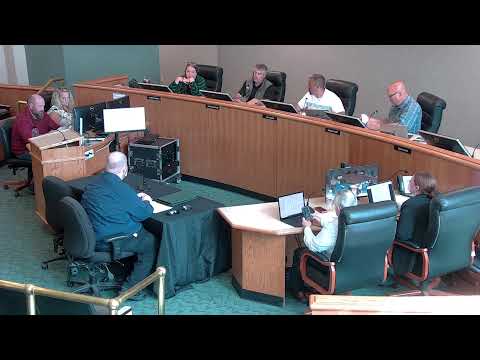
Chief Raymond, Del Norte County probation chief, told the Board of Supervisors on Aug. 1 that the department’s proposed 2025–26 budget reflects rising contract costs for out‑of‑county detention, changes to state funding and persistent vacancies that limit service delivery.
"It's our people that do the work," Raymond said, summarizing why most of the department’s budget is for salaries and benefits. He told supervisors the department is operating with about a 33% vacancy rate overall and that several teams — Adult Services Unit (ASU), Juvenile Services Unit (JSU) and Support Services — are more than 40% vacant in places. Raymond said one juvenile probation officer had submitted a resignation, and he expected recruitment activity to continue.
The department presented two main budget units: 244 (probation services, adult and juvenile supervision and support) and 243 (youth opportunity center and detention services). Raymond said juvenile detention averages and out‑of‑county custody needs are driving uncertainty in the detention line: "We were about where we figured with 2 to 3 average daily population; this spring we've seen a pretty significant uptick in our kids in custody," he said, noting that custody contracts with Humboldt and other counties are under negotiation and could increase costs.
Raymond also flagged state policy and funding changes. He warned that pretrial funding under Senate Bill 129 faces a $5 million cut at the state level, a change that could reduce county pretrial resources allocated through courts. He described how various grants and allocations support the department — including AB 109, JJCPA/AB1913, YOBG and other state programs — but said those revenues are subject to state formulas and fluctuation.
Supervisors pressed for detail on a large change in the department's total spending. "When we look at total expenditures for the past 4 years, we've got an average of $3.3 million and yet the proposed budget this year is $5.6 million," Supervisor Short said during the hearing. Raymond and budget staff explained part of that increase reflects program grants rolling through the department, full staffing assumptions (planned hires), and a cautious estimate for detention costs and special placements that can be costly in individual cases.
Raymond described several program items the department is implementing or has in progress: a mobile probation office funded by a Mobile Probation Grant (MPG) that will be outfitted as a vehicle for outreach; Prop 64 funds passed through to the County Office of Education for juvenile programming; and continued participation in wraparound services (SB 163) coordinated with Behavioral Health. He said the MPG vehicle upfit was underway and expected for delivery in early 2026.
Union and public comment at the meeting underscored concern about workforce shortages. Norma Williams, president of DNCEASA 1021, said the vacancy rates — "45 to 50%" in some teams — should be alarming and urged the county to prioritize recruitment and retention. Raymond said recruiting has improved recently, with more applicants for DPO positions in the current recruitment than he recalled seeing, but he cautioned that onboarding and background checks take time.
What happens next: Raymond said the department will continue to refine detention cost estimates and work with courts and contract partners; supervisors asked staff to return with more detailed breakout of general fund versus grant funding so the board can evaluate discretionary choices.
Ending: Supervisors and probation agreed the budget reflects both unavoidable state‑driven changes and internal staffing challenges; the board signaled it will scrutinize detention contract changes and requested a clearer separation of grant versus general fund costs before final adoption.