Get Full Government Meeting Transcripts, Videos, & Alerts Forever!
Get email alerts on the Public Health topic
No spam. Unsubscribe anytime.
City staff review $5.6 million in task‑force-funded health programs, report reductions in infant mortality and food‑insecurity wait lists
Summary
Presenters reviewed eight city‑funded health initiatives approved in December 2023, reporting program outcomes including reduced infant mortality, expanded 988 call capacity, reduced senior meal waiting lists and the training of community health workers. City staff recommended continuing five programs into the FY26 budget.
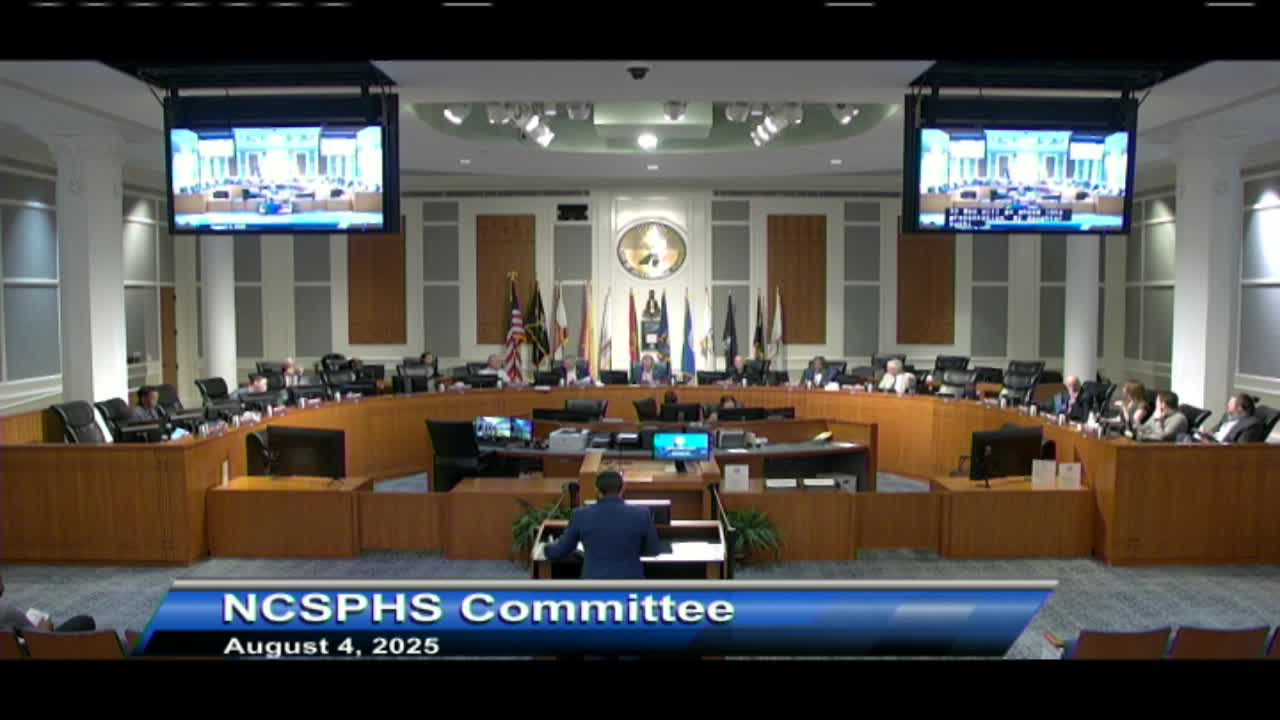
Dr. Joshi, presenting to the Jacksonville City Council Neighborhoods Committee on Aug. 4, 2025, summarized outcomes from eight health initiatives funded with $5,600,000 approved by the council on Dec. 12, 2023.
The presentation said the initiatives target infant mortality, mental‑health access, elderly food insecurity, primary and preventive care access, and community health worker (CHW) training. "This program's goal is to help us continue to reduce infant mortality and improve maternal health outcomes," Dr. Joshi said, describing the infant‑mortality program managed through a competitively awarded contract to Northeast Florida Healthy Start Coalition.
Why it matters: the city-funded work supports multiple partners in direct outreach and clinical diversion, city officials said. Committee members and staff framed the programs as part of a broader effort to reduce avoidable emergency care, connect residents to services, and build local CHW capacity.
Key program results presented
- Infant mortality/home visitation: Dr. Joshi said the Healthy Start contract hired two to three CHWs and reached roughly 635 women and families over the past year (about 300 pregnant and 72 postpartum), exceeding a target of 200 pregnant women. The speaker reported 100% of program participants received education on preconception health and safe sleep; roughly 80% of identified at‑risk women were referred to home‑visitation programs.
- Crisis hotline/988: United Way's local 988 center added two full‑time crisis operators and a program director. Staff reported the center routed more than 17,000 calls (about 1,400 per month), answered more than 14,000 calls locally (about 1,200 per month), and reduced average answer time to 17 seconds. The local center reportedly answered calls locally 83% of the time and recorded a de‑escalation rate of about 98.7%, with roughly 1.3% of calls resulting in emergency hospitalization or Baker Act transport.
- Pediatric behavioral health and care coordination: presenters said pediatric mental‑health supports delivered more than 6,000 hours of care coordination and more than 8,000 hours of direct patient care; the programs reported more than 16,000 books distributed and a 22% reduction in some social‑determinant‑of‑health risk factors for served children. Mental Health First Aid training reached about 261 people (including adult and youth courses); staff reported improvements in knowledge and reductions in stigma and referred 158 people to local behavioral‑health clinics or hotlines.
- Senior food security: Aging True Urban Jacks (as named in the presentation) received a competitively awarded contract to expand home‑delivered meals. Presenters said the eligible waiting list started near 2,800 and, after program expansion, declined to 945 as of June 30. Staff reported about 273,000 additional meals served during the last year and high self‑reported improvements in nutrition and quality of life among recipients.
- Primary and preventive care access (telehealth and wraparound services): Health Link Jax (Telescope Health contract) received more than 5,000 calls and over 3,000 clinical encounters; presenters estimated that more than 1,300 encounters likely diverted avoidable emergency‑room care, with an estimated ER cost avoidance up to about $6.4 million based on average avoidable ER cost models. Overflow Clinic provided wraparound services including job placement (22 people), clothing, financial literacy and Narcan training.
- Community health worker training: the Partnership for Child Health (awardee) enrolled about 360 people, with about 180 completing the program. Approximately 50% of completers planned to sit for CHW certification — an estimated 90 newly certified or certifiable CHWs for the local labor pool.
Next steps and budget notes
Dr. Joshi told the committee five of the eight programs are proposed for continuation in the Fiscal Year 2026 budget: the infant‑mortality program (Northeast Florida Healthy Start), two mental‑health/wellness programs (the 988 call center and the pediatric mental‑health/wraparound services), senior feeding through Aging True Urban Jacks, and the primary‑care access program (Telescope Health/Health Link Jax). Committee members asked follow‑up questions about outstanding contract payments and contracting authority; Dr. Joshi and procurement/city staff said procurement and contract execution were in progress and that staff would pursue outstanding payments through the contracting process.
Council questions and clarifications
- Councilman Ron Salem asked whether the senior provider that had missed two months of payments would be paid; Dr. Joshi said procurement and the Office of General Counsel were finalizing signatures and Chief Weinstein and staff were working to identify funding for the outstanding two months.
- Committee members asked for clarity on how telehealth encounter diversion estimates were calculated and on enrollment and certification rates for CHW training; presenters supplied program totals and indicated the data came from the contractors' reports to the city.
What the presentation did not show
The presentation gave counts, targets and self‑reported client survey results but did not include full program contracts or independent evaluations in the meeting packet. The presenters noted estimated ER savings were based on avoidable‑ER cost models; the committee did not receive a line‑by‑line audit in the session.
Speakers quoted in this article are listed in the article's speaker list for traceability and attribution. The committee did not take a committee vote on these programs during this meeting; staff said five programs are proposed for the FY26 budget and will be considered through the regular budget process.