Get Full Government Meeting Transcripts, Videos, & Alerts Forever!
Get email alerts on the Public Safety topic
No spam. Unsubscribe anytime.
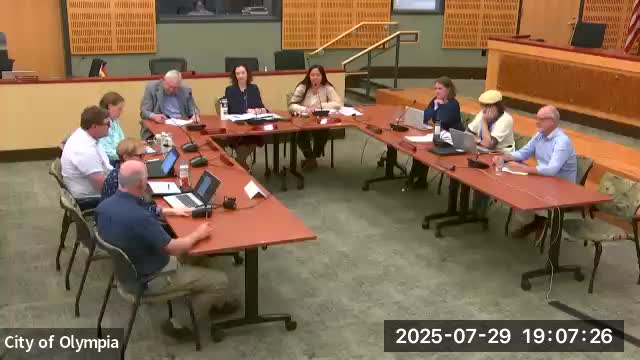
Council reviews revised public safety chapter; seeks clarity on sanctuary language, oversight and staffing
Summary
City planners presented a substantially rewritten public safety chapter at the July 29 study session; the draft centers equity, non‑enforcement responses, data‑driven prevention and disaster preparedness and adds a new crowd‑management goal drawn from a 2020 city review.
Casey Schoffler, associate planner with Community Planning and Economic Development, presented a revised public safety chapter that staff rewrote following a December 2024 study session and input from the Planning Commission, the Social Justice and Equity Commission, and the Community Livability and Public Safety (CLPS) committee. Schoffler said the rewrite centers equity, accountability and community‑centered approaches and reduced scope by moving schools, social services, housing and sustainability topics into separate chapters so the public safety chapter focuses on code enforcement, fire response and city policing.
Schoffler told the council the draft reflects multiple concurrent efforts: the “reimagining public safety” process, community outreach (including the 1Community plan and resident surveys), the Olympia Police Department and Olympia Fire Department strategic plans, and a staffing study. The presentation added a new goal and supporting policies on public demonstrations, drawn from the City of Olympia review of 2020 public‑demonstration responses and crowd‑management practices; Schoffler noted that goal was a significant, late addition that did not have the same level of prior public review.
Interim Police Chief Shelby Parker and Fire Chief Matt Morris joined Schoffler and answered council questions about staffing and implementation detail. Council members asked how the chapter addresses staffing, recruitment and retention. Chief Parker and Schoffler pointed to department strategic plans and a separate staffing study that provide numbers and operational guidance; Schoffler said the comprehensive plan is intended to describe service levels and that the departments’ strategic plans would contain how positions will be staffed, recruited and retained.
Chief Morris said the fire department recently completed a standards‑of‑cover analysis and will present related operational work plans, noting that many apparatus and infrastructure questions are answered in those department plans rather than in the comprehensive plan.
Council members sought explicit recognition in the chapter of the city’s sanctuary status and requested a short historical note linking the chapter to the December 2022 Reimagining Public Safety report and its recommendations. Council Member Susan Madrone asked staff to remove the word “citizen” from policy language about First Amendment rights (pS 9.1) so the chapter speaks inclusively. Several council members suggested adding photos to show first responders participating in non‑emergency community activities, reflecting the Social Justice and Equity Commission’s emphasis on community presence and prevention.
Schoffler said staff can add an introductory paragraph referencing the Reimagining Public Safety work, will update language to remove “citizen” from the crowd‑management policy, and will work with communications on photos. Council members discussed whether to return the draft to the Social Justice and Equity Commission for review; staff said the commission recently completed comp plan review and is poised to shift to other work but could be asked for additional comment if council wants it. Several council members endorsed familiarizing the incoming community oversight body with the chapter as part of its onboarding.
There was no formal vote. Schoffler said the next steps are to seek feedback and guidance, proceed toward chapter acceptance and then full plan adoption in 2025. Council praise for the rewrite focused on the chapter’s broader framing beyond policing, its emphasis on data and community partnerships, and the new emphasis on disaster preparedness and smoke impacts as a climate‑linked service issue.