Get Full Government Meeting Transcripts, Videos, & Alerts Forever!
Get email alerts on the Peacekeeping topic
No spam. Unsubscribe anytime.
UN briefing to Security Council urges united political support, regional partnerships for peacekeeping
Summary
Jean-Pierre Lacroix told the Security Council that peacekeeping requires sustained political backing, stronger coordination with regional actors and better resourcing, citing recent and historical missions as examples.
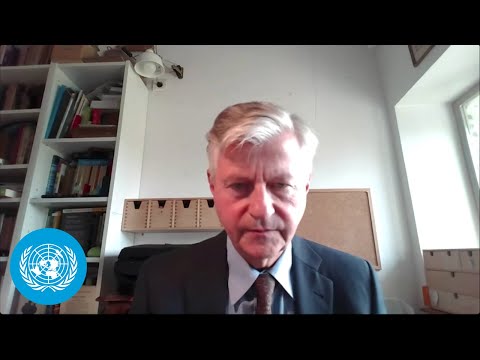
Jean-Pierre Lacroix, briefing presenter, told the United Nations Security Council that peacekeeping missions must receive sustained political support, better coordination with regional partners and adequate resources to help parties resolve conflict and secure durable peace.
"Peacekeeping operations are proven to be critical instrument in advancing peace processes and supporting lasting political solutions," Lacroix said, citing missions that have supported transitions from civil war to stability in countries including Cambodia, Timor-Leste, Sierra Leone, Liberia and Cote d'Ivoire.
Why it matters: Lacroix framed political support from Security Council members and broader United Nations membership as central to whether peace operations achieve long-term political solutions or remain limited to managing conflict and protecting civilians. He urged member states to provide consistent backing to mission political strategies, to coordinate more closely with regional organizations such as the African Union, and to ensure missions have the resources to implement mandates.
Lacroix outlined four areas to "optimize our collective leverage." First, he said the council must not only mandate missions but "ensure that mission political strategies receive sustained political support on the ground," arguing that "when the council speaks collectively, the legitimacy of peacekeeping operations and the political processes they support are reinforced." He pointed to a unanimous council adoption of "resolution 27 73 of February 2025" as an example that provided a foundation for diplomatic efforts in the Democratic Republic of the Congo.
Second, Lacroix urged mission leadership to act as "constant and unwavering ambassadors for peace," using good offices and communication to maintain host-state confidence and to seek opportunities to advance political processes. Third, he recommended closer coordination with regional and subregional actors, saying such partnerships "can enable us to devise a shared vision and clearly define roles and responsibilities" and citing the African Union and a joint AU-UN road map tied to "Security Council resolution 27 19" as relevant developments.
Fourth, he called for more purposeful engagement by troop- and police-contributing countries, noting these states are "political stakeholders whose engagement can reinforce mission credibility and national ownership." He specifically referenced Pakistan as an example of a top troop-contributing country that brings both operational insight and political weight to the council table.
On resources and accountability, Lacroix said peace operations cannot fully implement mandates without adequate resourcing and urged member states to support efficiency initiatives inside the UN. He described the Secretary-General's UNAT initiative as focusing on "efficiencies, improvement in how we manage and operate, reviewing how mandates are implemented, and exploring structural and program realignment across the UN system." He reiterated the Secretary-General's request that member states "pay in full and on time their assessed contribution."
Lacroix also cited mission-level examples of impact: MINUSCA's role in facilitating a 2019 political agreement in the Central African Republic and missions' longstanding role in Cyprus, where he said more than half a century of UN peacekeeping has preserved calm despite underlying tensions. He noted that progress in conflict settings is often "incremental, fragile, and uneven," but that even modest gains can prevent relapse into widescale violence and save lives.
He closed by thanking member states for support of peacekeeping and by noting widespread participation at a recent ministerial-level meeting in Berlin where, he said, "135 member states, 52 of which were represented at the ministerial level" attended.
Lacroix's briefing comprised recommendations and appeals to the council and member states; the transcript records no formal vote or council decision arising from his remarks.