Get Full Government Meeting Transcripts, Videos, & Alerts Forever!
Get email alerts on the Budget Appropriation topic
No spam. Unsubscribe anytime.
Griffith Public Schools opens first 2026 budget hearing, proposes $30.9 million spending plan and outlines timeline
Summary
Superintendent presented the district’s proposed 2026 budget proposal, explained budgeting principles and next steps; board will adopt appropriations on Oct. 27 and send documents to the state for DLGF review by year end.
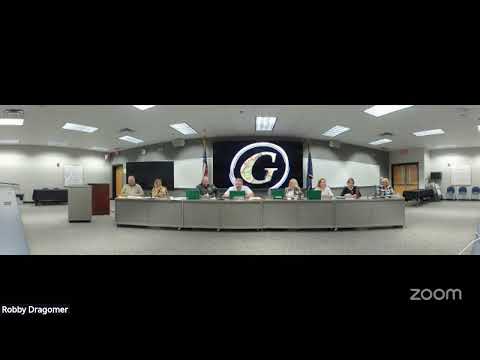
Griffith Public Schools held the first public hearing on the 2026 budget, during which district leaders presented the proposed appropriation plan, explained the budget process and outlined next steps toward state certification.
Superintendent (name not specified) said the district’s proposed total budget for 2026 is $30,874,023, and described the distribution among major funds: roughly 48% for the Education Fund, 26% for Debt Service, 16% for Operations, and 10% for the local referendum. The superintendent said the Education Fund appropriation is $14,661,919, with most of that amount budgeted for salaries and employee benefits.
The superintendent explained the district builds revenue projections conservatively and that enrollment is an important driver; current enrollment was stated as 1,991 and the district said it budgets conservatively (for example, using 1,950 for state budgeting). The superintendent also detailed the budget calendar: the board will finalize the appropriation resolution on Oct. 27, the Department of Local Government Finance (DLGF) will review and certify budget forms later in the year, and the DLGF’s final notice typically arrives by the end of December.
Why this matters: The appropriation and levy set during the local process determine how much revenue the district can spend in each fund and, combined with state actions, determine the tax rates that property owners will pay.
Superintendent (name not specified) reviewed budget principles—aligning resources with academic priorities, planning for contingencies (utilities, insurance, unexpected facilities repairs), and using conservative projections for state tuition support and net assessed value. She described that debt service months (December and June) typically require higher cash flow and that the district updates cash flow assumptions after the certified net assessed value is published.
Public comment included discussion of recent state tax changes and their likely effects on district revenue. A member of the public who identified recent changes to state law urged the board to consider the combined effects of Senate Bill 1 and House Bill 1427 on homestead and other credits going forward and recommended staff use the most current assessed‑value data when modeling future referendum or levy scenarios.
The board opened the floor for questions. A member of the public asked about capital items that had appeared on multi‑year lists (sidewalks, bus replacement); staff offered to follow up by email with specific project schedules and recent bus replacement counts. The budget hearing remains an open step in the process until the board adopts appropriations on Oct. 27 and the DLGF completes its certification.
Ending: The board closed the budget hearing portion and scheduled the appropriation adoption for Oct. 27; final state approvals and certified forms are expected by year end.