Get Full Government Meeting Transcripts, Videos, & Alerts Forever!
Get email alerts on the Land Use Development topic
No spam. Unsubscribe anytime.
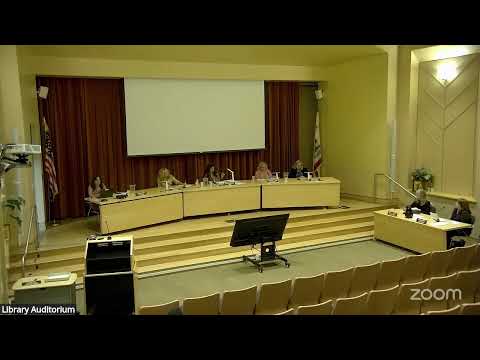
Orinda council authorizes consultant contract to begin environmental review for Southwood Valley proposal
Summary
The Orinda City Council unanimously approved a contract for outside planning and environmental review services to begin processing a development application for the 43‑acre Southwood Valley site. The city says the work will be reimbursed by the applicant; neighbors raised geological, evacuation and fiscal concerns during public comment.
The Orinda City Council on Oct. 21 approved an agreement with Kimley Horn and Associates to begin environmental and planning review for a proposed Southwood Valley subdivision, authorizing up to $550,000 and a city‑manager contingency of up to 10 percent.
The contract will fund preparation of an environmental impact report under the California Environmental Quality Act, an environmental constraints analysis the city is required to produce under the general plan, and additional planning‑processing support, according to the planning director.
Planning Director Cross told the council the contract is divided into three parts: the general‑plan EIR (about $363,000), an environmental constraints analysis (about $69,000), and planning assistant labor and materials (about $116,900). Cross said the applicant submitted an incomplete application on July 8, 2025, and must provide additional studies — for example geotechnical, soils, drainage, wetlands delineation and traffic — before the city can make a final recommendation.
"The city is not necessary the city is contracting for the services, but the services that are being provided will be reimbursed by the applicant," Cross said during the staff presentation, referring to a reimbursement agreement included with the contract.
Michael Lu, managing member of Southwood Valley Estates LLC and the applicant, said his company formed the ownership LLC in Feb. 2001 and has owned the 43‑acre site since Feb. 2004. Lu told the council the applicant paid a $50,000 base deposit for initial work and that the developer has paid past study costs on this property. "All the money's come out of our pocket," Lu said, adding the owner is prepared to increase deposits as the work proceeds.
Neighbors urged caution. Judy Eben, who said she has lived on Tahoe's Road for 51 years, told the council the Southwood land is unstable and raised concerns about wildlife, evacuation access and the narrow time residents were given to review the project materials. "First of all, the land is unstable," Eben said during public comment. Several other speakers cited the site's history of slides and the presence of riparian habitat.
Attorney and resident Nick Waranoff urged the council to use a three‑party contract so consultants would look only to the developer for payment. "It is absolutely false to believe that the city is not at risk of going into a negative position," Waranoff said, arguing the city may be liable for consultant bills if an applicant fails to reimburse promptly.
Cross and the city manager described the city's current practice as a reimbursement agreement with an initial deposit and monthly invoices. Cross said the applicant already paid the $50,000 deposit and that invoices are issued monthly; if the deposit falls below an agreed threshold, the applicant must replenish it or staff stops work until invoices are paid.
Council members emphasized that approving the contract is not approval of the proposed development. "By approving the contract tonight, we are not agreeing to the project. We're just allowing the City to meet its obligation to respond to the application that's been submitted to the City," one council member said. After discussion, the council voted by unanimous voice vote to approve the agreement and contingency authorization.
The planning director said the applicant used a state density bonus in its application and that the city will require technical studies, including a geotechnical report, biology and drainage studies, as part of the EIR and environmental constraints analysis. Cross also said the consultant will help design community engagement because the site has a documented history of public involvement.
The city and the applicant declined to provide a construction timeline; Cross said the city has until the applicant submits the requested information to proceed with completeness review and CEQA. The council did not set any land‑use approval or entitlements at the Oct. 21 meeting; those decisions would follow the EIR, public comment and the city's formal hearing process.
Votes at a glance: the council approved the contract with Kimley Horn and Associates not to exceed $550,000 and authorized the city manager to approve up to a 10 percent contingency; the motion carried by unanimous voice vote and no council member recorded a dissent.
What happens next: the applicant must submit the missing technical studies identified in the city’s completeness letter; the planning department and the consultant will prepare the environmental documents, and the city will return to the council and planning commission for public hearings and any required entitlements.