Get Full Government Meeting Transcripts, Videos, & Alerts Forever!
Get email alerts on the Signs And Electronic Message Centers topic
No spam. Unsubscribe anytime.
Committee debates electronic message‑center rules, delays vote pending full board and legal review
Summary
Committee members discussed draft illuminated sign rules—automatic dimming, brightness limits, message timing and pixel size—but agreed not to finalize sign language at the Oct. 15 meeting and to reconvene with legal and additional information.
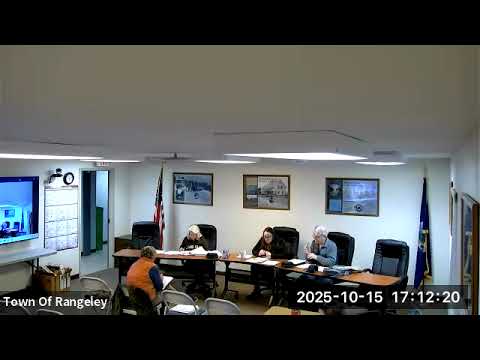
The Rangeley Ordinance Committee discussed a draft illuminated‑sign and electronic message‑center (EMC) ordinance on Oct. 15, reviewing brightness limits, automatic dimming requirements, message timing and technical display standards, but decided not to take a final vote at the meeting.
Committee members reviewed language drawn from several municipal models (including Laconia) and examined a range of provisions in the draft: maximum display luminance (the draft lists figures such as 10,000 nits during daylight hours and 500 nits between dusk and dawn in the sample language), mandatory ambient sensors and automatic dimming controls, prohibition on flashing or pulsating displays, a minimum display time (the draft uses five minutes for static messages), software reporting of current and factory brightness levels on request, and a proposal that no more than 75% of a sign’s surface be an EMC (a point some members said was unnecessarily limiting).
Participants stressed several practical concerns. Committee members asked staff to verify how sign‑size rules in the existing sign chapter interact with any EMC square‑foot limits and whether multiple businesses on one lot could share a single EMC under the town’s aggregate signage rules. One committee member suggested limiting display pixel size (for image quality) and recommended targeting smaller pixel pitches (for example, 8 millimeter or finer) to avoid a “dotty” appearance; staff agreed to collect vendor information and visual examples for the next meeting.
Discussion also covered content and aesthetics. Some members opposed a categorical ban on all graphic displays, saying that non‑moving graphics could be acceptable if they do not increase brightness or create moving imagery; others emphasized dark‑sky compatibility and recommended dark backgrounds with light letters for EMCs. Members repeatedly noted that EMC language should not conflict with the sign ordinance already approved by voters and should be coordinated with legal counsel.
The committee declined to adopt final sign rules at the Oct. 15 meeting, with members saying they preferred to review the draft with the full committee and legal staff present before taking a vote. Staff agreed to re‑examine the Laconia‑sourced language and related examples, gather pixel‑size examples (a video file was mentioned), and return with recommended edits at a future meeting.