Get Full Government Meeting Transcripts, Videos, & Alerts Forever!
Get email alerts on the Zoning Rezoning topic
No spam. Unsubscribe anytime.
Planning commission recommends rezoning 43.7 acres in southern downtown to mixed-use downtown
Summary
The Planning and Zoning Commission voted 3-1 to recommend that City Council rezone about 43.7 acres south of Denton's core from public facilities and mixed-use neighborhood to mixed-use downtown, restoring downtown zoning to an area removed from the floodplain in 2024.
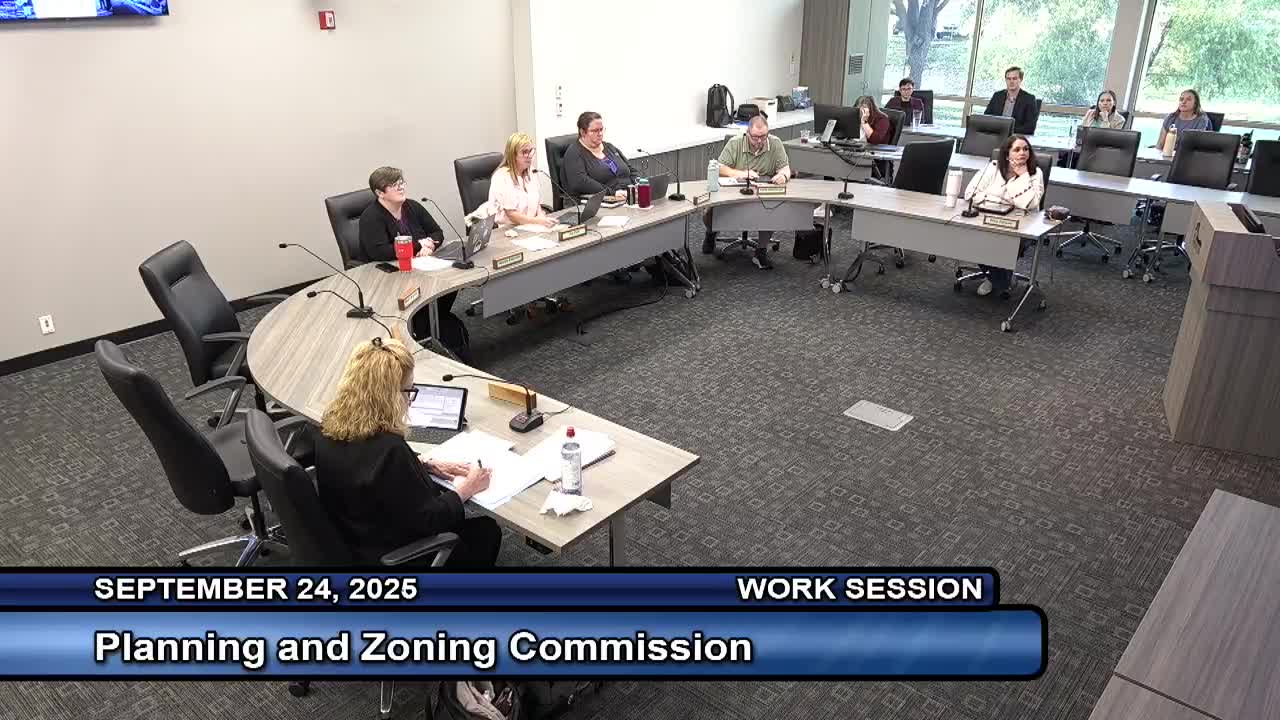
The City of Denton Planning and Zoning Commission on Sept. 24 recommended that City Council rezone about 43.7 acres in the southern downtown area from public facilities and mixed-use neighborhood (MN) zoning to mixed-use downtown (MD).
The recommendation, which passed 3-1, would replace current zoning over roughly the area south of Sycamore to Eagle and along Elm and Locust streets with the MD district, which the city says will allow more downtown-style mixed-use redevelopment. Commission Chairman Lisa Dyer called for the vote after a staff presentation and public comment period.
Staff presented the proposal as the next step to implement the Design Downtown Denton plan and to respond to a 2024 floodplain project that removed the southern downtown from the floodplain, opening the area to redevelopment. Shawn Jacobson, associate planner, told commissioners that the area had been zoned downtown commercial until the 2019 citywide rezoning and that restoring MD would give property owners more flexibility for small multifamily, townhomes and commercial uses and would remove several regulatory barriers that discouraged downtown-style development.
Jacobson said MD reduces mandatory parking requirements for small multifamily, allows higher building coverage, and eliminates some buffers that are unsuitable for a downtown context. He said the comprehensive plan already designates the area as Downtown Denton and that infrastructure upgrades make the area appropriate for denser uses.
The staff report and public outreach showed mixed responses: Jacobson said he received 10 written comments in favor and four in opposition, and that two neighborhood meetings in May produced unanimous support from attendees. Public commenters at the hearing included business owners who said they were concerned about the effect of rezoning on long-standing auto sales businesses and other small operations. Jacobson and staff repeatedly noted that legally existing businesses and residences would be protected as nonconforming uses and could continue to operate or be sold.
Hugo Cruz, an owner of a local auto sales business, said his family has operated in downtown Denton for more than 30 years and asked how rezoning would affect his retirement plans and ability to transfer the business. Jacobson answered that auto sales and similar uses are currently nonconforming and would remain protected; rezoning would not require any existing business to cease operations, although it could affect future expansions.
Other public speakers representing downtown organizations, including Kristen Kendrick Bigley of the UNT Collab (and president of Denton Main Street Association), supported the rezoning as a way to encourage reinvestment, more housing close to downtown and a more active southern downtown.
Commission discussion touched on protections for single-family homes and for existing businesses. Jacobson said the ordinance being recommended includes language to preserve existing single-family residences'they could be repaired, rebuilt or expanded as they are today. He also said the Downtown Development Code'including height-transition and use-buffer provisions'would continue to apply to protect adjacent residential properties.
The commission vote was 3 in favor and 1 opposed; staff said the measure will go to City Council for final action. Jacobson emphasized there is no specific private development tied to this rezoning request: the change is intended to allow property owners to pursue downtown-style redevelopment if and when they choose to do so.
The commission record shows the vote as the body'not a developer'moving to restore MD zoning to an area staff and supporters say is now able to redevelop after flood-control work.
Local residents raised questions about notification and potential traffic and construction impacts. Staff said notices were mailed to property owners within the study area and to property owners within 200 feet and utility customers within 500 feet, and that occasional mailing errors can occur. On traffic, staff said projects that come forward later would require the normal traffic review and improvements (turn lanes, driveway consolidation, etc.).