Get Full Government Meeting Transcripts, Videos, & Alerts Forever!
Get email alerts on the Juror Nondisclosure New Trial topic
No spam. Unsubscribe anytime.
Alabama Supreme Court hears dispute over new trial after juror nondisclosures in Nissan airbag case
Summary
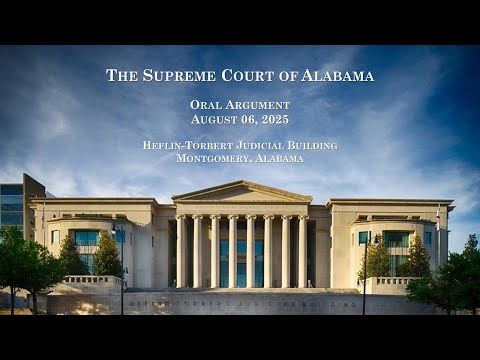
The Supreme Court of Alabama heard oral argument in SC-2024-0121 over whether a trial judge properly ordered a new trial after finding two jurors failed to disclose prior collections litigation; the court took the case under submission.
The Supreme Court of Alabama heard oral argument in SC-2024-0121 on whether a trial judge erred by concluding two jurors failed to disclose prior collections litigation and by ordering a new trial in a products-liability suit against Nissan North America Inc. and Nissan Motor Co., Ltd. The court heard lawyers for both sides on questions of materiality under the Freeman factors and whether existing Alabama precedent constrained the trial judge’s authority; the court took the case under submission.
The question centers on whether the nondisclosures were “material” under Alabama law and whether Judge Pipes, the trial judge below, properly exercised his discretion. John Nieman, counsel for appellants Nissan, told the justices that Judge Pipes’ factual findings — including that the jurors’ undisclosed litigation would have been struck for cause or by peremptory challenge — were correct and that the judge properly concluded the nondisclosures caused probable prejudice. “When my clients filed their motions for post judgment relief, Judge Pipes took the highly unusual step of asking the parties to consent to additional time beyond the normal 90 days so that he could adequately consider and address issues that he would later describe as extremely concerning to him,” Nieman said, arguing that the judge’s meticulous order should be respected.
Nieman asked the court to reject the opposing reading of this court’s precedents and to affirm that the trial judge could find objective and subjective materiality on the record. He emphasized the corporate-defendant context, saying jurors with personal experience of being pursued in collections are particularly likely to be susceptible to an “anti-corporate” narrative that counsel for a corporation would reasonably fear. “If someone on the jury has experience in which they perceive that some uncaring corporation has used the courts to extract every possible penny they can from that individual, then they’re just naturally going to be much more susceptible to a thematic suggestion at a trial like this,” Nieman said.
Albert Jordan, representing appellee Elise Henderson Brundage, urged the court to defer to settled precedent and to affirm the judgment against Nissan. Jordan identified a line of Alabama decisions he said supports treating small-claims or collections-type nondisclosures as presumptively immaterial in a products-liability case, and he told the court that the record should be construed most favorably to preserve the jury’s verdict. Jordan noted that the jury had awarded an aggregate of $8.5 million in February 2023 for permanent loss of vision and other damages arising from an airbag deployment in February 2018, and he described expert testimony in the trial about alleged design defects in the airbag system, including testimony from William Broadhead that a seat-belted occupant generally does not require an airbag deployment below about 15 miles per hour while the impact here was recorded as 9.1 miles per hour.
The justices’ questioning focused on several legal issues: (1) whether materiality is satisfied by subjective materiality (i.e., that trial counsel would have struck the juror) or also requires an objective test (what a reasonably competent attorney would have done); (2) how to read this court’s prior plurality and split opinions (including Hood) in relation to Freeman and to Jimmy Day; and (3) whether appellate review should remand to the trial judge to reapply legal standards or decide the materiality question itself on the existing record. Counsel for Nissan argued Judge Pipes had found both subjective and objective materiality and that, because the judge applied the Freeman factors and explained his reasoning, the Supreme Court should not remand for reweighing. Counsel for Brundage argued the record could support affirmance on alternative legal grounds.
The facts at issue as discussed in argument: the underlying tort claim concerns an airbag deployment in February 2018 that plaintiffs say caused permanent blindness in one eye; the jury awarded $8.5 million in February 2023. The trial judge, when presented post-judgment with evidence about two jurors’ prior small-claims/collections litigation, found the jurors had answered voir dire untruthfully and concluded, after receiving the parties’ consent to extend the post-judgment period, that the nondisclosures were material and produced probable prejudice. Nissan’s counsel emphasized that at least one juror’s litigation involved wage garnishment and similar collection tactics, which counsel said plausibly tied to the anti-corporate theme of the plaintiff’s case. Brundage’s counsel stressed that several prior Alabama cases treat analogous nondisclosures as immaterial and that factual ambiguities in voir dire — including how questions were phrased — counsel against overturning the verdict.
The court did not rule from the bench. Chief Justice Joseph Stewart thanked counsel and said the court would take the case under submission. The court’s eventual decision will determine whether Judge Pipes’ order for a new trial stands or whether the judgment for Brundage will be affirmed without remand.
Notes: the transcript reflects argument on precedent including Freeman, Hood, Jimmy Day, Marinelli, and Boudreaux; references in argument to the “no fire threshold” (6.5 mph for unbelted occupants) and to an expert’s view that an airbag is not required for a belted occupant under 15 mph; the trial judge sought and secured the parties’ consent to extend the typical 90-day post-judgment period in order to consider the new-trial motion.