
Hundreds of Indianapolis residents urge IURC to reject AES Indiana rate increase
Get AI-powered insights, summaries, and transcripts
Sign Up Free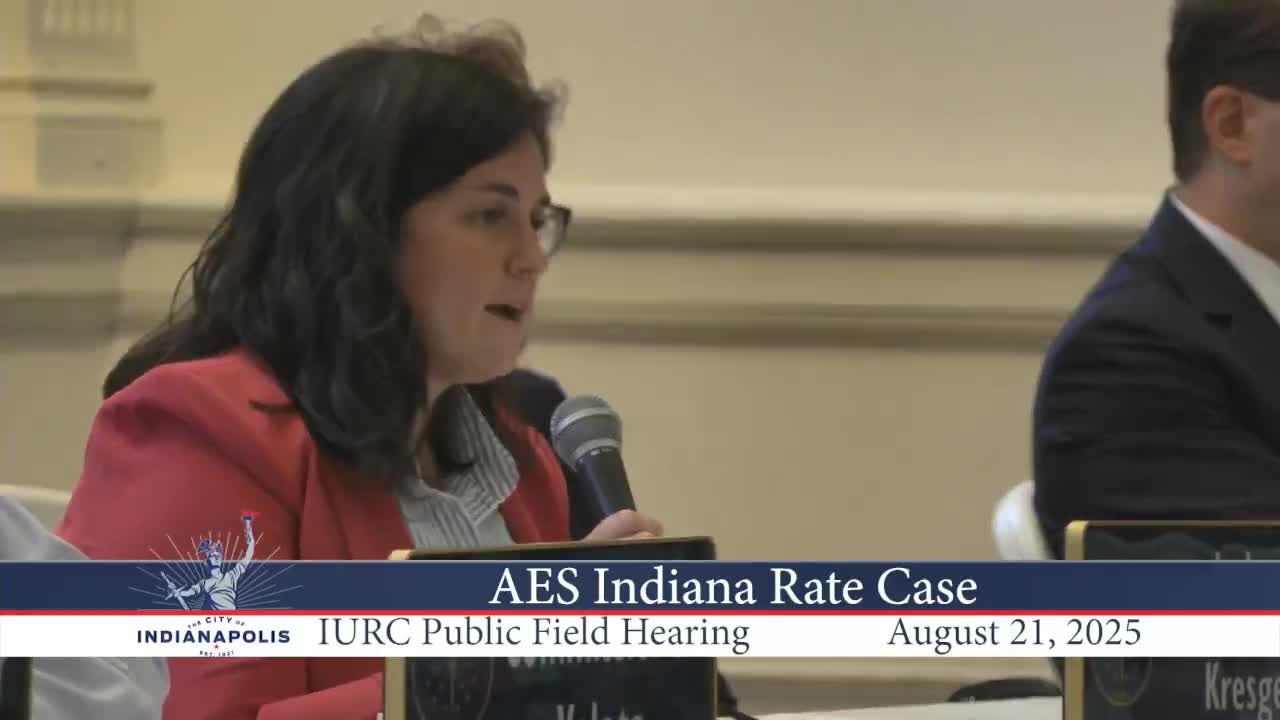
Summary
The Indiana Utility Regulatory Commission held a field hearing to take public testimony on cause number 46258, the petition of Indianapolis Power & Light Company, doing business as AES Indiana, for authority to increase electric service rates and charges.
The Indiana Utility Regulatory Commission held a field hearing to take public testimony on cause number 46258, the petition of Indianapolis Power & Light Company, doing business as AES Indiana, for authority to increase electric service rates and charges.
Speakers filled the room and urged the commission to deny or scale back the proposed increases. "Such a proposed rate increase on a basic service like electricity will force individuals and families to make hard choices between basic needs," said Andy Nielsen, City-County Councilor for District 14. Nielsen urged the commission to scrutinize how increases are distributed by customer class and to reform declining block rate structures.
The hearing matters because the commission’s decision will affect AES customers across Marion County and other counties AES serves. The petition seeks changes ranging from revised depreciation rates and accounting relief to a property-tax rider and new rate schedules; the commission incorporates public comments in the formal case record, and the docket is expected to continue into 2026.
Many speakers focused on affordability and unequal impacts. "This rate increase is excessive and greedy," said Lucas Waterfield, an Indianapolis resident who said his monthly bill is about $290 because of medical equipment and raised personal concerns about affordability. Several speakers said residential customers would bear a much larger portion of the proposed increase — repeatedly cited in testimony as roughly 13.45% — while large industrial users would see much smaller increases.
Commenters also challenged AES’s requested financial parameters. Multiple witnesses urged the commission to reduce AES’s requested return on equity, which public testimony identified as a 10.7% request, and to reject an increase in the monthly residential fixed customer charge from $17 to $20. "The customer charge should not be increased," said a witness speaking for older Hoosiers in Central Indiana, who said the change would make customers’ bills harder to control.
Residents described operational problems they said weaken the case for higher rates. Clark Mathis of the Bates-Hendricks Neighborhood Association and other residents said outages and long restoration times, spoilage of food during extended outages, and problems after a recent billing system upgrade justified denying the increase. "Asking us to pay more for an unreliable service is fundamentally unfair," Mathis said.
Testimony also criticized executive pay and corporate profits. Sharon Lepper and other speakers cited AES’s national results and investor disclosures, arguing customers should not subsidize higher corporate earnings. Several witnesses asked the commission to scrutinize capital expenditures and trackers that allow cost recovery between rate cases.
Other themes raised in testimony included: the effect on seniors and medically vulnerable customers who rely on electric medical equipment; the lack of competitive choice for many customers; concerns about data center-driven load growth and whether commercial customers are being subsidized by residential customers; and requests for more consumer protections or targeted assistance programs.
The Indiana Office of Utility Consumer Counselor (OUCC) reiterated procedural deadlines: OUCC staff said its expert team will file testimony on September 9 and that written consumer comments are accepted and will be part of the record if received by September 2. Administrative Law Judge Kristen Kresge read the petition caption into the record and reminded attendees that the commissioners and judge could not respond to comments during the hearing.
No formal vote or commission decision occurred at the field hearing. The record remains open and the commission scheduled continued public field hearings; the administrative record and testimony filed by parties will inform the commission’s eventual order, which the OUCC told attendees is not expected until 2026.
The hearing was convened as part of the formal rate case process for AES Indiana (cause 46258). Written comments and expert filings now become part of the case record and will be considered alongside filings from AES and other parties.