Get Full Government Meeting Transcripts, Videos, & Alerts Forever!
Get email alerts on the Board Goals Technology topic
No spam. Unsubscribe anytime.
Vernon board debates where technology should live as it adopts 2025–26 board goals
Summary
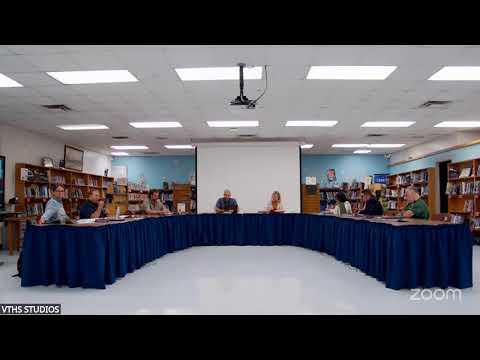
At its Aug. 21 meeting, the Vernon Township Board of Education approved a set of five board goals for 2025–26 and spent extended time debating whether technology oversight should be its own committee or integrated across curriculum, finance and other committees.
The Vernon Township Board of Education on Aug. 21 approved five board goals for the 2025–26 school year and opened a lengthy discussion about how to organize committee oversight of technology.
Board members approved goal language that calls for strengthening governance and professional development, launching a district strategic plan with community input, improving communications, proactive finance and facilities planning (including exploring a future referendum), and prioritizing student success, health and well-being with regular progress reviews.
Board members said they supported the goals but differed on how to treat technology oversight. Some members argued that student-facing technology (classroom devices, instructional software) belongs with curriculum and instruction, while hardware, security cameras and capital technology purchases should fall under finance and buildings and grounds. Others urged treating technology as cross‑cutting, integrating it into each committee’s work so it does not get lost. Several speakers asked to defer a final committee alignment decision until Brian Fisher, identified in the meeting as the technology committee chair, could participate.
The board’s materials list five governance buckets: governance and leadership development; strategic plan; communication; finance and facilities; and student success, health and well-being. Members discussed onboarding of new board members and the mechanics of measuring progress on student and board goals. Several members asked that the board develop action plans and ongoing assessments tied to each board goal, to be implemented through committee work and reported back to the full board.
Superintendent Ebony de Mendez, introduced to the board at the start of the meeting, described administrative work tied to the goals and noted the district’s immediate operational preparations for the school year. "I first wanted to just thank the board, for the warm welcome and the Vernon community," de Mendez said during her report; she also confirmed the district received 21st Century CCLC after‑school funding for Glen Meadow.
The board also discussed the district’s recently adopted AI policy template; policy committee members said the policy is aimed primarily at students and will be split into distinct student and staff policies over time as needed. Committee members said the AI policy is expected to reach the board for a first reading at the Aug. 21 meeting (first reading only) and a possible second reading in September or October for adoption.
Why it matters: committee alignment determines what issues get focused attention and who prepares proposals for the full board. Board members said they wanted action plans and measurable reporting (benchmarks tied to state assessments, benchmarks and superintendent evaluation timelines) so that committee work produces regular, transparent updates to the full board and public.
The board asked staff to revise the draft goals and the proposed committee alignments and return the revised language at the next meeting so the board can consider final adoption. Board members also proposed creating an ad hoc strategic‑planning committee to lead a three‑month planning timeline that, if implemented on schedule, would produce a final strategic plan by June 2026.